
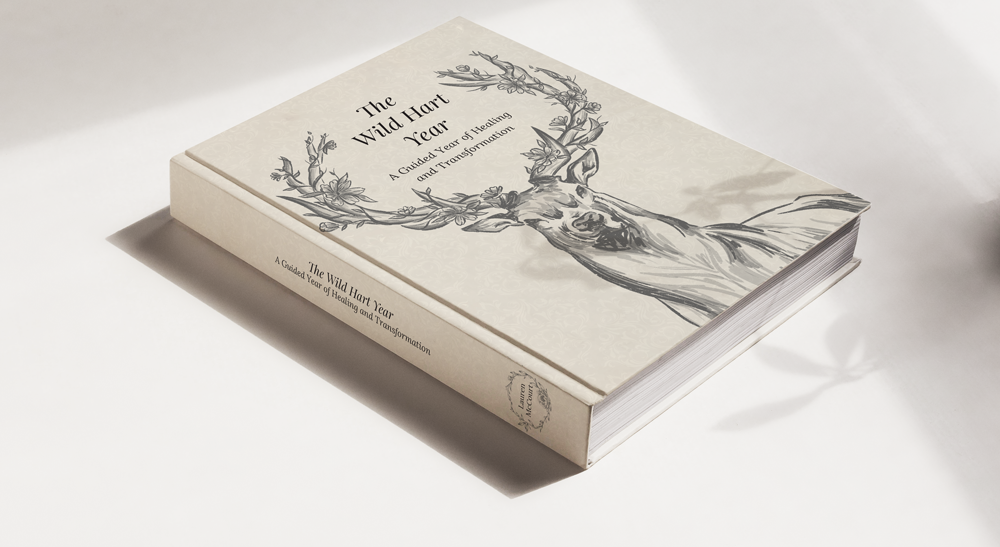
I’m very lucky in my line of work as the founder of Wild Hart Rituals that I meet people from every walk of life. At large wellbeing exhibitions, I stand at my stall with my self‑published journal, The Wild Hart Year, displayed on the shelves.
Around me is a sea of businesses promising healing, transformation, and life‑changing practices. People wander past in all states of being curious, overwhelmed, thoughtful, overstimulated, or simply trying to take everything in. It can be a lot.
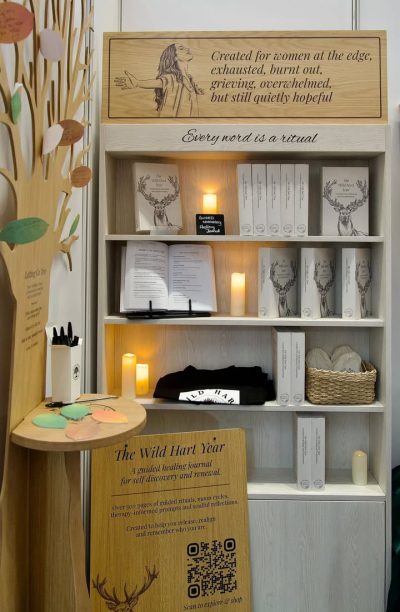
Sometimes they pause and look at my stall. I always ask the same question: “Do you journal?”
You might expect a simple yes or no. Instead, I hear variations of the same quiet confessions:
“I don’t do it as much as I should.” “My handwriting is too messy.” “I try, but I always give up.”
What strikes me is how many of us hold ourselves to an undefined standard of journaling a standard nobody can name, yet everyone feels they’re failing. How much is “enough”? Why does messy handwriting matter? And why do we call it “giving up” instead of recognising that maybe we simply reached what we needed in that moment?
Somewhere along the way, journaling stopped being a supportive tool and became a catalyst for shame.
We turn the problem inward. Instead of seeing journaling as a space for emotional processing, we treat it like a test we’re failing. But journaling is hard because it is hard — not because you’re doing it wrong.
It asks you to sit with a blank page and your own inner world in quiet and stillness. It asks you to be honest. That’s a vulnerable request, and for many, there’s a fear that someone might read their journal and judge what they find.
These are the real reasons journaling feels difficult — and they’re far more human than “messy handwriting.”
The good news is that once we name these fears, we can begin to soften them. We can reclaim journaling as the gentle, supportive tool it truly is.
Let’s dispel some of the common journaling fears:
“I don’t do it enough.” Define your “enough.” Once a week? Once a month? Once a season? Rhythm and outcome matter more than frequency. One journaling session can be life‑changing, while others may simply be daily musings.
“My handwriting is messy.” Messy handwriting is still handwriting. Journaling isn’t a competition. Writing more may help — and perhaps we don’t need to shy away from the less‑than‑perfect parts of ourselves.
“I try and give up.” Maybe the style of journaling doesn’t suit you. Blank pages can feel intimidating. Guided prompts might feel too structured. You might be a collage or junk journaler. Experiment until you find what supports you — you have time.
“I’m afraid someone will read it.” This fear is valid. You can lock your journal away, store it in a box, or destroy pages after writing. It’s also worth exploring boundaries — who believes they have access to your private thoughts, and why?
Journaling is one of the most accessible forms of self‑care we have. It supports emotional regulation, clarity, resilience, and healing. But to access those benefits, we need to release the shame that has quietly attached itself to the practice.
Let’s work past the shame and reclaim journaling for what it truly is: a gentle, powerful tool for understanding ourselves and our emotional landscape.
I had never journaled before, and in doing so I’ve worked through so much of my own fear and shame, released my own journal, and now find myself writing about my experience here. You never know where a new practice can take you.
All images by Wild Hart Rituals
About the Author: Lauren