
A Science-Based Bridge Between Physiology, Touch & Energetic Therapies
How understanding a primitive mammalian reflex can transform practitioner training & deepen client care.
For years, crystal healing and other resonance-based modalities have been dismissed by many medically trained practitioners as “fringe.” Not because they lack value, but because they do not fit neatly into mechanical models of therapy, models that emphasise force, structure and leverage, while overlooking the subtle yet powerful phenomenon of body-to-body resonance.
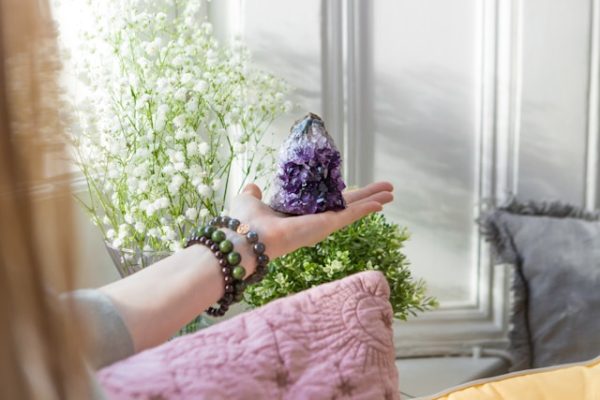
Photo by Emilija Launikaityte on Unsplash
But what if there were a physiological pathway, recognised across mainstream medicine, neuroscience and cardiology, that could help practitioners feel and understand resonance-based interaction in real time?
There is one.
It’s called the mammalian Dive Reflex.
Why the Dive Reflex Matters
The Dive Reflex is a well-documented physiological response, activated by cold water on the face and driven by the diamagnetic and dielectric properties of water within the body.
Crucially, its effects cannot be explained through mechanical pressure or structural manipulation.
Instead, it demonstrates how the behaviour of water within tissues can temporarily shift the autonomic nervous system, specifically sympathetic tone, through resonance-based mechanisms to a relaxed parasympathetic more relaxed state.
In simple terms:
The Dive Reflex is an accepted, measurable, non-mechanical interaction within human physiology to external water, a diamagnetic material.
It offers a rare scientific bridge between mainstream understanding and the principles underlying crystal therapy. Remember Ice is a crystal too, and still water, so water will still evoke the dive reflex by the same resonance pathways as liquid water. Proof crystal have resonance and physiological effects on the body the crystals in contact with.
What This Means for Practitioners
For more than twenty years in clinical practice, I’ve used the Dive Reflex to teach students how their own autonomic state influences the people they touch.
Because the hands are predominantly water, their diamagnetic properties shift with the practitioner’s parasympathetic state. This shift appears to transfer through touch, briefly softening the sympathetic tension in the client. The result is a deep but gentle window of relaxation that can be felt within seconds.
This experience becomes an “aha moment” for students… a direct, undeniable demonstration that:
- Their state matters.
- Regulation is transmissible.
- Resonance is real, measurable, and not mystical.
This understanding can take years to develop through standard training. With the Dive Reflex, it happens almost instantly.
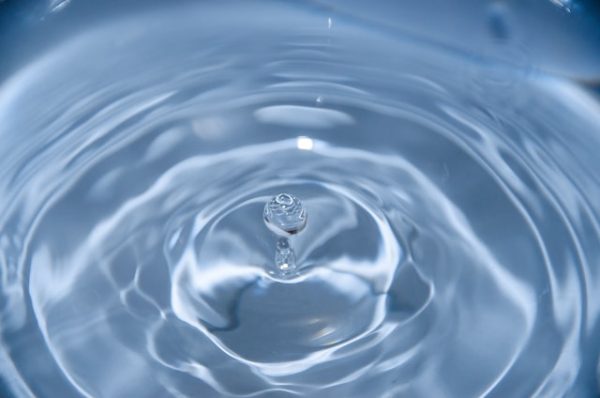
Photo by David Becker on Unsplash
A Pathway to Integrating Crystal Therapy with Physiology
A clearer understanding of how diamagnetism, dielectric behaviour and water-based resonance function within the human body may offer crystal practitioners a more accessible language for discussing their work with the wider healthcare community. Water, including the crystalline structure of ice, interacts with magnetic fields in ways that can influence physiological states. Although the mechanisms are complex, it is recognised that cold-induced stimulation of certain receptors can contribute to the dive reflex, a well-documented autonomic response.
While other crystals are not identical in structure or behaviour to ice, they are nonetheless crystalline materials, and some share diamagnetic properties. Diamagnetic materials( such as copper, silver and gold) respond weakly to magnetic fields and many people report a subjective sense of relaxation when such materials are placed near the body. In my own clinical experience, copper braid pads (used within neoprene covers and not in direct skin contact) have been associated with increased comfort and improved joint mobility in some individuals.
The first time I encountered a Vajra in Glastonbury, the relaxation response it elicited exhibited (more flexibility) remarkably similar to the response I had observed when working with diamagnetic materials such as copper. Experiences like this suggest that a shared descriptive framework may be possible, one that helps bridge intuitive, energetic and physiological viewpoints without making unwarranted assumptions about mechanism.
An Invitation to Learn More
I believe this perspective could contribute meaningfully to training programmes that seek to integrate intuition, energy work and bodily awareness. To support this, I am happy to offer a short demonstration to teaching staff or training teams who may wish to explore these ideas further.
The session provides an opportunity to observe and feel:
- how autonomic states can shift through gentle, resonance-based interaction
- how different materials may influence bodily perception
- how these concepts might be used to enrich crystal therapy practice
There is still much to discover about how the body responds to different crystalline materials. What is clear is that crystals—beginning with ice and extending to certain diamagnetic metals—can interact with the body in ways that people consistently describe as calming. The specific pathways involved remain a subject for discussion and further investigation.
If this perspective proves helpful, I would be delighted to collaborate further.
If not, I am simply glad to share the work.

Photo by Sticker it on Unsplash
Interested in a Demo?
If you’d like to see the Dive Reflex demonstrated, or explore how this science-based approach could support your training or practice, please get in touch… I’d love to show you what’s possible.
A Call to Collaboration
If the crystal-healing community were to come together and document, in a consistent way, the calming or relaxing responses that clients experience through practitioner touch, we could begin building a shared body of observable data. This would form the first step towards a more verifiable framework: reproducible observation.
We already know that water can trigger aspects of the Dive Reflex, and many practitioners report that clients experience relaxation when working with crystal-infused water as well. What remains especially interesting is the idea of body–body resonance — the way in which one person’s touch, influenced by certain materials, may be perceived by another person’s body.
The key question becomes: How does ice-to-body resonance differ from crystal-to-body resonance, and how do both of these compare to the resonance that passes from practitioner to client through touch?
If crystal therapy practitioners across the community were to observe and record whether contact with pure water (for example, held within sealed PVC containers) consistently enhances the sense of relaxation transmitted through their hands, this collective reporting could help illuminate whether such body–body resonance follows patterns similar to those seen in the Dive Reflex, a medically recognised Reflex.
By sharing observations openly and systematically, the community could begin to explore a new, nuanced way of understanding touch, resonance and relaxation, one that draws inspiration from known physiology while remaining open to experiential insight.
Main – Photo by Agustin Fernandez on Unsplash
About the Author: Hector Wells