

How to Support It Naturally
If you’ve ever watched your animal sleeping peacefully, the slow breath, the softening of the face, the nervous system finally letting go, it’s easy to forget that underneath that calm surface, there’s a whole universe of activity. Because your animal isn’t just “a body”. They’re a living ecosystem made of trillions of cells, all working together.
When we support cells well, we support everything: energy, repair, digestion, skin, immunity, resilience, mood, movement, and recovery. That’s why cell health in dogs and cats is one of the most empowering places to begin, especially if your animal feels “a bit off” and you can’t quite put your finger on why.
What is a cell?
A cell is the smallest unit of life. You can think of it as a tiny, intelligent “mini-world” that can take in nutrients, create energy, communicate, repair, and adapt.
Cells group together to form tissues, tissues form organs, and organs work together in body systems but it all begins here. And while different cells have different jobs (skin cells, muscle cells, nerve cells, immune cells), most of them share a few core needs.
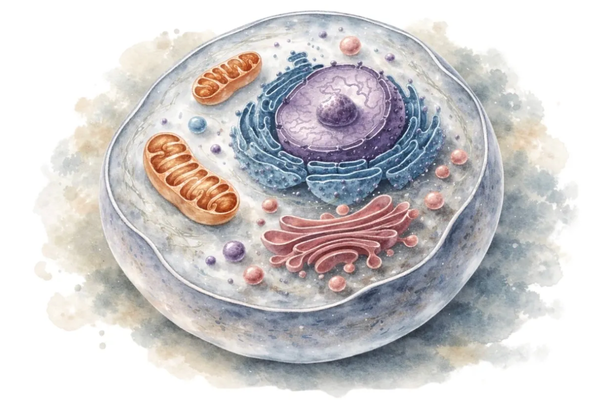
Image created by Kirsty McIvor
What do cells do in your animal’s body?
1. Cells create energy
Inside most cells are little energy-makers called mitochondria. Their job is to turn nutrients into usable cellular energy. If an animal feels “flat”, slow to recover, easily overwhelmed, or seems stuck in a constant state of inflammation, I often start by wondering: how well are their cells resourced to do their jobs?
2. Cells build & repair
Your animal’s body is constantly renovating, replacing skin cells, repairing gut lining, rebuilding muscle fibres, supporting connective tissue. That requires protein building blocks, minerals, vitamins, and enough energy to do the work.
3. Cells communicate
Cells don’t operate alone. They’re always sending and receiving messages through hormones, neurotransmitters, immune signals, and more. When cellular communication is clear, the whole system often feels more regulated and resilient.
4. Cells protect boundaries
Every cell has a membrane, a protective boundary that decides what comes in and what stays out. That membrane is made largely from fats (lipids). This matters because membranes aren’t just “wrapping”, they influence how cells listen, respond, and communicate.
Cells as part of the whole system
My brain loves biomedicine because it brings clarity. But my heart loves a holistic lens because it reminds us that biology doesn’t happen in isolation.
In a whole-system view, you could say:
- Cells are the “matter” (the physical building blocks)
- Energy is the “movement” (communication, flow, regulation)
- The nervous system is the “conductor” (how the system perceives safety and allocates resources)
When an animal is stuck in chronic stress, the body prioritises survival over repair. Digestion can change. Inflammation can rise. Sleep can become lighter. Muscles hold tension. Sensitivity increases. At the cellular level, the message is very simple: “We’re not resourced for restoration right now.”
Chronic stress & cellular health: what happens over time?
Your animal’s body is always responding to their environment, not only the “outside world”, but the internal environment too: digestion, blood sugar balance, inflammation, hormones, sleep, pain, and emotional safety.
When that inner world is chronically stressed (for example through long-term poor diet, ongoing inflammation, unresolved emotional stress, lack of rest, chronic pain, or repeated exposure to irritants/toxins), the body can shift into “survival-first” mode. In survival mode, cells often have to do their jobs with fewer resources.
The stress → cell strain pathway
1. More demand, fewer supplies: Chronic stress increases the body’s need for nutrients and repair, while often reducing the “rest and repair” side of physiology.
2. More reactive by-products: Many stressors increase inflammatory signalling and the production of reactive molecules, including reactive oxygen species (ROS). In balanced amounts, ROS are part of normal biology. But when they build up faster than the body can neutralise them, we call it oxidative stress.
3. Oxidative stress can affect cell function: Oxidative stress can contribute to wear-and-tear on cell membranes (lipids), proteins, and DNA. Membranes are how cells respond to signals, proteins do much of the cell’s work, and DNA is the instruction manual.
4. If damage isn’t repaired, mutations can occur: Cells have clever repair systems and a lot of damage is fixed. But if oxidative DNA damage isn’t repaired before a cell divides, it can contribute to mutations (changes in genetic material).
This doesn’t mean “stress equals disease” in a simple, direct way, bodies are complex and protective. But it does help explain why long-term wellness so often comes back to the basics: reducing chronic stressors and supporting repair capacity.
The following are common contributors to oxidative stress in everyday life:
- Nutrient-poor or highly processed diets (or diets that don’t suit the individual)
- Chronic inflammation (skin, gut, joints, dental issues, dental pain, etc.)
- Long-term emotional stress (fear, unpredictability, lack of safety)
- Environmental exposures (irritants, pollutants, certain chemicals or particles)
The goal isn’t perfection, it’s about reducing the “daily withdrawals” and increasing the “deposits”. That might look like offering real nourishment (enough protein, minerals and appropriate fats), supporting hydration, helping the gut so nutrients can actually be absorbed, building in gentle movement alongside deep rest, and creating nervous system safety through predictability, choice and consent. When we support the whole terrain, meaning the body, emotions and environment. We give cells the conditions they need to repair, regulate and communicate clearly.
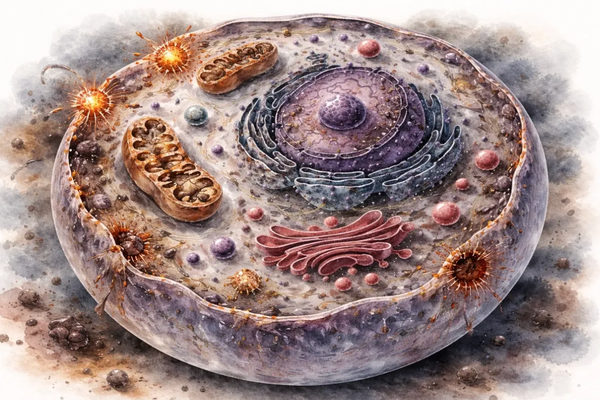
Image created by Kirsty McIvor
How to support cell health in dogs & cats naturally
Here are the foundations I return to again and again, because they’re simple, powerful, and support the whole system.
1. Real, appropriate nourishment
Cells need raw materials. For most animals, that means:
- Enough high-quality protein (repair, enzymes, immune function)
- Mineral-rich foods (cells run on minerals)
- Healthy fats (membranes, hormones, brain and nerve support)
If an animal eats a very limited or ultra-processed diet, it often shows up somewhere — skin, digestion, emotional resilience, energy, recovery.
Quick species note: cats are obligate carnivores, so high-quality animal protein is particularly important for them.
2. Support membranes with the right fats
Cell membranes are lipid-rich, and dietary fats influence what the body has available to build and maintain them. Many guardians choose omega-3 support (EPA/DHA) to help overall balance, but suitability and dosing depend on the individual, so this is always a “right animal, right time” conversation.
3. Hydration
Cells live in fluid. Hydration supports circulation, digestion, lymph flow, and healthy mucous membranes. Some animals (especially cats) do better with moisture added to meals. Sometimes it’s as simple as making water easier to access, fresher, or more appealing.
4. Reduce the “cellular stress load”
You can feed a beautiful diet, but if the nervous system is constantly on guard, the body won’t prioritise repair. That’s why cell nourishment also includes deep, uninterrupted rest, predictable routines that help the system feel safe, gentle movement to support circulation and regulation, and reducing environmental stressors wherever you can. For sensitive animals especially, offering choice and consent in handling can make a profound difference. Small changes, repeated consistently, are often where the magic is!
Supporting antioxidant balance
Oxidative stress is part of normal life, the body expects it, and it has built-in antioxidant and repair systems. The aim isn’t to “eliminate oxidants”, but to support balance so the body can do what it already knows how to do. A grounded approach usually starts with protein and minerals (because many repair pathways rely on them), then adds whole-food variety where appropriate in a species-appropriate, individualised way. It also means supporting digestion, because even the best nutrients won’t help if they aren’t absorbed, and using targeted supplements only when they’re truly needed, ideally with guidance from your vet or a qualified practitioner, especially if your animal has health conditions or is on medication.
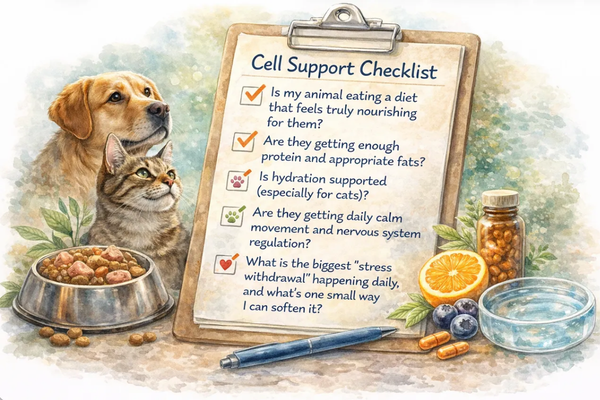
Image created by Kirsty McIvor
You don’t need to do everything. Pick one small shift and let it build.
FAQs about cell health in dogs & cats
1. What does “cell health” mean for dogs & cats?
Cell health refers to how well your animal’s cells can create energy, repair tissue, communicate clearly, and maintain healthy boundaries (cell membranes). When cells are supported, the whole system tends to function more smoothly.
2. Can chronic stress affect my pet at a cellular level?
Yes. Long-term stress can shift the body into survival mode, where repair and restoration are deprioritised. Over time, this can contribute to higher oxidative load and less efficient recovery.
3. What is oxidative stress in dogs & cats?
Oxidative stress is a state where reactive molecules (like ROS) build up faster than the body can balance them with its antioxidant and repair systems. It’s a normal part of life, the goal is balance, not elimination.
4. What are simple ways to support cellular health naturally?
Start with the basics: species-appropriate nourishment, hydration, good sleep, gentle movement, and reducing daily stressors. These are the foundations that make nutritional support easier for the body to use.
5. Do omega-3 supplements help cell health in pets?
Omega-3s (EPA/DHA) can support membrane balance and overall inflammatory regulation for some animals. Suitability and dosing depend on the individual, so it’s best guided by your vet or qualified practitioner, especially if your pet is on medication.
6. Is cell health connected to digestion & the gut?
Very much so. If digestion is irritated or absorption is poor, cells may not receive the nutrients they need to repair and regulate. Supporting gut comfort often supports cellular wellbeing too.
7. My pet seems “not quite right” — where should I start?
Start with observation: energy, appetite, digestion, sleep, skin/coat, and behaviour. Then make one small supportive change (hydration, routine, calmer rest, simpler food). If signs are persistent, worsening, or sudden, involve your vet.
Main – Photo by Nadia Vasil’eva
About the Author: Kirsty McIvor