

Movement & Dance in Clinical Practice (Part 5): Rethinking Embodiment, Agency & Sustainability
Therapy is a word that can bring up different feelings for all of us.
Traditionally we may associate it with grief or complexity. Something that needs careful, considered repair.
We are trained to sit with intensity — to tolerate the unknowing and to hold steady while we watch someone move through difficult terrain. It is both a privilege and a responsibility.
But there is something we speak about less often.
Aliveness.
Over time, the work can become heavy — not because it is wrong, but because much of what arrives in the therapy room is deep. Grief, trauma, loss, confusion. We listen with care, we hold the space. But if we do not take care of ourselves, our nervous systems begin to absorb this layer upon of layer of client history.
Gradually. Subtly. Unknowingly.
Somewhere beneath the role of therapist, there is a person who moves, plays, creates, laughs, wanders — who has their own rhythm, their own life energy. And it is that person — not just the professional — who walks into the room with every client.
When we forget that, the quality of our presence changes, even when our skills are stellar.
The Science of Joy: Why Play & Creativity Matter
Joy is sometimes treated as peripheral in professional spaces — a frivolous luxury, something to welcome in after the serious work is done. But physiologically, joy is expansive. And the reason why I am passionate about somatic dance is because the research into play, creativity, and music make a compelling case for its importance in our wellbeing.
Play creates psychological space for the brain to make unusual connections, to try out ideas without the pressure of ‘getting it right’. Science shows how playful activity encourages our divergent thinking, being original, and cognitive flexibility — all of which are central to a creative intelligence and, crucially, to having resilience in the professional workplace.
Play is an essential part of childhood development that supports problem-solving and adaptive coping. It fuels our imagination, and these growth opportunities continue into adulthood, when we allow it. When we treat ideas like a game, when we approach experience with curiosity rather than performance, we generate more options and less self-censoring.
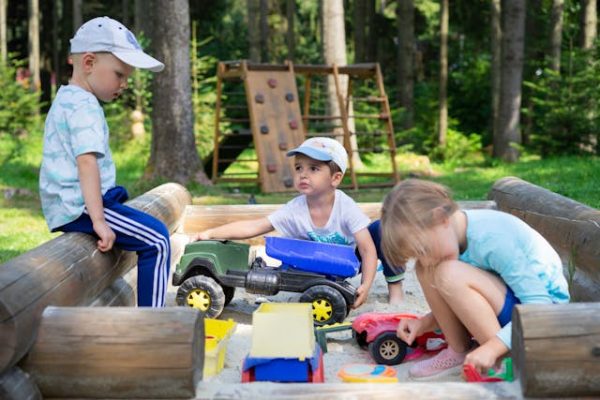
Photo by Atlantic Ambience
This is not incidental to therapeutic work. It is the same cognitive flexibility we need to meet clients where they are, to hold multiple truths at once, to stay curious rather than reactive.
Joy, too, is not merely pleasant — it interrupts our overthinking, our unhealthy rumination. It creates moments of emotional sustenance. Even brief playful moments can help people feel more socially connected, hopeful and energised. I remember in a dance workshop last year, I worked with a small group where we introduced the concept of play. Suddenly I saw the group energy transform with a new lightness and release.
And this matters for therapists as much as for clients. We cannot continually pour from an empty vessel. The research is clear: playful activity reduces stress, lifts mood and supports life satisfaction in adults. Neglecting it is not professionalism. It is a slow depletion.
Music as Medicine: What the Evidence Shows
Music adds another powerful dimension to this picture. There is a growing body of evidence that shows positive effects of music therapy on depression, anxiety and quality of life. And it doesn’t have to be music in the formal sense – the sounds of nature, the sounds of birds chirping have been recognised for their uplifting benefits.
And music can be both active and receptive: we can sing, play, write, drum or simply listen. Each mode engages our nervous system differently, yet all have been associated with emotional regulation, relaxation, and social connection. And it is no coincidence how sound healing workshops such as gong baths are becoming increasingly popular.
The benefits of music have also been studied for conditions ranging from trauma and anxiety to depression, dementia, and insomnia.There is a consistent theme that we see: music gives the nervous system the opportunity to shift. It bypasses the analytical mind and reaches something more primal, more honest, and more… well, soulful.
For therapists, we can use music both as a tool in our client work but also as a personal resource. At the end of a long day, a playlist that helps you to wind down. A few minutes of movement before the next client arrives. These are not indulgences. They are acts of professional maintenance.
Movement as Renewal: Returning to Your Own Rhythm
This is the core of what I want to offer in this final article of the series.
Movement — and somatic dance in particular — is where play, music and embodiment come together. When we allow the body to move freely, to simply feel without any agenda, something within us can recalibrate.
Our breath deepens. Our spine lengthens. Our fluids begin to flow and our mood lifts.
Somatics — working with the physical, mental, emotional, and energetic body as one integrated whole — is how I approach this ‘work’. In this context, Somatic dance is not an art form separate from professional life. It is a reminder that we are living systems. We now know that the wisdom held in the body is as important as the knowledge held in the mind, and the two are in a synchronous, synergistic dance.
As therapists we give presence daily. We hold space. We regulate. We listen with our whole selves. But if we never drop into our own rhythm — if we remain only in stillness, staying professionally composed and containing our emotions — we lose some of our vital essence.
We can get lost in our role and forget who we really are. We just become the caregiver — and being deeply empathic means we often take on more than we realise. When we drop back into our bodies, we recover something essential: the capacity to stand in ourselves, to have clearer boundaries, to express ourselves authentically. Not just as therapists. As people.
What This Looks Like in Practice
It does not have to be a big event. Sustainability is built in small, consistent acts of renewal — not in grand gestures.
A few minutes of movement between sessions. A walk where attention rests in the feet, not the phone. Music at the end of the day that allows you to transition out of being professional. Arms swinging freely instead of remaining held. A spontaneous moment of dance in your kitchen, for no reason other than you felt like it.

Photo by Borbála Kőhalmi
Or more intentionally: a regular somatic movement practice, a workshop, a creative ritual — something that brings the body back into conversation with the whole of you, not just the part that holds space for others.
The evidence from play research gives us a simple touchstone: unstructured, playful movement — even fifteen minutes — supports neural resilience, emotional flexibility and cognitive adaptability. These are not soft outcomes. They are the foundations of sustainable clinical presence.
And they are available to all of us. We do not need to be dancers. We do not need to be particularly coordinated, or musical or uninhibited. We simply need to begin — to allow the body to move, however it wants to, and to notice what happens.
Joy Is Not the Opposite of Seriousness
It restores our range of possibility.
When a therapist is physically alive, clients feel it. There is natural warmth. There is an ease that can still hold boundaries without strain. The room carries lightness alongside depth. We are more present, more creative, more genuinely available to the people in front of us.
If sustainability is only about endurance, we build careers that survive but do not thrive. If sustainability includes aliveness — joy, play, movement and creative expression — we build careers that can breathe.
Therapy does not require us to become less alive. It asks us to become more capable of holding life. And life moves.
A Personal Note to Close
This is why I do this work.
Somatic dance — Visionary Somatic Dance, as I have developed it over decades — is a practice that brings deep renewal and genuine joy. It works on all four levels of our being: physical, mental, emotional, and spiritual. It rejuvenates. It revitalises. It helps us see beyond the everyday, beyond the role, beyond who we have learned to be. And it helps us find who we actually are.
And this is no small issue.
Whether you work in a therapy room, a leadership role, or any space where you are consistently holding space for others — the capacity to come back to yourself matters. Movement is one of the most direct routes there. It is supportive, light, and — crucially — joyful. A complete win-win.
Over the course of this series, I have explored how movement and dance can offer therapists a language for what words cannot reach, a pathway through compassion fatigue, a means of deepening embodied attunement with clients, and a practice of self-renewal. This final piece is an invitation to take that seriously — not as an add-on, but as an essential part of your professional and personal care.
If any of this resonates, and you would like to explore what this might look like for you — in a group setting or one-to-one — I welcome you to reach out. This is the work I do, and it is such a joy and privilege.
 References
- Brown, S. (2009). Play: How It Shapes the Brain, Opens the Imagination, and Invigorates the Soul.
- National Institute for Play. About NIFP and The Basics.
- Aalbers, S., et al. (2017). Music therapy for depression (Cochrane Review).
- Gold, C., et al. (2017). A review on music therapy or music-based interventions for mental health, if you want the broader claim to stay.
- Russ, S. W. (2014). Pretend Play in Childhood: Foundation of Adult Creativity.
Photo by Jill Wellington
About the Author: Helene Su