
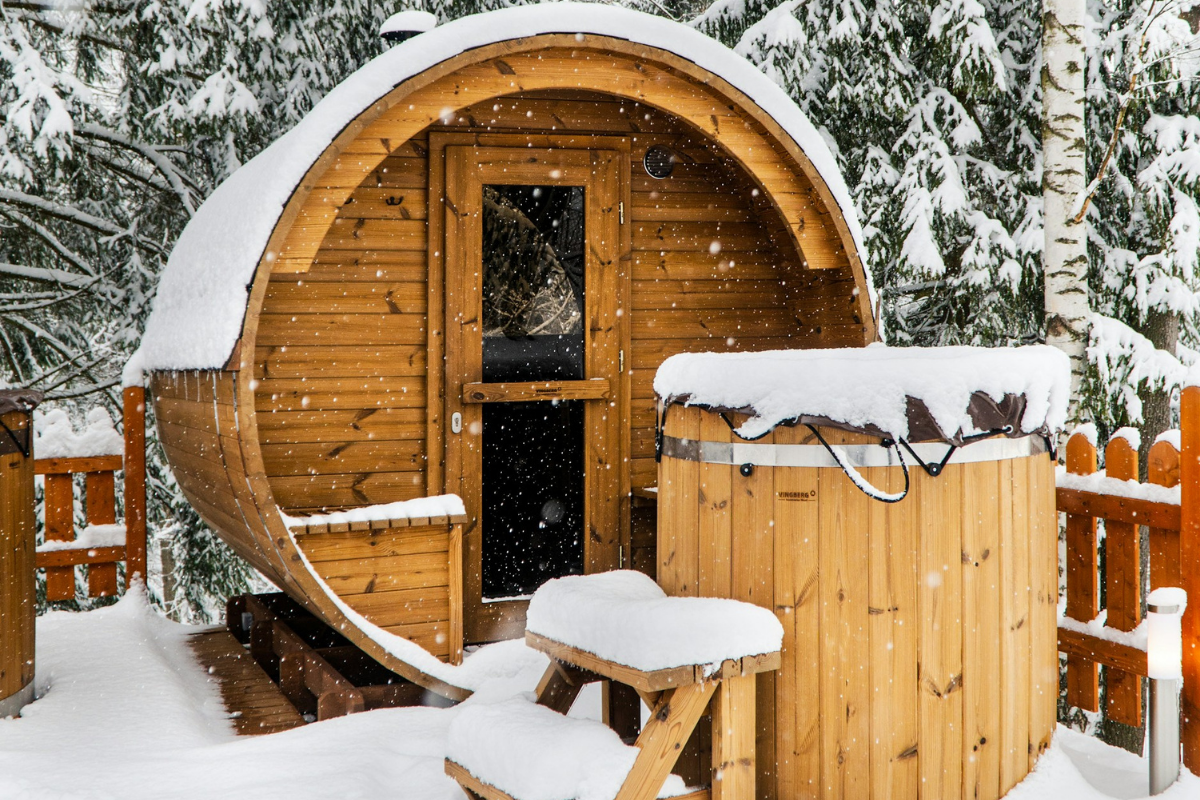
You may have heard about saunas, contrast therapy and brown fat, and I think there are a lot of misconceptions about it.
What Is Brown Fat?
Despite the name, brown fat isn’t really fat in the way most of us think of it, it’s more like an organ in its own right. Unlike the regular white fat that sits around our waistlines storing energy, brown fat actually generates heat. It does this by burning fuel, fats, sugars, proteins and instead of converting that fuel into usable energy the way normal cells do, it just releases it directly as warmth. Like a boiler that runs to heat the house rather than power anything else.
The reason it appears brown is simply because it’s absolutely packed with mitochondria, the power plants of our cells, and that density gives it its colour.
Babies are born with lots of it, they can’t shiver or put on a jumper. As adults we still have it, mostly tucked around the neck, collarbone and spine, but most of us barely use it anymore. Modern life has made us too comfortable. Underfloor heating, warm cars, thick coats, and if we’re lucky a winter trip somewhere sunny, all of it keeps our body temperature nice and steady, which means our brown fat just sits there doing nothing.
The Zone of Hormesis
The zone of Hormesis means the level of discomfort that is good for you. Not too much, not too little, just enough stress to make your body react and adapt. Pressure makes diamonds, and our bodies are no different. A little bit of the right kind of challenge and we get stronger, more resilient, more capable. Too cosy and comfortable all the time and we quietly go in the other direction.
Contrast therapy lands right in the goldilocks zone.

Photo by Jude Glover on Unsplash
Detoxification
Our liver and kidneys do the heavy lifting when it comes to clearing toxins out of the body, and they do a remarkable job — but in the world we’re living in now, with heavy metals, alcohol, ultra-processed foods and all manner of things floating around in the air we breathe, they are genuinely under more strain than ever. So anything we can do to take some of the pressure off them has to be a good thing.
Sweating gives toxins an additional route out. Our pores act as an exit door for toxins, which means every time we work up a good sweat we’re giving the liver and kidneys a bit of a break.
It’s also worth knowing why that matters, because our detox pathways, brilliant as they are aren’t completely foolproof. The liver breaks toxins down in stages, first dismantling them, then making them water-soluble enough to be flushed out. They pass into the intestines ready to leave the body, but here’s the problem as some of those toxins can actually get reabsorbed back into the bloodstream before they make it out. This is called enterohepatic recycling, and it means the liver sometimes ends up processing the same toxins multiple times over.
Every bit we can sweat out is one less thing going round that loop. And the sauna is one of the easiest, most pleasant ways to do it, with no fad diets or enemas, just sitting in the heat.
How a Sauna Lowers Your Core Temperature
Here’s the bit that surprises most people, a sauna doesn’t just heat you up, it actually ends up lowering your core temperature. Here’s how it works.
When your body detects the heat of the sauna, it immediately starts trying to cool down your vital organs. It pushes blood out towards your skin and your extremities, your hands, feet, the surface of your body to carry heat away from the core, and it starts sweating heavily so that heat can evaporate off the skin’s surface. Both of those things together mean your core temperature is actually coming down, even though you’re sitting in what feels like an oven.
And it’s that drop in core temperature that starts to wake the brown fat up.
Take the Plunge
You don’t need anything fancy for this. I’ve done it in top-of-the-range plunge pools at high-end health clubs, I’ve jumped into rivers and streams, I’ve used a cold bath at home, I’ve even used a chest freezer filled with water where I had to break the ice before I laid down (not recommended for beginners).
After 10 to 20 minutes in the sauna, once you’ve got a good sweat going, you get into cold water at ideally around 10 degrees or below. Take it steady, especially at first, and work up gradually to around three minutes. Focus on slowing your breathing down, long slow exhales, and you’ll find it becomes much more manageable than it sounds. Once you feel as though you are becoming used to it start to move your body around and break the thermal layer you’ve just built around you (you’ll not thank me for this tip).
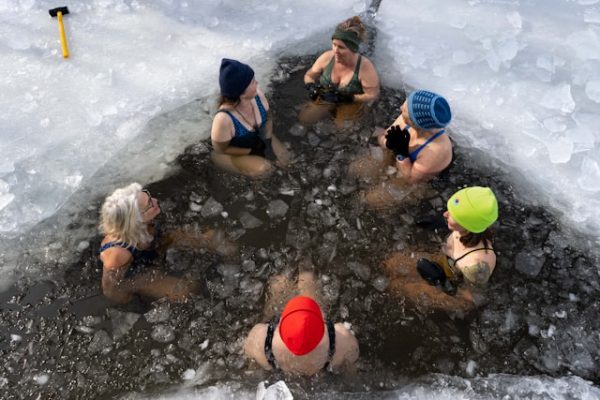
What you’ve just done is called contrast therapy, and the reason it’s so effective is that the cold drops your core temperature even further and faster than either the sauna or the cold on their own ever could. That’s the signal your body needs, that’s the hormetic stress that really activates the brown fat.
This Is Where the Magic Happens
When you get out of the cold water, try to resist the urge to immediately grab a towel, jump in a hot shower or pile on your clothes. Give yourself 5 to 10 minutes to just let your body warm itself back up naturally. This is the moment your brown fat earns its keep.
To bring your temperature back up, it starts burning whatever fuel is available: stored fats, sugars, proteins, and the process it uses to do that is remarkably similar to what happens during fasting. Your body is essentially dipping into its own reserves and recycling things it doesn’t need, clearing out old or damaged material as it goes. If you already fast or are interested in fasting, contrast therapy sits alongside it beautifully and seems to bring a lot of the same benefits.

Photo by Artem Maltsev on Unsplash
Why Should I use Contrast Therapy?
A third way to detox – sweating pulls heavy metals and other stubborn compounds out through the skin, taking pressure off the liver and kidneys and short-circuiting that reabsorption loop we talked about.
Better mitochondria – the cold stress prompts your body to build more mitochondria and make the ones you have work more efficiently. More mitochondria means more energy, slower ageing at a cellular level, and greater resilience generally.
Cellular housekeeping – the process of your body burning its own reserves to warm up triggers something called autophagy, which is essentially your cells clearing out the old and damaged material that accumulates over time. It’s one of the main reasons fasting is so good for you, and contrast therapy seems to get you a good chunk of those benefits without the hunger.

Photo by Artem Maltsev on Unsplash
A more active metabolism – regular brown fat activation genuinely raises your resting metabolic rate, improves how your body handles blood sugar, and over time can help reduce the kind of fat that builds up around the organs. On top of all that, the cold triggers a release of norepinephrine and dopamine, so most people come out of a session feeling genuinely great: focused, calm, and energised.
Reduced Inflammation – Contrast therapy has been shown to significantly reduce inflammatory markers, with a 2021 study in the Journal of Physiology finding that cold water immersion measurably lowered CRP (the key blood marker for systemic inflammation) compared to passive recovery.
Got Questions?
Main – Photo by Glib Albovsky on Unsplash
About the Author: Nick Walton-Cole (NA. Dip)