
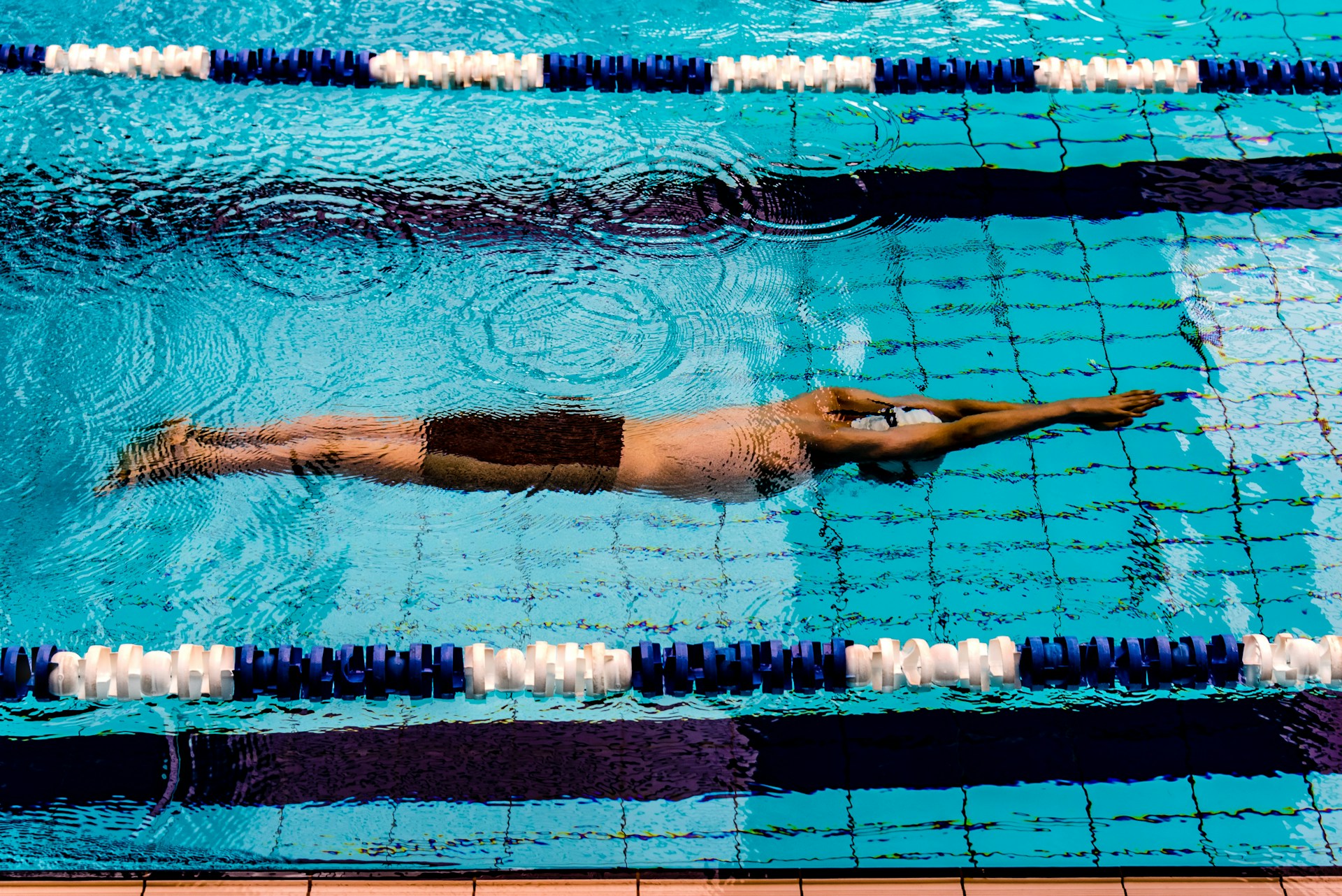
I once met a Buddhist monk named Karma at a retreat a friend arranged. I met him at the nearby train station to go pick him up, I hadn’t met him before, but he wasn’t particularly hard to spot in his monk’s shroud, standing in arrivals smiling. We drove back mostly in silence, which felt appropriate at the time, trying to think of a good opening line for a monk.
Karma gave a presentation that day on how to meditate. The main premise was that you needed a centering thought to bring your focus back whenever your mind wandered off chasing something else. Karma used a tree as his centering thought, and asked everyone in the room to picture the same tree whenever their thoughts drifted, in slow, deliberate detail until I could genuinely picture the thing. Bark texture, leaves and birds, it was an old chestnut, half dead and half alive. The tree was so vivid and still is, with no story attached, no memory to get tangled in, just a shape to rest on.
I really enjoyed that day with Karma, and only recently have I found myself circling back to it , specifically, thinking about the centering of our thoughts and how that translates into sport. I’m currently training for an Ironman, and the weakest of my three events, by a long chalk, is swimming. So I’ve been in the pool every day, consistently, in a way I’ve never managed to before.
Often by my 6pm swim my head is completely filled with the debris of the day of emails, a conversation that didn’t land right, some low frequency admin I haven’t done yet and that’s usually when the stress actually builds, not during the busy part of the day itself but in the gap right after it, when there’s nothing left to distract from it. In the past, my go to for that particular hour was a glass of wine. And to be fair to the wine, it works. It’s just not really solving anything, just anaesthetising.
What I’ve found instead is that swimming leaves me in almost exactly the same post-meditative state I was in after sitting with Karma’s tree. Not immediately, the first ten minutes in the pool are usually just as noisy as the rest of the day, thoughts sloshing around with nowhere to go. But somewhere around lap fifteen or twenty, something clicks over, and I come out the other end of a session in a state that’s noticeably quieter than the one I went in with.
The practice of swimming, it turns out, is barely distinguishable from the description of meditation Karma gave us that day. You’re controlling your breath. You’re focusing on the next pull, and then the next one, and that’s it , there isn’t room for much else if you’re doing it properly. You’re giving your brain the chance to decouple from your thoughts, to let them float somewhere just out of reach for a while, so your subconscious can go about quietly sorting the library of the day into some semblance of order without you standing over its shoulder micromanaging the filing system.
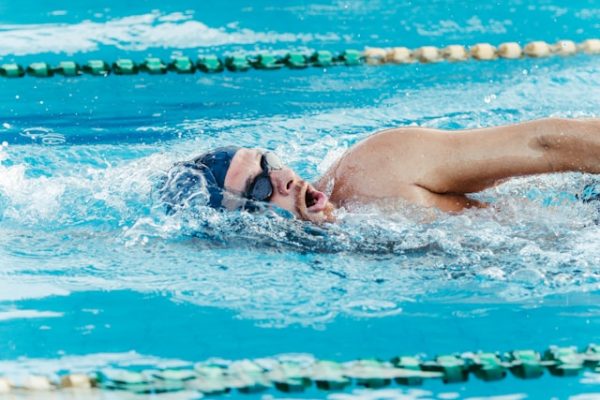
Photo by Jonathan Borba on Unsplash
Drills Make Skills
Similar to meditation, swimming increases Brain-Derived Neurotrophic Factor (BDNF), if you want the science of that, which I didn’t know until I went down a rabbit hole trying to figure out why I felt so specifically clear-headed after a session, rather than just tired. BDNF encourages new connections between brain cells, and increases neuroplasticity, which is really just the brain’s word for flexibility – its ability to form new pathways using those connections, linking thoughts and memory together in ways they weren’t linked before. This is unconscious learning, you are processing it, lap by lap, and learning from it in a way that doesn’t ask anything of your conscious attention at all.
What’s strange is how much this resembles what Karma described meditation doing, just from a completely different entry point. He was getting people there through stillness sit down, breathe, return to the tree. Swimming gets you there through repetition and motion, through a kind of forced simplicity where there’s genuinely nothing else you can be doing with your attention except the stroke count and the wall coming up. Different route, same destination, and maybe that’s the more interesting point buried in all this, that the state itself doesn’t care how you arrive at it. Stillness and motion both seem to lead somewhere similar, provided you’ve got a centering thought, or a tree, or a lap count, to keep pulling you back whenever your attention tries to wander off and react to something from three hours ago, rather than give your mind the chance to pause and respond.
I don’t know if Karma would recognise a chlorinated 25-metre pool as a legitimate substitute for what he was teaching that day. But one month into Ironman training, with swimming still stubbornly my weakest discipline, it’s turned into the one part of training I never dread doing, partly because I know I need the reps, and partly, I think, because some part of me has quietly started treating the pool the way Karma treated his tree.
Main – Photo by Richard R. Schünemann on Unsplash
About the Author: Nick Walton-Cole (NA. Dip)