
Lets tap directly into something almost every parent is worried about today.
Unlike previous generations, today’s children are growing up in a world of constant stimulation, increasing anxiety, reduced independence, social pressures, digital distractions and in some cases, a reluctance to take risks.
The thing about creating calm, confident swimmers in an anxious world is that it isn’t necessarily about swimming.
Swimming becomes the vehicle through which children learn confidence, emotional regulation, resilience and self belief.
Lets focus this around one powerful idea…
The idea that the swimming pool may be one of the last places where children can disconnect from the noise of modern life and reconnect with themselves.
Today’s children face different challenges.
Children today are growing up in a very different world from the one many parents experienced.
Their lives are increasingly structured, supervised and technology driven.
Many children spend less time exploring independently, less time taking physical risks and less time learning through trial and error.
At the same time, anxiety among young people has become a growing concern, children are often exposed to pressures that previous generations simply didn’t face.
This doesn’t mean children are less capable, it means they often have fewer opportunities to develop confidence through real world experiences.
Swimming can help fill that gap.
Water provides healthy challenge.
One of the reasons swimming is so powerful is that it presents children with a challenge they cannot simply scroll past, avoid or shortcut.
Water demands engagement, it asks children to trust themselves, to solve problems, to overcome uncertainty.
The wonderful thing is that children quickly discover they are capable of much more than they first imagined and every small achievement becomes evidence that they can overcome challenges.
Confidence is built, not given.
Many parents want confident children but confidence cannot be handed to a child.
It must be earned through experience.
It might only be the little things like every time a child puts their face in the water, lets go of the wall, floats independently, jumps in or swims that little bit further.
They are collecting evidence and proving to themselves that they can cope.
Real confidence is simply a collection of successful experiences and swimming provides hundreds of these opportunities.
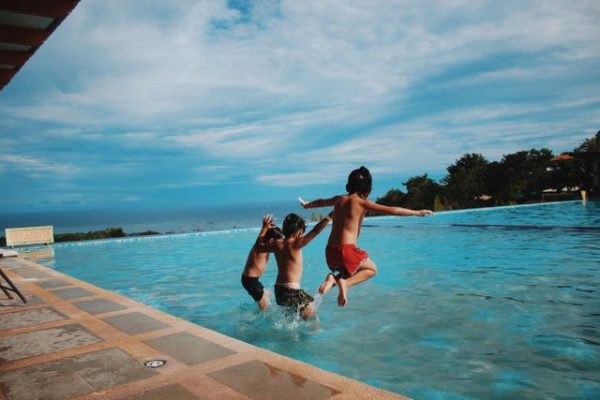
Photo by MarcTutorials
Calm comes before confidence.
This is a powerful psychological point.
Many adults focus on confidence first but In reality, children often need calm before they can become confident.
When children feel safe, supported and understood, their nervous system relaxes.
Once they are calm, they become more willing to explore and exploration leads to success, success creates confidence.
A child who feels emotionally safe will almost always learn more effectively than a child who feels pressured.
Why emotional safety matters.
One of the biggest lessons modern psychology has taught us is that learning and emotions are vey much connected.
Children who feel judged, rushed or overwhelmed often focus on avoiding failure.
Children who feel encouraged and supported focus on learning.
The best swimming lessons create an environment where mistakes are not something to fear, they are simply part of the process.
This mind set helps children not only in the pool but throughout life.
The role of independence.
Modern life often limits opportunities for children to develop independence, swimming naturally encourages it.
At some point every swimmer must learn to trust their own judgement, movement and ability.
When children discover they can solve problems themselves, they experience a powerful shift in self belief…. they stop asking can I do it but start thinking I can do it.
Swimming as a form of mindfulness.
Swimming requires presence…. to be in the moment.
Children cannot worry about homework, social media or tomorrow’s challenges while concentrating on floating, breathing and moving through water.
Water naturally draws attention to the job at hand.
Many adults describe swimming as calming and therapeutic and children often experience similar benefits.
The pool can become a place where they feel free from outside pressures.
Play Is more important than ever.
In a world increasingly focused on performance, targets and outcomes, children still learn best through play.
Play encourages creativity, problem solving, experimentation, confidence and joy.
When children laugh, explore and enjoy themselves, they often learn faster and retain skills longer.
Fun is not the opposite of learning, it is often the pathway to learning.
A Place for SwimFin
Over the years I have seen how small changes can have a significant impact on a child’s confidence.
Sometimes it is a teacher’s encouragement or a carefully structured activity or even the right teaching aid.
The development of SwimFin was driven by a simple idea, helping children feel secure enough to explore independently.
What became clear was that the greatest benefit was often psychological… when children feel more confident they became more willing to experiment, learn and enjoy the experience.
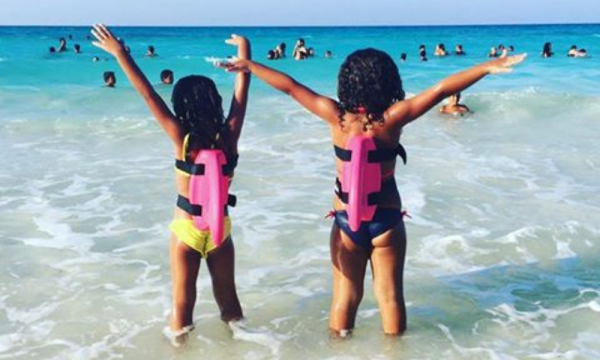
Image by SwimFin
Lets finish with a broader wellbeing perspective…
Perhaps one of the greatest gifts we can give children is not the ability to swim itself but the confidence that comes from overcoming something they once thought they couldn’t do.
In an increasingly anxious world, swimming provides something many children desperately need, a safe environment to face challenges, build resilience and discover their own capabilities.
The result is often far more than a confident swimmer, it is a calmer, stronger and more confident young person.
Main – Photo by Volker Thimm
About the Author: Kev Moseley