
by Barbara Panetta
Appearance & Self-Confidence
Children do not begin life with a definition of beauty. They discover it through what catches their eye: the colours of flowers, the shapes and patterns they notice, and the faces they see around them. As they grow, however, they begin to look beyond what catches their eye and develop their understanding of what it means to be “beautiful”.
Childhood is where our first sense of ourselves begins and this is where we, as adults, have a role to play because
Children learn by observing us
Psychology reminds us that children learn through observation. They learn what to notice through what we praise, what we compare, the words we use, and the importance we give to appearance.
Little by little, these messages can shape how children understand beauty, and how they see themselves.
Children notice much more than we sometimes realise
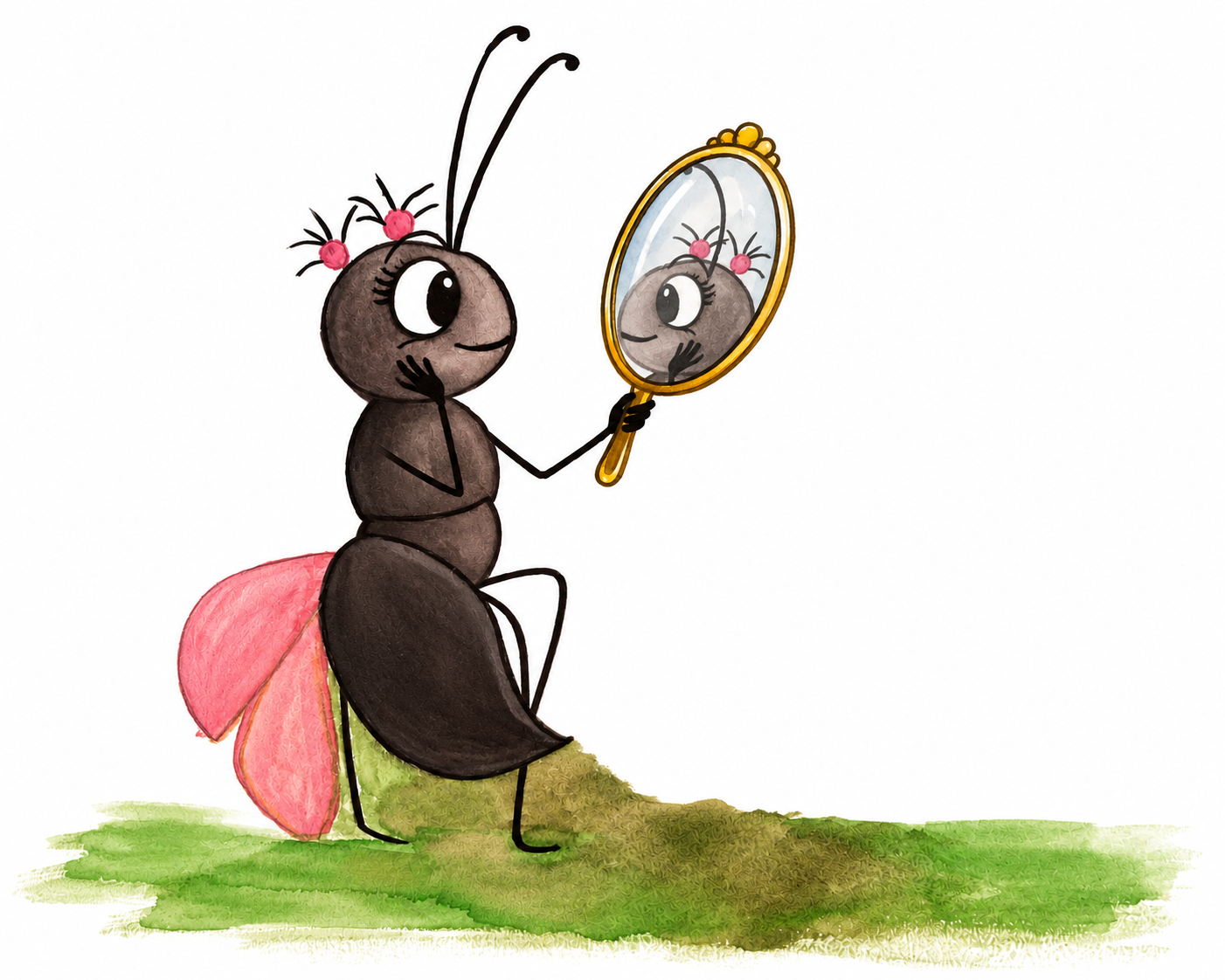
In my children’s books of Ant Chloe, I explore a simple but powerful idea:
How our understanding of beauty can shape how we see ourselves
Ant Chloe is a little black ant, very different from the colourful butterflies we often associate with beauty. Her story invites a simple question: How do we learn what we see as beautiful?
Beauty Is More Than Perfection
It is about feeling comfortable and confident in the way we look, while recognising that our appearance is only one part of what makes us who we are. Perhaps we can help children grow with a broader understanding of beauty.
Our face is often our introduction to the world, and our skin is an important part of that first impression. As children become more aware of their appearance, changes in their skin can sometimes affect how they see themselves and how comfortable they feel in their own skin.
As Domenico Piccolo, President of the Italian Association of Ambulatory Dermatologists (AIDA), explains:
“Caring for the skin also means recognising the person behind it. The way we speak to children about skin, appearance and beauty matters from an early age. Healthy skin does not mean perfect skin, and a skin condition or visible difference does not make a child less worthy.”
Beauty is not about having a perfect appearance
“A spot, scar, birthmark or skin condition does not define a child. Helping children feel comfortable in their own skin matters.”
For Dr. Piccolo, caring for young patients means recognising this connection between skin, appearance and self-perception. The goal is to have healthy skin, while our role is to help children develop a healthy relationship with their appearance; with their face, their skin, and ultimately, with themselves.
The stories we share with children matter more than we may realise. They stay with them and help shape how they see themselves and the world around them.
Ant Chloe encourages children to see appearance as one part of who they are, not something that defines their worth.
“Through Ant Chloe, I hope to share a simple message: beauty is about confidence, self-acceptance, and being yourself.” Barbara Panetta
Images by Barbara Panetta
About the Author: Barbara Panetta