

I have wanted to write this for a little while now but because it is contextual learning from clients who are self healing the ruptures in their life, the stories or the moments experienced are perhaps too personalised. Hopefully, I have found an ethical way of sharing about how we might gather together all the broken aspects of our life as though collecting parts of a singular jigsaw spread across time, to have a more complete self-image.
When I am having an initial interaction with clients, I am rarely asked about my approach, theories, or practices used, but I am inclined to share an approach based on my contextual learning, both as therapist and as a client.

Photo by Pierre Bamin on Unsplash
I often explain to a client that I believe we, as people, are fragmented – that aspects of the 'self' are left behind, mostly but not entirely during our developmental years. These aspects of self, or 'mini me,' are waiting for us to reconnect with them, know them, and invite them to join our present, increasingly complete self. I use the term 'gather ourselves back to ourselves' to describe this process, so that more of us is present in the here and now to deal with our day-to-day lives.
In our interactions, especially with difficult others, it is clear that a child aspect of ourselves can come to the surface, ready to react, recoil, or perhaps bite. When clients reflect on unpleasant interactions with others, it can be helpful to ask, 'How old were you on your insides?' Clients are often readily able to name a childhood age that corresponds to how they were feeling during the interaction.
The concept of inner child work is nothing new, though I believe it is more plural these days as 'inner children'.
Whilst I have met my own inner child as part of a healing process, I recognise there are different points in my childhood where what I experienced caused emotional blockages.
It was 30 years ago now, but I remember my own therapist taking me on a visualisation journey to house, with the counsellor gently inquiring, "does it feel comfortable to approach, does it have a wall, a gate or pathway leading up to it, how many windows does it have?" I would eventually find myself at the front door, being asked if the door was new or old, whether I could see the handle, and if I felt able to reach down, open the door, and walk in. I clearly remember how I was asked if there was an upstairs, perhaps with other doors that I might like to explore. I did find one particular door that intrigued me, and I opened it to see a small boy sitting in one corner in the shadows, his knees drawn up to his chest and his arms wrapped tightly around them. I immediately knew it was myself as a child. It felt very natural to approach him/me, to lean down and offer a hand up, and then lead him out of the room. It was emotional for me to be there as an adult meeting myself as a child, bringing the empathy and compassion that was absent in those years.
When I shared with the counsellor what I had felt, seen, and acted upon, she looked surprised and said, 'This is the quickest I've known someone to find and reconnect with their inner child'. Until that moment, the term 'inner child' was alien to me.

Photo by Kid Circus on Unsplash
Since that time, I have taken these moments in a client's journey to be an indication that healing is taking place for the client, but not healing because of anything that I myself have done. Instead, the client is participating and active as the source of healing for themselves.
Twenty-four years ago, I used to work in a faith-based context, albeit a funky bar attempting to be non-conformist. I used to be one of those folks standing at the front, reading from the Bible and telling stories, attempting to make the content of ancient letters to specific people at another point in history relevant. That's not really where I'm at anymore, although there is one passage, reworked by myself, which I feel has some relevance to the defragmentation and rupture healing journey. The original is simply this: 'When I was a child, I thought like a child, I reasoned like a child, but now I am full-grown, I put childish ways behind me.' My own spin on this is sometimes shared with clients: 'When I was a child, I felt like a child. In fact, I felt everything all of the time. I experienced things no child should experience, and I carry the deficit of things that were vital for my 'becoming'. But now I am full-grown, I have emotional intelligence, the ability to step out of feeling and not be overcome with emotion. I can revisit those things I was unable to process then, from a place of greater safety.' I agree it's a bit wordy, but I really wanted to paint a picture that they are no longer the child who can only feel; they are an adult who can process, understand, feel what needs to be felt, finally engage with that which has been internalised, and allow it to be expressed and healed.
Often, that's the key component of this journey: feeling, and allowing that child self to express what they could not. The unheard becomes spoken, the invisible becomes seen. In truth, it is the client, as the adult, who is turning around and truly seeing their child self, becoming the listener and at times genuinely saying, 'I see you.' It can seem a little unnerving to allow suppressed feelings to express themselves, but I often say it is likely to be mmnneeeah, sobs, and a good amount of snot, as the fragmented aspects of self have the invitation to reconnect.
It frequently amazes me, as onlooker and as witness, to hear the encounters that clients have with themselves during a simple visit to the symbolic house, enabling self-discovery.
Each client has his or her own deeply unique & deeply personal experience of reconnection.
One client found a darkened room and pulled open the curtain, revealing a car of a specific colour. It really was simply just this: a room with a car in it, little more than that. The client spoke to their surviving parent about their childhood, only to be told that they used to take a car of that colour with them everywhere they went, an inseparable attachment object in the absence, perhaps, of secure adult figures to attach to during their formative years. Another client in their early sixties didn't know about conditions such as childhood trauma but had experienced a considerable amount of it. For them, there wasn't really much of a childhood at all, certainly not a safe one. Yet their encounter with their child self was to reach out and lead that young self out of the room, out of the house, and, as the client stated, 'then they ran off and played… as a child should'.
The concept of the inner child is only part of the healing journey, and it's possible that we may meet ourselves at several moments in our journey, with different aspects of the fragmented self waiting to have their moment and rejoin the rest of us.
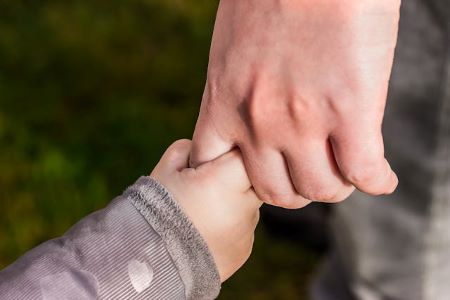
Photo by Pixabay
If you're reading this and thinking, 'Goodness me, that sounds like a nightmare if I am to rejoin all the fragmented parts of myself and specific moments of trauma,' all I can say is that we are fortunate in that memories are often representative. We are not required to visit every moment a teacher humiliated us or gave us corporal punishment. Instead, there is usually one 'specific' or 'cluster' memory that emerges, enabling us to engage with and process the related emotions to this trauma. I think our makeup as human beings is wonderful in this regard. For myself, I needed only to revisit a moment that represented rejection or criticism to be able to process that stuck 'internally labelling' moment in my life, which had led to decades of people-pleasing and self-sacrificing in search of affirmation and acceptance.
One of the hindrances to such a healing journey is the lens through which we view our pasts. Usually, we do so from a safe distance and in a way that retains our separation at an emotional level. We have multiple coping mechanisms at play to keep 'that stuff' in the past where it belongs—coping mechanisms that got us here but also perpetuate our leaving a part of ourselves stuck in the past, waiting for reconnection.
One coping mechanism we employ is intellectualising the past, visiting it cerebrally, not emotionally.
I remember being asked about where I had witnessed my parents in conflict as a child and how, as a child, I may have experienced it. The memory had become an interesting story I could disclose to people if we were talking about our childhoods. I began to tell the counsellor how my mum and dad were having a 'raised voice push and pull' physical tussle in the middle of the living room, my father's 6' tall head banging on the lampshade above. The counsellor asked how old I was, and I replied, 'probably around 12'. She asked what happened, and I began to tell how I got pepper from the kitchen and, standing taller than them atop the sofa, I began to shake the pepper onto my parents' heads. The counsellor asked, 'And why did you shake pepper on their heads?' I began, 'Well, I used to see Mum do it to the dog. If it stole food or a loaf of bread, she would put pepper on his nose to get him to release it'.

Photo by Tim Mossholder on Unsplash
The counsellor went on to explain how it's normal for people to 'intellectualise' their past experiences, to look back at them from the understanding and the experience (safe distance) of the adult we are now. She continued, 'But why was Garry, aged 12, shaking pepper on his parents' heads?' And boom, there it was, complete with snot, sobs, and tears, I replied, 'Because I didn't want my dad to kill Mum!' And so the journey back, to gather our self, or our 'mini me' back to ourselves, does have some challenges, but it's ok. You are no longer a child; you are an adult, able to give time and space for your inner child, stuck in time, to have their moment, to be seen, to be made visible, to be heard, and to have time to express what needs to be expressed so that finally, they can leave it there, processed through and completed.
It is not just a case of having an opportunity to defragment and gather ourselves back to ourselves from wherever aspects of the self have been left behind. It's also a model for 'adulting', for how to deal with more recent conflicts and things which trigger deep feelings of fear, rejection, loss, etc. It raises the question of whether, as adults, we can continue to re-fragment if we retain old coping mechanisms of detaching, burying, and compartmentalising instead of facing and processing. As I pointed out to one client recently, 'Where do you think the stuff is that you put in those compartments?'
Such a journey of reconnection can begin when our childhood coping mechanisms, carried through into adulthood, slowly begin to fail us, and we have to sit with our unconsciously avoided feelings and allow them to express themselves. It is also the case that as we do reconnect, the work is not finished because we are now in a place of greater freedom to look at the behaviours and beliefs that were adopted as a result of unfinished childhood trauma.
Often these things have made our world smaller and unsafe instead of ever-growing with exploration.
My comment to clients in this context is that you are now more likely to be the driver in your body, rather than the passenger of its unresolved trauma and related feelings.
My understanding of such things is still evolving, and I continue to have questions about inner child work. The healing of trauma and reconciling with the self that was present in those childhood experiences should mean the healing of the trauma, with the recognition that our nervous system is going to experience triggers, somewhat like muscle memory, because our whole self has remained postured, ready to self-protect. Trauma is not intended to remain an open wound, and it's my perception that our left-behind child self is not to remain there as a child where we might reference that 'my inner child is feeling triggered' when in fact it is your adult self and our conditioned nervous system's memory, which remains in ongoing recovery.
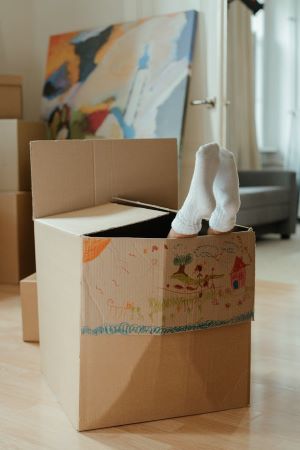
I am not especially a fan of the idea that we have small child ‘selves’ in a box, which we can bring out from time to time to explain why we are not feeling good. I much prefer the reconciling nature of our left-behind child selves being able to rejoin our adult self in the present so that we are both more complete and more present.
I believe the therapist is not the healer, they are an enabler, a host, a witness to the client healing themselves.
Main – Photo by Hans-Peter Gauster on Unsplash
About the Author: Gaz Kishere