

Something loosened in me the day I finally admitted how judgmental I’d become — about almost everyone, about almost everything. I could feel what it was doing to me on the inside, and I knew it had to stop.
That doesn’t mean I no longer believe in right and wrong. I still do. It just means I’ve made peace with a simple fact: I almost never know the full story. Everyone I pass on the street, everyone I sit across from at dinner, is carrying something I can’t see — an old wound, a private victory, a struggle they’d never mention, a hope they haven’t said out loud to anyone yet.
Jesus put it better than I ever could: “Judge not, that you be not judged.” And when a crowd was ready to stone a woman for her sins, he simply said, “Let him who is without sin cast the first stone.” I don’t read that as a religious rule anymore so much as an invitation — look at yourself before you look at everyone else.
Eastern thought gets at the same thing from a different angle. Taoism has this idea of wu wei — not forcing things, not trying to grip and control the world around you. And Buddhism keeps returning to the idea that suffering grows out of clinging — to opinions, to being right, to the little stories we build about other people. Hold a judgement tightly and it gets heavier. Hold it loosely and, somehow, everything gets lighter.
The older I get, the more I notice my own blind spots — my contradictions, my shortcomings, the sheer number of times I’ve been wrong. I’ve misread people. I’ve snapped to conclusions too fast. I’ve held opinions that quietly fell apart the moment I actually learned more. Strangely, none of that has made me feel weaker. If anything, it’s made me gentler — with other people and with myself.
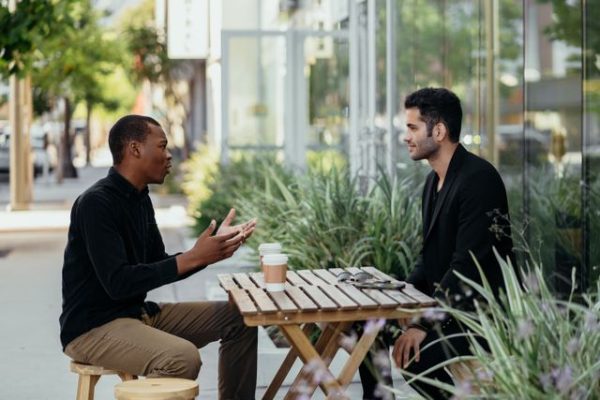
Photo by RDNE Stock project
At this point in life, I’ve got more than enough work to do on my own character to bother picking apart anyone else’s. Every minute spent replaying someone else’s flaws is a minute I could’ve spent getting a bit more patient, a bit wiser, a bit kinder.
I’ve also noticed something else: arguments rarely change anyone’s mind. If anything, they dig people in deeper. Samuel Butler said it best over three hundred years ago:
“A man convinced against his will is of the same opinion still.”
These days I care a lot less about winning an argument and a lot more about actually understanding the person in front of me. Sometimes the wisest thing you can say is nothing — just listen.
When I feel myself getting critical or defensive, I try to build in a small pause. A slow breath in. A slow breath out. Sometimes just a quiet “hmmmm.” It sounds almost silly, how something that small could interrupt an automatic reaction — but it does. That tiny gap is usually all it takes for curiosity to edge out irritation, for understanding to take the sharp edge off frustration.
Mindfulness has taught me I don’t have to believe every thought that wanders through my head. I can watch a judgement show up, smile at it even, and just let it drift on without handing it a microphone. Thoughts are like clouds — they pass, if you don’t grab hold of them.

Photo by Petr Ganaj
None of us is finished. We’re all still learning, most of it in ways nobody else can see. Once you really believe that, compassion starts to feel like far better company than certainty ever did.
So I’ve stopped trying to become a better judge of people. I’d rather be a better student of life — a little slower to react, a little quicker to forgive and a lot more curious about the people around me.
The peace I was chasing was never going to arrive by waiting for other people to change. It showed up when I changed the quality of my own attention. The more I practise humility, compassion and a bit of restraint, the lighter everything feels.
If I could pass on one daily habit, it’d be this: pause before you judge. Breathe. Smile if you can manage it. Meet people with curiosity instead of certainty, with compassion instead of criticism.
And above all — try to be a little less judgemental of yourself. That’s usually where the real kindness has to start.
Main – Photo by Zoë Gayah Jonker on Unsplash
About the Author: Steve Consalvez