Is EMS the Future of Fitness?
We all know what going to the gym involves. Or at least, we think we do.
The familiar routine of changing into gym kit, warming up, lifting weights, pushing through increasingly challenging exercises and emerging an hour or so later feeling as though you’ve earned your shower. It’s a tried-and-tested approach, but it isn’t necessarily for everyone.
So, what if there was another way to work your muscles, build strength and improve fitness without spending hours lifting increasingly heavy weights or pushing yourself to the point of exhaustion?
Enter EMS: Electrical Muscle Stimulation.
Sounds a little intimidating? My colleagues certainly thought so. There was enough curiosity, uncertainty and perhaps a little scepticism in the office that somebody had to volunteer to give it a go.
Well, I was volunteered. Or perhaps more accurately, volun-told.
And I’m rather glad I was!
So, what exactly is EMS?
Electrical Muscle Stimulation (EMS) is a training technique that uses controlled electrical impulses to stimulate muscle contractions.
While the technology has been used in various forms for years, it is increasingly finding its way into the fitness world as an alternative approach to conventional resistance training.
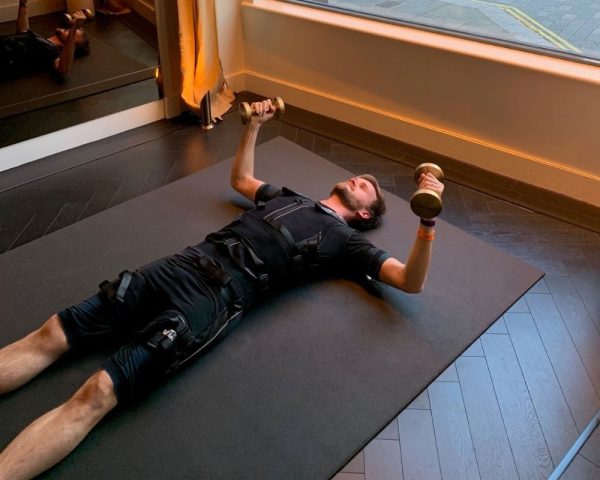
The idea is relatively straightforward. You wear a specially designed suit fitted with electrodes positioned over major muscle groups. These deliver electrical impulses, stimulating muscle contractions while you perform a series of exercises under the guidance of a personal trainer.
The result is a workout that combines your own physical movements with additional muscle stimulation.
It sounds complicated, but the experience is surprisingly accessible.
My introduction to E-Pulsive
My introduction to this rather different approach to fitness was at E-Pulsive, a specialist EMS personal training studio in London’s Belgravia.
Walking into the studio, I immediately noticed that this wasn’t your conventional gym.
Forget rows of treadmills, racks of weights and people competing for space around the machines. The environment is much more intimate, designed around individual training sessions and a personalised experience.
The styling is sleek, modern and welcoming. It feels considered and rather stylish, with an atmosphere that makes you feel you’re about to experience something a little different.
There is something quite appealing about having a dedicated space and a personal trainer focused entirely on your session.
It feels less like walking into a traditional gym and more like stepping into a glimpse of what the next generation of fitness studios might look like.
Getting suited up
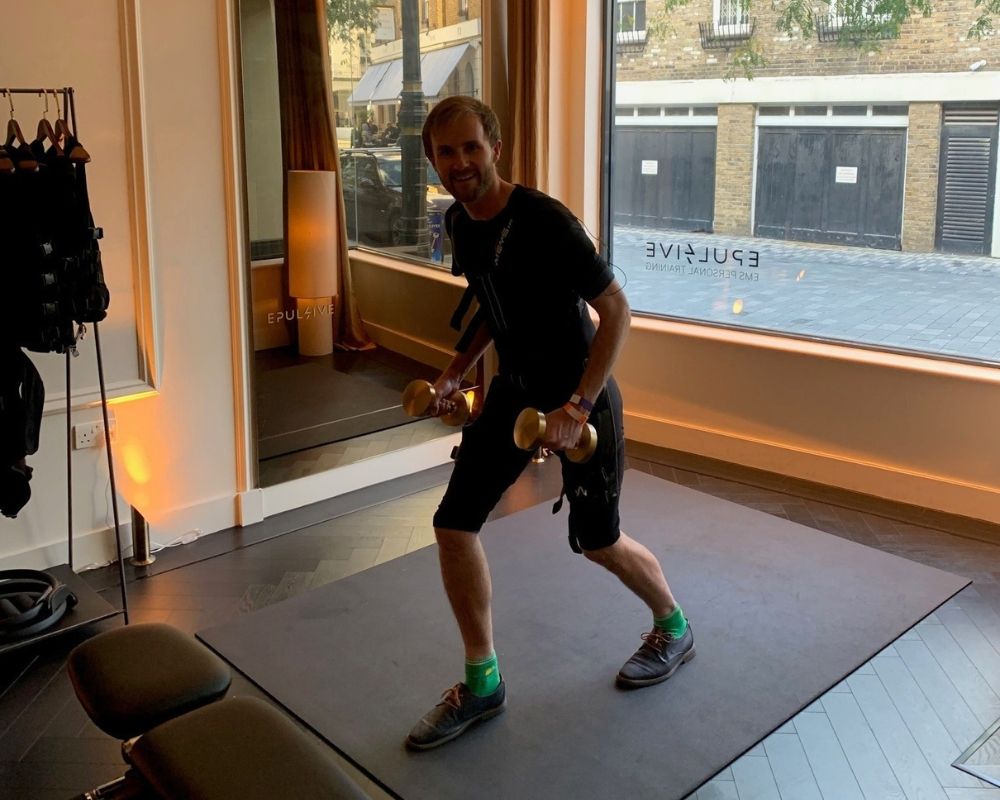
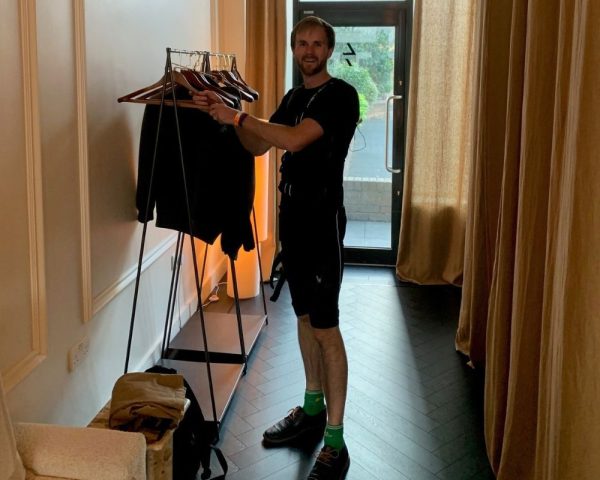
Before the workout could begin, there was the small matter of getting into the EMS suit.
The best way I can describe it is rather like putting on a short-sleeved wetsuit. It’s fitted fairly closely to the body, with additional straps and connections to accommodate the electrical stimulation equipment.
There are wires involved, naturally, but nothing particularly complicated or uncomfortable.
Once everything is in place, the trainer checks the positioning and begins adjusting the stimulation levels.
And then things get interesting!
What does it actually feel like?
This was probably the part I was most curious about.
If you’re imagining something resembling an electric shock, put that thought to one side. The sensation is much more controlled than that.
Think of one of those massage chairs that gently works its way across your back, producing that slightly unusual tingling sensation. Now imagine turning the intensity up a notch or two, spreading that sensation across much more of your body.
That’s probably the closest comparison I can offer.
As the session progresses, you feel a buzzing, tingling and contracting sensation across different muscle groups. Your muscles are being stimulated while you perform movements and exercises that might otherwise feel relatively straightforward.
The intensity can be adjusted by the personal trainer, who controls the stimulation levels and tailors them to your comfort and ability.
This is an important part of the experience. It isn’t about simply turning everything up to maximum and hoping for the best. The trainer guides you through the process, making adjustments as necessary to keep the session challenging but manageable.
What surprised me most was the feeling afterwards.
I had the distinct impression that my muscles had been worked and that I’d completed a proper exercise session, but without the feeling of complete exhaustion that can sometimes accompany a conventional gym workout.
That’s not to say it isn’t exercise, or that you won’t feel the effects. It’s simply a different approach.
A full-body workout in just 20 minutes?
One of the most interesting aspects of the E-Pulsive approach is the time involved.
The active EMS workout lasts just 20 minutes.
During that time, electrical stimulation is applied across multiple major muscle groups while you work through a series of controlled exercises.
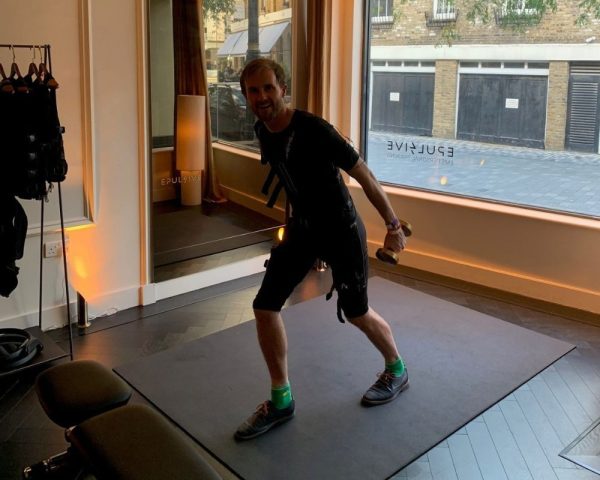
Rather than needing an entire gym’s worth of equipment, the session I experienced involved relatively simple movements and just one set of weights.
Squats, basic resistance exercises and controlled movements suddenly take on a different dimension when your muscles are also receiving electrical stimulation.
E-Pulsive describes its approach as a time-efficient alternative to traditional gym training, particularly suited to people with busy lifestyles.
Of course, a 20-minute EMS session isn’t automatically a complete substitute for all the benefits of a longer exercise programme. Cardiovascular fitness, mobility and general physical activity still have their place.
But for someone struggling to fit conventional gym sessions into an already busy schedule, the concept is certainly worth investigating.
Personal training with a difference
Another thing I liked about the experience was the level of personal attention.
Before starting, E-Pulsive takes clients through an initial consultation to understand their lifestyle, fitness goals and any injuries or medical considerations.
The trainer then uses this information to help shape the session and adjust the stimulation levels.
This makes a difference, particularly if you’re new to EMS and aren’t quite sure what to expect.
There is also the convenience factor. E-Pulsive offers both studio-based training in Belgravia and at-home sessions, where the equipment and trainer come to you.
It’s an interesting proposition for busy professionals who want a more structured, personalised approach to exercise without necessarily having to travel to a gym.
Is it really the future of fitness?
It’s tempting to get carried away with something new, particularly when the experience is as different as this.
But EMS isn’t magic, and it shouldn’t necessarily be viewed as a complete replacement for conventional exercise.
The benefits will depend on the individual, the quality of the training, the intensity of the sessions and, importantly, consistency.
It also isn’t a shortcut that removes the need for physical effort. You’re still actively exercising, moving your body and engaging your muscles.
What it does offer is another option for people who might find traditional gym routines difficult to fit into their schedules, who prefer a more personalised approach, or who are simply interested in trying something different.
As with any exercise programme, it’s worth discussing suitability with a qualified trainer, particularly if you have any medical conditions or relevant health concerns. EMS sessions should be properly supervised, with stimulation levels introduced gradually.
Would I go back?
Absolutely.
I went into the experience with curiosity, a little uncertainty and perhaps a degree of scepticism. I came away pleasantly surprised.
The sensation was unusual but not unpleasant, the session was engaging, and the whole experience felt quite different from what most of us traditionally associate with going to the gym.
I particularly liked the combination of personal attention, relatively simple exercises and the feeling that my muscles had genuinely been put to work without leaving me completely drained.
And there’s one other thing I’d be interested in exploring.
I’d quite like to take my wife along and compare notes. After all, it’s one thing for me to describe the experience, but it would be interesting to see how somebody else responds to the same technology and training approach.
Perhaps that’s the real appeal of something like EMS. It challenges our assumptions about what exercise has to look and feel like.
Is it going to replace the gym? Probably not for everyone.
Is it worth investigating if you’re curious about alternative ways to exercise? I would certainly say so.
Sometimes, the best way to understand a new approach to fitness is to put the theory aside, pull on the rather unusual-looking suit and give it a try.
And that’s exactly what I did.
E-Pulsive offers introductory EMS training sessions at its Belgravia studio, as well as at-home training options.
Images by Andrew Slater
About the Author: Andrew Slater