
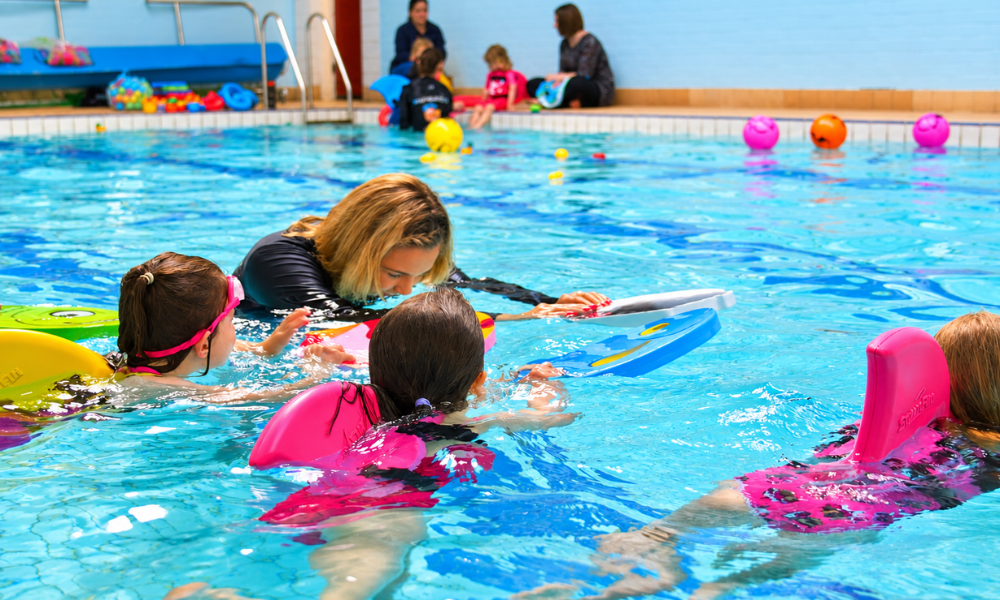
When I first started teaching children to swim back in the 1980s, the approach was relatively straightforward.
We taught children the basic skills, encouraged them to practise, corrected their mistakes and worked towards getting them swimming independently.
And to be fair, much of that approach worked, millions of children have learned to swim through traditional teaching methods and there are some wonderful swimming teachers doing an incredible job.
But times have changed and so has our understanding of how children learn.
Having spent much of my working life involved in swimming education, I’ve often asked myself a simple question…..
Are we teaching children to swim in the way that works best for them or are we sometimes expecting children to learn in the way that suits the teaching programme?
It’s an interesting question, particularly when we consider how much we now understand about child development, psychology, confidence and emotional wellbeing.
For me, one of the most important things we should be putting at the heart of swimming education is confidence.
Not confidence as something children achieve once they’ve learned to swim but confidence as something that helps them learn in the first place.
Think about it from a child’s perspective.
Imagine being introduced to an environment where you cannot move as you normally would, where your balance feels unfamiliar, where breathing requires more thought and where, perhaps most importantly, you are not entirely sure what will happen if you lose control.
For some children, this is exciting, for others, it can be quite frightening.
And yet we sometimes expect both children to progress through exactly the same programme, at roughly the same pace, achieving the same milestones.
But children don’t all think, feel or learn in the same way.
Some are naturally adventurous, others are cautious.
Some need to watch and understand before they participate, while others are happy to jump straight in.
Neither approach is right or wrong. It’s simply how children develop.
This is where I believe swimming education has an opportunity to think differently.
Rather than concentrating entirely on what we want children to achieve, perhaps we should spend more time understanding how they feel while they’re learning.
A child who feels safe, relaxed and supported is generally more willing to explore, experiment and try something new.
A child who feels frightened or pressured may be more concerned about avoiding an uncomfortable experience than learning a new skill.
The difference can be enormous.
One of the things I’ve learned over the years is that confidence doesn’t always come from being told you’re doing well.
Sometimes the most powerful confidence comes from discovering something for yourself.
I remember countless occasions when children have surprised themselves by achieving something they hadn’t previously thought possible.
It might be floating without someone holding them, discovering how to change their body position, moving through the water independently or simply finding their feet again after losing balance.
To an adult, these may seem like relatively small achievements.
To a child, they can be life-changing moments.
There’s something very special about watching a child realise, without anyone needing to tell them, that they’ve just achieved something for themselves.
That sense of achievement creates self-belief and self-belief encourages them to try again.
This is why I have always been interested in the relationship between physical support and psychological independence.
Swimming aids, for example, have traditionally been associated with keeping children afloat. And while buoyancy support can be useful, I believe we should be asking a much bigger question….
Does the equipment simply support the child, or does it also help the child learn?
There is a difference.
When I developed SwimFin, I wanted to explore that very idea.
Could a teaching aid provide support while leaving children free to move their arms and legs, experiment with balance, explore different body positions and gradually discover their own capabilities?
The shark-fin design also introduced something I hadn’t underestimated, but which became increasingly apparent through experience and that’s the importance of imagination and enjoyment.
Children often see something very different from what adults see.
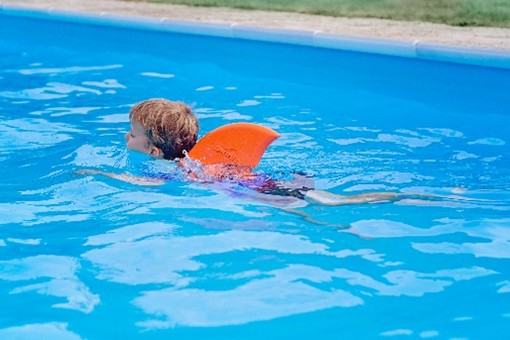
An adult sees a swimming aid, a child sees a shark fin, an adventure, a game or an opportunity to become something exciting.
That playful connection can help change how a child approaches the water….. psychology.
Of course, no swimming aid can replace good teaching, appropriate supervision or the development of genuine swimming and water safety skills but thoughtfully designed equipment, used correctly, can become part of a much wider learning experience.
And that experience should encourage children to become less dependent on support as their skills develop, not more dependent on it.
Another area I believe deserves greater attention is how we measure progress.
Swimming programmes quite rightly need structure.
Teachers need objectives, parents need to understand how their children are progressing and children benefit from having goals.
But should progress always be measured by distance, technique or how quickly a child achieves the next certificate?
What about the child who was terrified of putting their face in the water but now happily blows bubbles?
Or the child who wouldn’t leave the poolside but now confidently explores a little further?
Or the child who previously needed constant reassurance but is beginning to make decisions independently?
These are significant achievements, even if they don’t always fit neatly into a traditional assessment system.
They deserve just as much recognition.
Praise and encouragement can have an extraordinary influence on children, particularly when we recognise effort, curiosity and perseverance rather than simply rewarding the finished result.
Sometimes a smile, a few encouraging words or acknowledging something a child has discovered can make all the difference.
We should also remember that learning isn’t always a straight line.
Children have good days and difficult days. They may confidently perform a skill one week and hesitate the next. That doesn’t necessarily mean they’ve gone backwards.
Confidence can fluctuate, particularly when children are faced with unfamiliar challenges.
A good teacher recognises this and understands when to encourage, when to adapt and when to give a child a little more time.
I also believe we sometimes underestimate the importance of play.
Swimming lessons don’t have to feel like lessons every minute.
Children learn an enormous amount through imagination, games, exploration and simply enjoying being in the water.
They’re developing coordination, balance, spatial awareness, problem-solving skills and confidence, often without realising they’re learning at all.
That doesn’t mean abandoning structure or technical instruction, it means finding a healthier balance between teaching children what to do and giving them opportunities to discover what they can do.
Of course, water safety must always remain a priority.
Confidence alone does not make a child water safe and feeling comfortable in water is not the same as being able to manage its dangers.
Children still need to develop essential swimming skills, understand their limitations and learn how to respond appropriately in different aquatic environments.
But I believe confidence and safety should develop together.
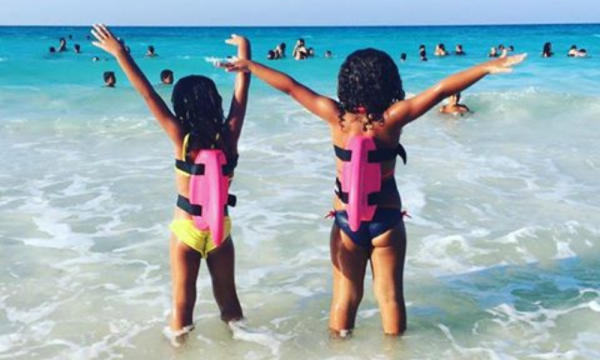
When children feel supported enough to explore safely, they can begin to understand their own movement, recognise their abilities and develop practical skills alongside a healthy respect for water.
Ultimately, putting confidence first isn’t about lowering standards, removing challenges or allowing children to do whatever they please.
It’s about recognising that how children learn is just as important as what they learn.
It’s about creating an environment where children feel comfortable asking questions, making mistakes, trying again and celebrating their own progress.
And perhaps most importantly, it’s about remembering that every child is an individual.
After all these years, I still find it fascinating that something as simple as learning to swim can teach children so much about themselves.
They learn to trust, to explore, to persevere and to overcome uncertainty, they discover things which once seemed impossible can gradually become possible.
Those lessons extend well beyond the swimming pool.
Perhaps the future of swimming education isn’t about finding ways to teach children faster.
Perhaps it’s about finding new, better ways to help them learn, this is where SwimFin fits right in.
Because when we put confidence first, we’re not simply developing better swimmers, we’re helping children develop the independence, resilience and self belief to enjoy the water and the opportunities it offers, for the rest of their lives.
All images by SwimFin
About the Author: Kev Moseley