

How Digestive Health Drives Conditions Like Eczema & Acne
Skin health is often approached only on the surface. Creams, lotions and prescription treatments all have their place, yet for many people the real breakthrough comes when they start looking in a different direction; towards the gut. A growing body of research and clinical experience suggests that, for some, the secret to calmer, clearer skin starts with supporting digestive health.
This does not mean every flare of eczema or acne is “caused” by the gut. Skin conditions are complex and influenced by genetics, hormones, stress and environment. What it does mean is that for many, the gut is an important part of the jigsaw, and one that is often overlooked.
What is The Gut-Skin Axis
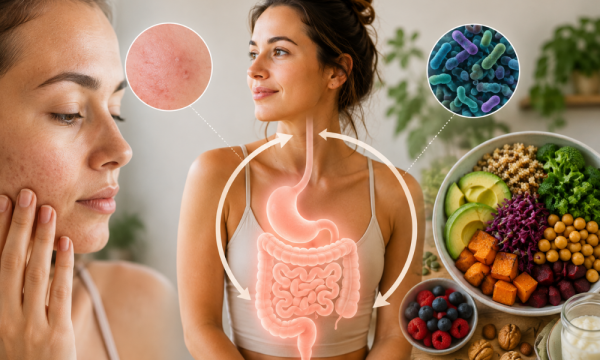
The gut-skin axis is the term used to describe the two-way relationship between digestive health and the condition of the skin. It recognises that what happens in the digestive tract can influence inflammation, immune responses and even the balance of bacteria on the skin surface.
The gut is home to trillions of bacteria and other microbes. Together they are sometimes called the gut microbiome. When this inner ecosystem is diverse and balanced, it helps support digestion, immunity and a healthy barrier function in the gut lining. When it is under pressure, the ripple effects can be felt elsewhere in the body, including the skin.
How Digestion Can Influence Eczema & Acne
In eczema and acne, inflammation is a key driver. The gut can influence this in several ways. For some people, certain foods may aggravate the immune system and contribute to skin flare ups. For others, chronic constipation, loose stools or ongoing bloating are clues that digestion is under strain.
When the gut lining is irritated or imbalanced, the body may be more prone to low grade inflammation. This can act like a background “noise” that makes eczema patches more reactive or acne lesions slower to heal. People sometimes notice that skin worsens after a stomach bug, a course of antibiotics or a period of eating in a way that does not suit them.
Why Creams are Not Always Enough
Topical treatments can be invaluable. They soothe, hydrate and protect the skin barrier. However, if new blemishes continue to appear, or eczema repeatedly flares despite careful skincare, it can be helpful to ask a different question. Instead of “what else can I put on my skin” it may be “what is my body trying to tell me from the inside”.
This does not mean abandoning medical treatment. Rather, it suggests a more holistic perspective. For some, addressing underlying digestive discomfort, food triggers or stress patterns can make topical care more effective, because the skin is no longer fighting the same level of internal stress.
Everyday Signs Your Gut May be Involved
Although only a qualified professional can help you make sense of persistent symptoms, certain everyday patterns can hint that the gut might be playing a role in skin health.
People often report:
- Frequent bloating, especially after meals.
- Alternating constipation and loose stools.
- A feeling of heaviness or sluggishness after eating.
- Heartburn, burping or a sense that food “sits” in the stomach.
- Skin flare ups that follow stomach upsets or periods of eating in a way that feels less nourishing.
On their own, these signs do not prove a link. They are simply gentle prompts to be curious about whether supporting digestion could also be beneficial for the skin.
Gentle, Practical Steps to Support Gut & Skin
The good news is that many first steps are simple, kind and accessible. They are not about perfection, strict rules or cutting out whole food groups without guidance. Instead, they focus on making life easier for your digestion so that your body can do more of its own balancing work.
Slow Down & Chew Well
Digestion starts long before food reaches the stomach. Taking a moment to sit down, breathe and chew thoroughly can make a surprising difference. When you eat in a rush or while distracted, your body has less chance to release the digestive juices that break food down. This can leave you feeling bloated and uncomfortable.
Try giving yourself a short, screen-free pause at mealtimes. Put cutlery down between mouthfuls and notice the flavours and textures. It sounds simple, yet for some people this alone reduces gas and fullness.
Build Meals Around Real, Varied Foods
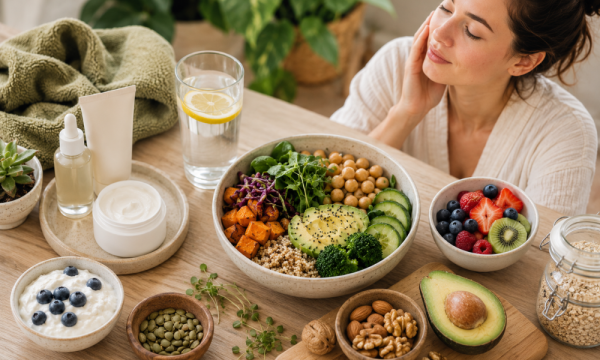
Your gut microbes thrive on variety. Including a rainbow of vegetables, fruits, whole grains, beans, nuts and seeds in your week provides the fibre and phytonutrients that support a more diverse microbiome. This, in turn, may have a positive effect on skin health.
You do not have to change everything at once. You might start by adding an extra portion of vegetables to one meal a day or swapping a highly processed snack for a piece of fruit and a handful of nuts. Small, consistent shifts can be more sustainable than dramatic overhauls.
Notice Your Personal Patterns
Everyone’s digestion and skin are unique. What triggers one person’s eczema or breakouts may be completely fine for another. Keeping a simple, non-obsessive diary for a short period can be helpful. You might make a note of:
- What you ate and drank.
- How your digestion felt.
- Any changes in your skin that day or the next.
The goal is not to police yourself but to notice trends. Perhaps you see that certain foods are always followed by itching, or that skipping meals leaves you more prone to breakouts. These insights can give you and any practitioner you work with valuable clues.
Support Your Stress Levels
The gut-skin axis does not operate in isolation. The nervous system plays a powerful role. When stress is high, digestion can slow or speed up, and skin often tells the story through increased sensitivity, redness or eruptions.
Gentle practices that help calm the nervous system can support both gut and skin. This might be as simple as a daily walk, a short breathing exercise, a regular yoga or relaxation class, or talking therapies that give you space to process what you are going through. Counselling, hypnotherapy and other mind body approaches can be particularly supportive here.
When to Seek Extra Support
Self-care has real value, yet you do not have to figure everything out alone. If eczema or acne are affecting your confidence, sleep or quality of life, or if digestive symptoms are persistent or worsening, it is wise to seek professional guidance.
Many people find it helpful to work with qualified practitioners who focus on areas such as nutrition, food intolerance testing, stress management, massage, yoga, counselling or other therapies. In some cases, complementary approaches are used by individuals as a part of a broader support plan, and some explore homeopathic treatment for eczema alongside conventional skincare as part of a holistic plan.
Working with experienced professionals allows you to explore the gut skin connection in a structured way. They can help you identify priorities, avoid unnecessary restrictions and put together a plan that respects both your physical and emotional wellbeing.
Key Takeaways
The idea that healthier skin might begin in the stomach can feel refreshing, especially if you have spent years focusing only on the surface. The gut-skin axis offers a hopeful message. By supporting digestion, calming the nervous system and seeking appropriate help when needed, you give your body the best possible conditions to heal and rebalance.
You do not need to change everything overnight. One or two gentle, realistic steps are enough to begin. Over time, these small acts of care can add up, offering benefits not just for your complexion but for your overall sense of health and vitality.
All images created using AI
About the Author: Haroon Ashraf