
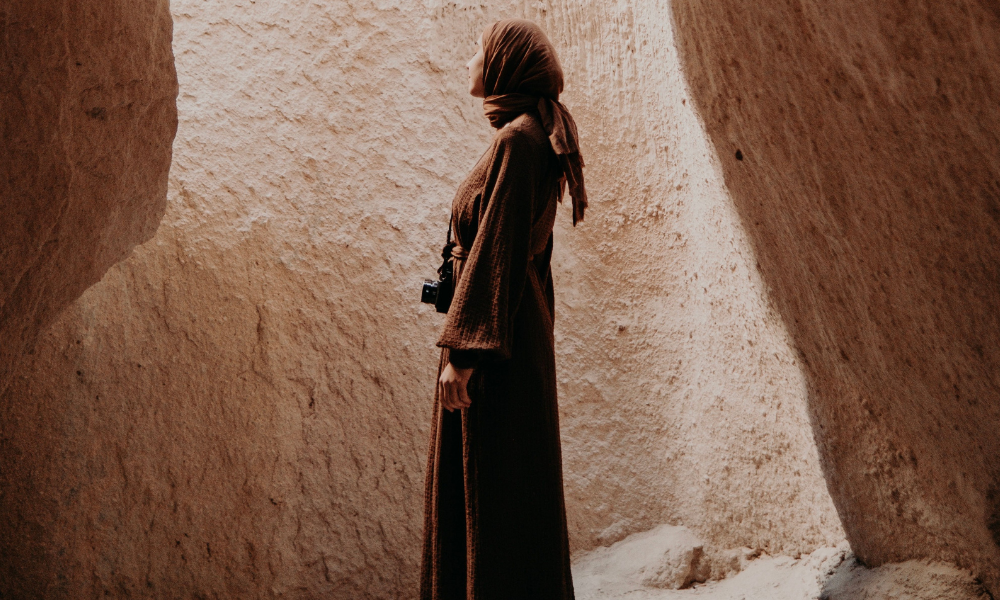
What comes to mind when you consider the word hermit?
Are you in ascetic desert hermit mode, thinking of St John the Baptist, St Anthony the Great or St Mary of Egypt?
Or are you laughing with me at the idea that so-called hermit crabs are actually sociable lobsters who sleep together in puppy piles in their colonies and communicate by rubbing body parts to chirp or click. Hermit crabs even form house group swaps to upgrade together when the largest crab finds their new home! Some even make friends with symbiotic sea anemones who live on top of their shells to both decorate and protect the crab from predators in exchange for travel to free food!

Photo by Ansel Lee
You might even stretch to the symbolism of the Tarot, where the Hermit card is usually an old man on top of a snowy mountain who steps away from the world as a seeker of truth with a lamp representing consciousness illuminating the next step on your journey.
How about retreating?
And if I bring in the word retreat, you’re either going to be a military strategist planning your next Risk move of planned retreat, or thinking about your Chess moves three to four in advance (and if you can think more than four, I want you to know that I absolutely do not play Chess!!!). if you’re a real life strategist, then I’ll leave you with your secrets!

Photo by Ebahir
Given the context of my usual articles, you may be correlating retreat with a yoga retreat, a lazy resort by the sea with gentle yoga and plenty of time for socialising and eating amazing food as part of my holiday.
I wish!
I am sad to share that it’s been a while since I went on a retreat that was focused on chilling and eating. Maybe it’s time for me to rethink my priorities…
If I were fully retired with the world at my fingertips and limitless funds, then zooming around the world to the most beautiful locations, and visiting places on my bucket list like Machu Picchu, and the Galapagos would be a no brainer. Including a few lazy yoga retreats on that, as well as meditation retreats more focused on practice would be simple. Alas. That’s not yet to be!
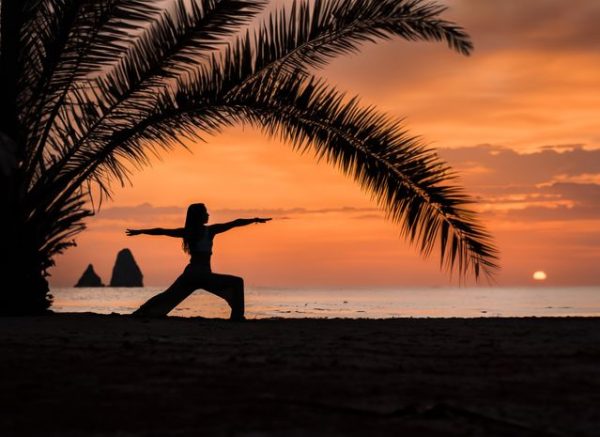
Photo by Jordi Costa Tomé
Living for today, and not tomorrow, I need to prioritise. Juggling study and work means time is a precious commodity and I need to actively manage my energy. And that’s where tradition and practice come to the fore.
The Householder Path
In my tradition, which has Vedic and yogic origins, we practice the way of the householder. The householder holds the more challenging path of living a spiritual life whist maintaining real life responsibilities including family, work and bills. This contrasts with the ascetic monastic path of withdrawal from the material world, that we most often see associated with Zen Buddhism. The householder embraces the reality of material, real world commitments and deadlines. And, whilst we may quietly devote ourselves to a committed spiritual practice, this happens behind closed doors. I mean…there’s only so much you can say about what happens when you’re sitting in meditation…right?
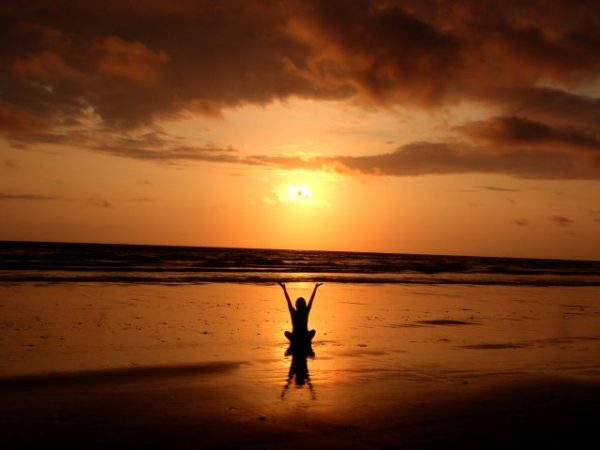
Photo by Pixabay
Havan, agni, kunds
In Vedic and yogic traditions, the kunda, the fire pit where offerings are made, represents the creative matrix of the universe. When we cast our offerings of flowers, grains, fruits, seeds and oils into the fire pit, during havans, ritual fire ceremonies, as part of external fire rituals, yajna, we are honouring our relationship with the cosmos. The kunda or kund, represents the womb of creation, and the sacred fire lit within it, agni, serves as the divine mouth that carries offerings to the universe.
The body mirrors this universal connection at the navel. The navel, or belly button, is the seat of agni, primal transformative energy. The pelvis or pelvic bowl represents the kunda. Our offerings are threefold:
- Alchemical and energetic
- Experience
- Material
Alchemical & energetic
Pranayama is practised to cultivate breath control. It combines prana, energy, breath or mind, with ayama, control or extension. We use breath control techniques to manage our energy, the subtle body of the chakras.
Bandhas, energy locks are used to coalesce energy at the navel.
The combination of pranayama and bandha activates the fire, the agni at the navel, held in the internal kunda, igniting the internal fires of transformation.
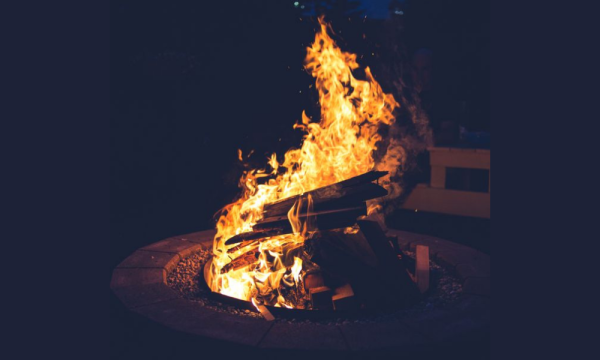
Photo by Erik Mclean
Experience
Vedics and yogis have practiced restraint as part of the eight-fold path of the Sutras because what we consume through our five senses affects the quality of our pranayama and the effectiveness of our bandhas.
We consume with our eyes and mind when we doom-scroll or worse, watch the late night news before sleep.
We consume with our heart and body when we brace our bodies each time we march into an adversarial meeting.
We consume through our nostrils when we scent the bakery smells at the entrance of supermarkets to lure us through the aisles to the mystery smells that don’t seem to correlate to the baked goods in front of us! Just as we hold our noses each time the rubbish truck wafts past.
Material
We consume food and drink as fuel to keep going, knowing that empty calories from ultra-processed foods (UPFs), and the deep reliance on caffeine to wake up the sluggish brain (guilty!) isn’t the best for us…I wonder if our relationship with food and our bodies would shift if we return to considering our bodies as sacred vessels.
When we focus on capitalist priorities, and live to work, rather than work to live, and so many live and plan for a tomorrow that never comes! There is something wrong with our world if we have to exhaust ourselves earning a living that never quite seems to meet the bills that appear…
Reframing the spiritual path
Life has shifted for me over the past decade. Leaving the corporate life and embracing a life devoted to healing hearts and minds, is more aligned to my spiritual path, and created more space for spiritual practice.
I remember setting an intention, a sankalpa many years ago that I wanted a meditation practice. Past me would have been astonished that I voluntarily sit for more than the 5 minutes I used to struggle with. Past me absolutely would not believe that I would also choose to go on meditation retreats, sitting for hours at a time!
The reality of living life means that I sometimes take on deeper meditation practices during real life, and not just whilst on my annual retreats.
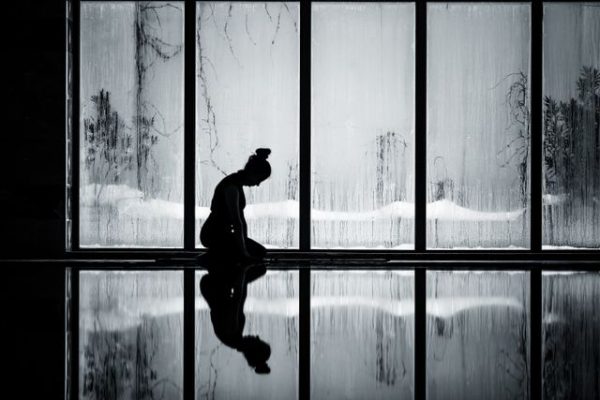
Photo by Emrah Yazıcıoğlu
Big practices take big focus.
And big practices are often transformative and also bring up big stuff. Lots and lots of big stuff. And big stuff requires tender love, care, and awareness for the alchemical process to complete.
This means that if I am seeking to consciously manage my energy, I need to prioritise and ensure I have sufficient resources available to invest into these deep practices and excavation of my psyche.
Which is why I sometimes go hermit-like and retreat in the wild.
What is wild retreating? Wild retreating means that I’m out living my life, but I’m secretly in the wilderness, retreating in plain sight.
And to be honest, most people wouldn’t notice the difference. I continue to work, study and meet all my usual commitments. You simply might notice that I’m not posting on social media as much. And my close friends will notice I’m more selective about my social commitments and spending more time in practice. To be honest, my friends are pretty relaxed about my wild retreats these days and will know when I go quiet in the wild!
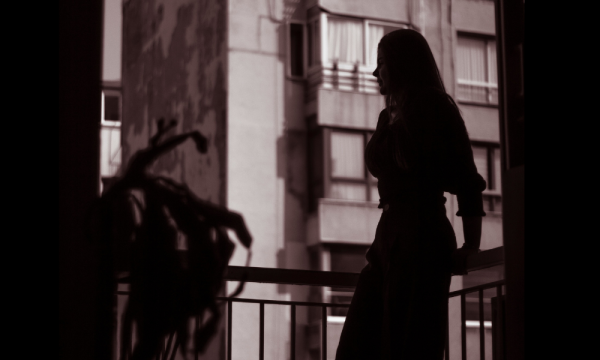
Photo by Foto Kesit
During these periods, I might also be more conscious about what I choose to eat and drink, so that my body isn’t distracted digesting cake and sweets…and I definitely don’t recommend trying to meditate when hungover and dehydrated. It’s just unfun. Not what a sensible yogini would do…
You might call this sensible energy management, prioritising the use of your energy towards what’s important.
You might also call this a healthy lifestyle.
You could also call this being strategic, focused, and investing in what matters, and not being distracted.
I choose to call this honouring the sacred through wild retreat and indulging my inner hermit.
How do you indulge your inner hermit and embrace wild retreating?
The Householder path reminds us all that life is to be lived for today, and not tomorrow. It is absolutely possible to walk a spiritual path alongside living a full life in the material world. It just might mean that your inner socialite gets less airtime, as you develop hermit-mode!
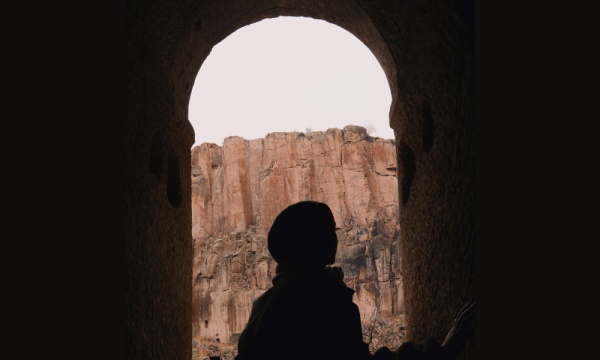
Photo by kübra zehra
May your spiritual life sustain your joy and be a source of inspiration and illumination for you.
May you find your places of wild retreat and hermitage.
I wish you joy on your path, however it might emerge!
Main – Photo by thecactusena
About the Author: Winnie Man