

Learn how summer heat affects your pet’s Fire Element. Discover TCM tips, cooling foods, acupressure, and routines to keep them calm, joyful, and healthy.
Is your usually chill pet suddenly panting excessively, getting overstimulated by the smallest things, or seeming a bit… manic? Maybe they’re struggling with the heat more than usual, having heart palpitations, or just seem “wired but tired” all the time?
If summer turns your pet into a hot, anxious, overstimulated version of themselves, we need to talk about the Fire Element. In Traditional Chinese Medicine, summer isn’t just about hot weather; it’s when the Fire Element is at its peak. And when this powerful energy gets out of balance, it shows up in ways that go far deeper than just “my pet doesn’t like the heat. Let me walk you through what’s really happening when your pet’s inner fire burns too hot (or not hot enough), and how to help them find that sweet spot of vibrant, calm energy.

Photo by Vitalina Parpalak
The Fire Element Is The Heart Of Everything
The Fire Element in TCM is like your pet’s inner sun; it governs joy, connection, circulation, and that spark of life that makes them… them. But here’s where it gets interesting: the Fire Element isn’t just one system. It’s actually four interconnected systems working together:
The Heart — the emperor of all organs, governing circulation, consciousness, and emotional joy
The Small Intestine — the “sorter,” separating pure from impure (physically AND emotionally)
The Heart Protector (Pericardium) — like the Heart’s bodyguard, protecting it from emotional overwhelm
The Triple Warmer — your pet’s internal thermostat and stress-response coordinator
Together, these four systems create your pet’s ability to feel joy, connect with others, regulate temperature, process experiences, and maintain that perfect balance between excitement and calm.
When everything is flowing beautifully, your pet is joyful and social without being hyperactive, sleeps well and wakes refreshed, and maintains good circulation with warm extremities and a healthy tongue colour. They regulate their temperature easily, process food and experiences smoothly, and feel confident and secure in their relationships.
But summer’s intensity can push this delicate system over the edge. Here’s how imbalanced Fire Element energy shows up in our pets:
Fire Excess
When there’s too much Fire energy burning through your pet’s system, you’ll notice they’re essentially running too hot on every level. Physically, they’ll be panting excessively even when it’s not that warm, with red eyes, gums, or tongue, and their heart might race or beat irregularly. They overheat easily and constantly seek out cold surfaces like tiles or concrete, have restless sleep (especially between 11pm-3am when the Heart and Triple Warmer are most active), and often get diarrhoea or loose stools from overexcitement. Behaviourally, these pets become hyperactive and struggle to settle or focus, get overstimulated by completely normal activities, and may become aggressive or snappy when they’re hot. You might also see obsessive behaviours like excessive licking or pacing, increased separation anxiety or neediness, and those telltale manic bursts of energy followed by complete crashes.

Photo by Sachin Nihcas
Fire Deficiency
On the flip side, Fire Deficiency shows up as a animal whose inner flame has dimmed too much. These are the animals who are always cold and seeking warmth even in the middle of summer, with pale gums or tongue and poor circulation that shows up as cold paws or slow capillary refill when you press their gums. You might notice weak heart sounds or a slow heart rate, digestive issues where their Small Intestine isn’t “sorting” properly (leading to nutrient absorption problems), and surprisingly low energy, especially when the weather gets hot. Behaviourally, Fire Deficient animals become withdrawn and lack their usual spark, showing signs of depression or complete disinterest in play. They often have difficulty bonding or showing affection, experience confusion or mental fogginess, and tend to be timid, fearful, or anxious. Perhaps most tellingly, they struggle to process change or stress; their system just doesn’t have enough Fire energy to adapt and flow with life’s challenges.
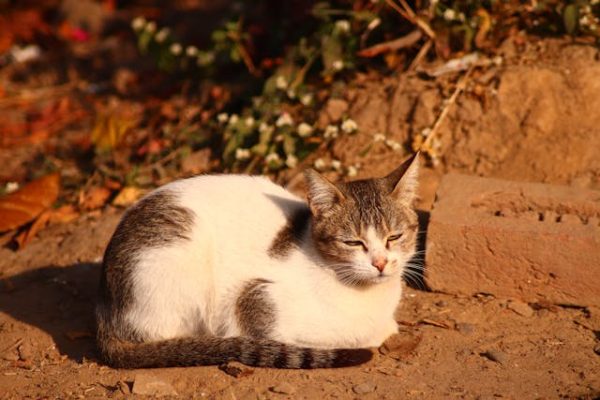
Photo by Shreshth Vij
The tricky thing?
Some animals swing between both extremes, hot and manic one day, depleted and withdrawn the next.
What Fans the Flames (And What Puts Them Out)
Understanding what throws the Fire Element off helps us prevent summer meltdowns. When it comes to creating Fire Excess, we’re looking at things like overheating environments (stuffy cars, no shade, hot pavement), overstimulation from too much excitement, noise, or social activity, and spicy or heating foods, even “warming” proteins that might be fine in winter can be too much in summer. Emotional intensity plays a huge role too, both yours and theirs, because they absolutely absorb our stress. Irregular sleep patterns, especially late nights that disrupt Heart time, excessive exercise in hot weather, and chemical stimulants from medications, preservatives, or artificial additives can all fan those flames beyond what’s healthy.
On the flip side, there are plenty of things that can dampen the Fire too much, leaving your pet depleted rather than balanced. Too much cold, think ice water constantly, air conditioning blasting, or exclusively cold foods — can shock their system and weaken their inner fire. Emotional withdrawal, lack of connection, isolation, or depression will gradually extinguish their spark, while chronic stress depletes their reserves over time. Poor circulation from not enough gentle movement, heart-weakening foods that are highly processed and chemical-laden, and overworking (whether physical or mental exhaustion) can all leave your pet’s Fire Element struggling to burn at all.
How to Balance the Fire Element
The goal isn’t to eliminate fire, it’s to help it burn steadily and brightly without burning out. Here’s how:
1. Cool, Calm Nutrition
Summer eating is all about gentle cooling without dampening their inner fire completely. Try incorporating some Fire-Balancing foods into their diet, such as:
- Cooling vegetables — cucumber, zucchini, leafy greens, celery
- Cooling proteins — duck, rabbit, fish (especially white fish)
- Hydrating fruits — watermelon, pear, apple (small amounts)
- Fresh herbs — parsley, cilantro, mint (let them self-select)
Avoid in summer:
- Lamb, venison, or other “hot” proteins if they’re already overheated
- Spicy foods or warming spices
- Too much raw food if they’re fire-deficient
- Ice-cold anything (lukewarm or room temperature is perfect)
2. Temperature Regulation That Actually Works
The Triple Warmer is your pet’s internal thermostat, but it needs support to do its job properly. For pets running too hot, effective cooling strategies include providing plenty of shade and airflow through fans, cross-breezes, or covered outdoor areas, along with cooling mats that aren’t ice-cold (you want cooling, not system shock). You can offer wet towels on their paws or belly, but always let them choose whether to use them. Provide paddling pools for water-loving dogs, and restrict exercise to early morning or late evening only when temperatures are manageable.
Fire-deficient pets need the opposite approach, gentle warming through sunny spots, light blankets, and warm (but not hot) spaces where they can regulate gradually. For these sensitive souls, avoid over-cooling by keeping air conditioning from blasting directly on them, and always make temperature changes gradual since their system needs time to adjust without being shocked into further imbalance.
3. Heart-Centred Connection
The approach needs to be tailored to your pet’s Fire constitution, though. For anxious Fire types who are running too hot, focus on creating calm, peaceful environments where they can decompress and settle their overstimulated systems. For withdrawn Fire types whose flame has dimmed, you want to gently encourage play and connection, but without overwhelming their already delicate energy, think soft invitations rather than enthusiastic demands. Creating laughter and lightness helps maintain that spark of life. Routine comfort through predictable love and security gives the Heart a stable foundation, and your own emotional regulation is crucial since they mirror our energy so closely.
The approach needs to be tailored to your pet’s Fire constitution, though. For anxious Fire types who are running too hot, focus on creating calm, peaceful environments where they can decompress and settle their overstimulated systems. For withdrawn Fire types whose flame has dimmed, you want to gently encourage play and connection, but without overwhelming their already delicate energy, think soft invitations rather than enthusiastic demands.
4. Acupressure for Fire Element Support
These points can work wonders for balancing Fire energy:
Heart 7
- Location: On the inside of the front leg, at the crease of the carpal joint, just above the pad where the leg bends.
- How to find: Place your fingers along the inside edge of the front leg, feel the groove just above the wrist joint; Heart 7 is in the soft depression between tendons.
- Use: Calms the mind and heart; ideal for anxious or overstimulated animals.
Small Intestine 3
- Location: On the outside (lateral) edge of the hind paw, at the base of the fifth toe (smallest toe), where the paw meets the leg.
- How to find: Move along the outside edge of the paw until you feel the small hollow just proximal to the last knuckle of the small toe.
- Use: Helps animals process stress and emotional overwhelm.
Heart Protector 6
- Location: On the inside of the front leg, 2–3 finger widths above the wrist crease, between the two prominent tendons running along the leg.
- How to find: Flex the paw slightly, feel the two tendons on the inside of the leg above the wrist; the point is in the soft depression between them.
- Use: Supports motion sickness, nausea, and emotional stress.
Triple Warmer 5
- Location: On the outside (lateral) of the front leg, 2–3 finger widths above the wrist crease, directly opposite Heart Protector 6.
- How to find: Palpate the outside of the leg in line with Heart Protector 6; it sits between the two tendons on the lateral aspect.
- Use: Regulates temperature, circulation, and stress response.
Tip: Always use gentle, circular pressure for 30–60 seconds. Let your pet guide you, if they pull away, stop; if they relax, you’ve found the spot.
5. Sleep & Recovery
The Heart and Heart Protector are most active from 11pm-3am, this is prime healing time when their systems do their deepest repair work. To support this crucial window, focus on creating cool, quiet sleeping spaces during summer months, and establish consistent bedtime routines since the Heart absolutely loves rhythm and predictability. Avoid any late-night stimulation by dimming lights and maintaining calm energy after sunset, ensuring comfortable temperatures that aren’t too hot but also won’t shock them with sudden cold, and prioritising security and comfort through their favourite bed positioned near you if that’s their preference. This isn’t just about getting enough sleep; it’s about creating the optimal conditions for the Heart’s natural healing cycles to work their magic.

Photo by Helena Lopes
Summer doesn’t have to be a struggle
When you know what your pet’s Fire Element needs, whether that’s cooling things down or gently sparking their energy, you can help them feel happy, balanced, and full of life all summer long. And the best part? Supporting the Fire Element isn’t just about summer symptoms; it’s about keeping their joy, connection, and that little spark that makes them them.
Our animals deserve more than just “getting through” the hot months; they deserve to really enjoy them.
Want to help your pet’s Fire Element shine this summer?
Let’s put together a personalised wellness plan that fits their unique needs.
Photo by Kojirou Sasaki on Unsplash
About the Author: Kirsty McIvor