
The ketogenic diet is becoming increasingly popular, appealing both to people seeking a more natural approach to eating and to those hoping to address serious health issues. This short guide is for anyone trying the ketogenic diet for the first time and looking to navigate some of the common challenges along the way.
The Science Bit
The ketogenic diet is named for the metabolic state it promotes: instead of producing energy primarily from glucose, the body relies on fatty acids and ketones.
Normally, our bodies use glucose as the main fuel source. The pancreas converts excess glucose into glycogen for storage, then releasing it into the blood when energy is needed. When we consume high amounts of sugar or simple carbohydrates, blood glucose can spike beyond what our cells can immediately use. This excess glucose can impair mitochondrial function and contribute to insulin resistance, where cells block further glucose uptake to protect themselves. By contrast, in ketosis, the body produces ketones from fatty acids in the liver. Fat is highly satiating (filling), which helps control hunger, and it is much harder to overconsume than sugary drinks or processed snacks. Ketones provide a clean, efficient fuel for mitochondria, improving energy regulation, mood, and blood sugar stability, partly by activating cellular energy sensors such as AMPK. Think of AMPK as the cell's energy gauge, signalling your body to use fuel wisely and keep everything running smoothly.

Photo by Sergey Kotenev on Unsplash
Fat – Your New Friend
To ensure you reach ketosis, a ketone meter can be helpful. I personally use the Keto-Mojo meter. You can find one here with a discount. Light ketosis is generally considered around 0.7 mmol/L blood ketones. Achieving this state requires reducing carbohydrates, moderating protein, and increasing fat intake.
Carbohydrate intake should typically be kept under 50 grams of net carbs per day. Net carbs are calculated by subtracting fibre and sugar alcohols from the total carbohydrate content. Within this limit you will need to include nutrient-dense vegetables and berries provide antioxidants, so please factor that in when considering your squares of dark chocolate quote for the day, which while being delicious, is not nearly nutritious :)
Protein intake must also be moderated according to activity level because excess protein can be converted into glucose in a process called gluconeogenesis, which can interfere with ketosis. Not moderating protein is often why people never fully make the transition into ketosis. For sedentary adults, about 0.8 grams per kilogram of body weight per day is sufficient. Active individuals aiming for moderate exercise may need around 1–1.2 grams per kilogram, while athletes or those engaging in intense training may require 1.6 grams per kilogram. For a simple interactive guide to protein requirements use this link.
Fat makes up the remainder of your daily calories. To calculate your needs, first estimate your total daily energy expenditure (TDEE) using a reliable formula like the Mifflin-St Jeor equation. You can do this with the Kulator TDEE calculator. From your TDEE, subtract the calories coming from carbohydrates and protein, then divide the remaining calories by nine (since each gram of fat contains nine calories) to get your daily fat requirement.
For example, consider a 70 kg moderately active adult. If they consume 50 grams of carbohydrates per day, with each gram providing 4 kcal, that amounts to 200 kcal. Seventy grams of protein, also at 4 kcal per gram, provides 280 kcal. If their total daily energy requirement (TDEE) is around 2,550 kcal, the remaining calories come from fat, which provides 9 kcal per gram. This means they would need roughly 230 grams of fat per day. This can be summarised as follows: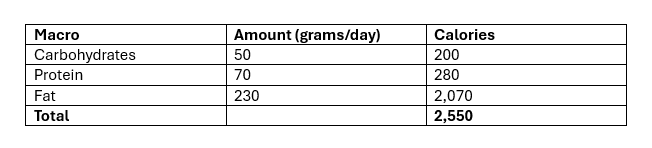 These macros would support light ketosis (~0.7 mmol/L), keeping carbohydrates low, protein moderate according to activity level and avoiding , and fat high enough to meet energy requirements.
- Reaching this level of fat intake may seem daunting at first, but there are many options to make it manageable.
- Foods like double cream or panna cotta are extremely high in fat, containing roughly 45 grams per 100 grams.
- A tablespoon of olive oil adds about 15 grams of fat, while keto cocoa bombs provide around 12 grams of fat for two servings.
- Coconut or MCT oil can be added to your coffee, gradually. One teaspoon provides approximately six grams of fat and is efficiently converted into ketones by the liver.
- Oily fish are another excellent source, think SMASHT (salmon, mackerel, anchovies, sardines, herring, trout) which contain up to ten times the fat of non-oily varieties.
- Choosing fatty cuts of meat and chicken thighs also helps. The latter are rich in mitochondria, this may support the function of your own mitochondria when consumed as part of a ketogenic diet.
Ketones & Mood
Ketones are more than just an alternative fuel source, they can also influence brain function. Unlike glucose, ketones provide a steady supply of energy to neurons, which reduces blood sugar fluctuations that can cause irritability, brain fog, and energy crashes. Many ketogenic dieters report improved focus, calmer mental states, and more stable moods. Ketones may also enhance neurotransmitter balance and mitochondrial efficiency in the brain, supporting mental clarity and resilience. In short, by shifting the brain's primary fuel from glucose to ketones, the ketogenic diet can create a smoother, more sustained cognitive and emotional energy throughout the day.
It's worth noting that some initial weight loss on a ketogenic diet is normal, largely due to the reduction of glycogen and associated water loss. However, this effect should not be expected to continue indefinitely, and rapid or extreme weight changes can be harmful. As with any major dietary change, it is always best to undertake the ketogenic diet under the guidance of a qualified healthcare or nutrition professional, particularly if you have existing health conditions or are taking medication.
The ketogenic diet requires a shift in mindset. If consuming high-quality fats feels challenging, it is worth reflecting on how easy it is to overconsume sugar in the typical Western diet. With careful planning, the ketogenic diet can improve blood sugar regulation, sustain energy, and support a long health-span.
Main – Photo by Total Shape on Unsplash
About the Author: Nicholas Walton-Cole (NA. Dip)