
Why Adults Struggle & How to Crack It This Winter
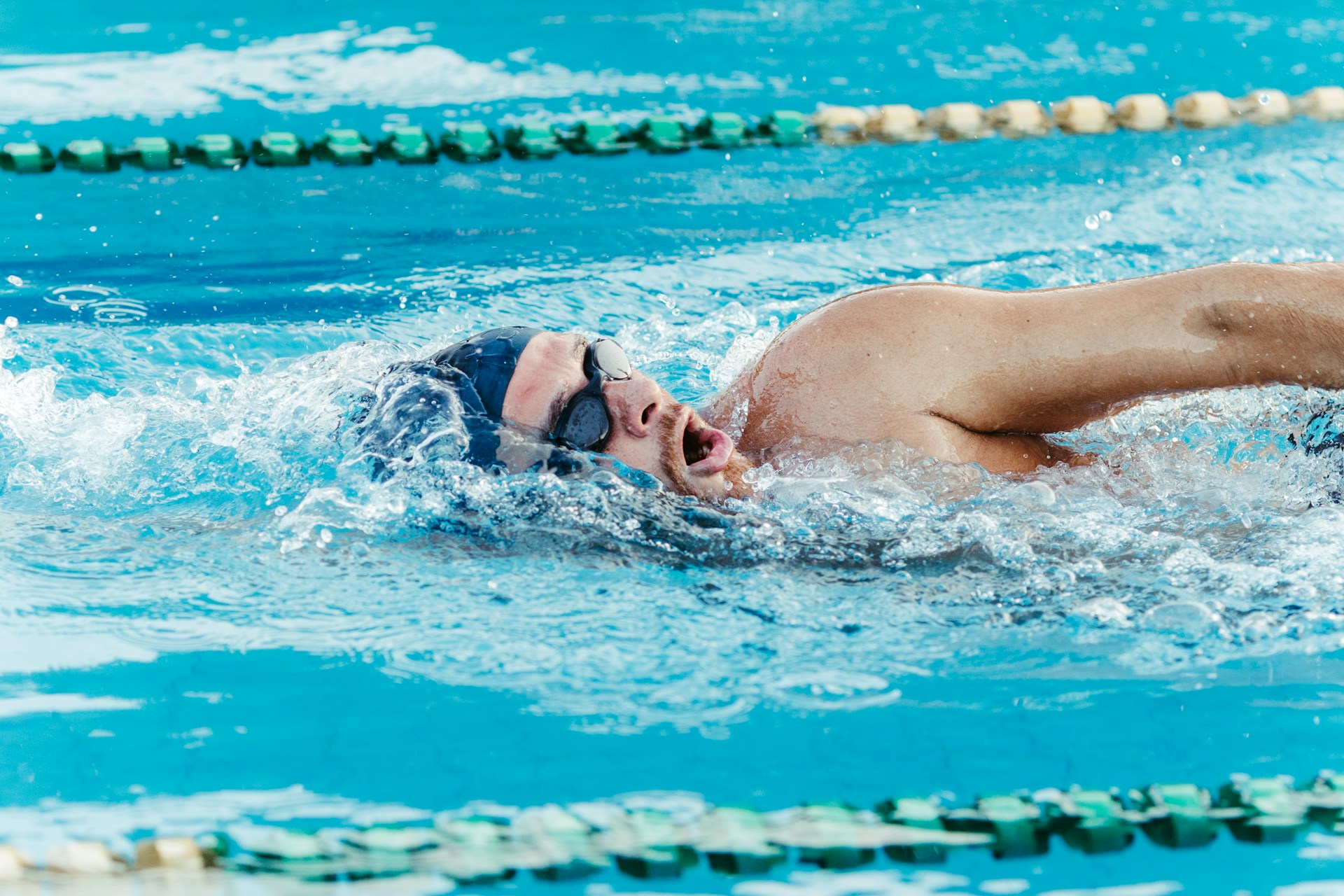
Ask a room of adult swimmers what holds them back and the answer is nearly always the same. Not their kick, not their arms, not their fitness. It is breathing. They can swim a length of front crawl on one breath, gasping at the wall, or they quietly switch back to head-up breaststroke because “I just can’t get the breathing.”
If that sounds like you, you are in very good company. According to Sport England’s Active Lives survey, almost 4.2 million people in England swam at least twice a month between November 2022 and November 2023 (Swim England, 2024). I would guess a large share of them have never felt at ease breathing in front crawl. The good news is that it is a skill, not a talent, and winter is the perfect time to learn it.
Why breathing feels so hard
On land, breathing looks after itself. In front crawl you have to time it, you only get a fraction of a second to do it, and your face spends most of the stroke underwater. Three things tend to go wrong for adults.
First, they hold their breath. With their face in the water, most adult learners clamp their mouth shut and keep the air in. Then, in the brief moment they turn to breathe, they try to breathe out and in at the same time. There is not enough time, so they snatch a half-breath, and after a few strokes they are desperate.
Second, the urge to breathe is not really about oxygen. Under normal circumstances your breathing is driven mainly by chemoreceptors in the brain that respond to carbon dioxide building up in the blood (Nguyen & Duong, StatPearls). Hold your breath underwater and carbon dioxide builds quickly, so that “I need air now” feeling arrives long before you are actually short of oxygen. Breathe out steadily underwater and the feeling eases. This is the single most useful thing I teach.
Third, they lift their head. Many adults turn to breathe by lifting their chin forwards, as if looking for the end of the pool. The head goes up, the hips and legs sink, the body becomes a brake, and the next breath feels even more urgent. It is the same loop I wrote about in October: tension leads to a worse position, which leads to more tension.
The fix: exhale in the water, rotate to breathe
The coaching principle is simple. Breathe out under the water, so that all you have to do when your mouth clears the surface is breathe in. And find the air by rolling your body, not by lifting your head. Here is the progression I use with adult swimmers, from complete beginners to triathletes.
- Bubbles at the wall. Stand in shallow water, take a comfortable breath, put your face in and hum or blow out slowly through your nose and mouth until you feel nearly empty. Lift your face, breathe in, repeat. Aim for a calm, unhurried rhythm. Ten relaxed repetitions are worth more than one heroic one.
- Turn, don’t lift. Still standing, hold the side with one hand, put your face in, blow bubbles, then turn your head to the side until one goggle and your mouth clear the water. Keep one ear on your shoulder, as though your head is resting on a pillow. Breathe in and turn back.
- Kick on your side. Push off on your side with your lower arm stretched out in front and your face turned towards the ceiling. Kick gently, roll your face down to blow bubbles, then roll back up to breathe. This teaches you that the breath comes from rotation, not from lifting.
- Add the arms, slowly. Swim a few strokes of front crawl, breathing out the whole time your face is down, and turn to breathe as your arm recovers past your ear. Many adults find breathing every two strokes easiest at first. Others prefer every three, which balances both sides. Choose what keeps you calm, not what you think you should be doing.
- Look for the “pocket”. As your head moves forward through the water it creates a small trough of air beside your mouth. When you rotate properly you can breathe in that pocket with your mouth barely above the surface. Swimmers who lift their head never find it.
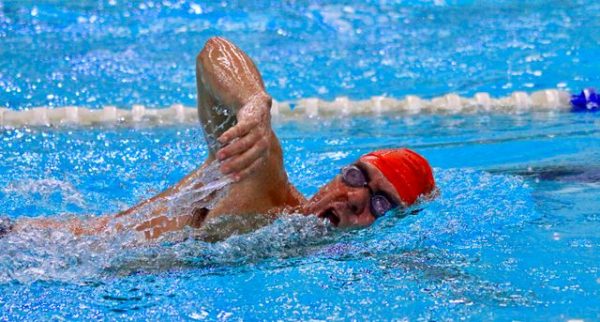
Photo by Quentin Paz
Common mistakes & what to do instead
Breathing too late. If you only start breathing out when you turn, you will never get a full breath. Start exhaling as soon as your face goes back in.
Looking forward. Keep your eyes looking down at the bottom of the pool between breaths. Your head is heavy; where it goes, your hips follow.
Over-rotating to breathe. Turn your head only as far as you need. If you can see the ceiling, you have gone too far, and your stroke will cross over to compensate.
Going too fast. Most adults who “can’t breathe” in front crawl are simply swimming too hard. Slow down. Breathing well is much easier at a pace you could hold for ten minutes than at one you can hold for ten seconds.
Why winter is the right time
For triathletes and open-water swimmers, the months between November and March are the off-season, when there is no race to taper for and no lake to swim in. That makes it the ideal window to rebuild your breathing from the ground up, even if it means a few weeks of feeling slower before you feel faster. For newer and more nervous swimmers, quieter weekday pool sessions in the run-up to Christmas give you space to practise without an audience. Either way, a technique change made now will feel natural by spring.
A word of reassurance if you find this frustrating. Learning to breathe in front crawl as an adult often takes weeks rather than days, and progress is rarely a straight line. You may have a session where it clicks, followed by one where it falls apart. That is normal. Your nervous system is unlearning decades of “don’t breathe with your face in the water,” and that takes repetition.
The take-home
If you remember one thing, make it this: breathe out in the water, and roll to breathe in. Get those two right and everything else in front crawl becomes easier: your body sits higher, your stroke lengthens and the panic goes. Start with bubbles at the wall this week. You might be surprised how quickly a length that used to leave you gasping starts to feel calm.
References
Swim England (2024) Active Lives data, April 2024: almost 4.2 million people swimming twice a month.
Main – Photo by Jonathan Borba on Unsplash
About the Author: Brian FitzGerald