
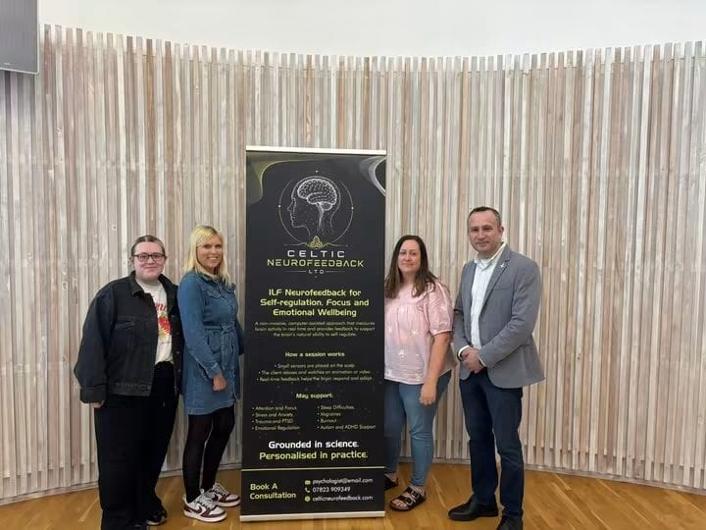
Who Supports the People Who Are Doing the Supporting?
By Dr Nistor Becia MBE,
Chartered Clinical Psychologist,
Celtic Neurofeedback
In collaboration with Natalie Croll and Kate Williams, with acknowledgement and thanks to Rebecca Curtis and Lynne Dockerty, Spectrum Hub.
Parents and carers spend a great deal of their lives answering questions about somebody else.
How is your child sleeping? How are they managing at school? What are their sensory needs? How is their behaviour? Are they taking their medication? What support do they need?
All of these questions are important. But somewhere amongst the appointments, assessments, meetings, forms, phone calls and day-to-day caring responsibilities, there is another question that can very easily disappear:
How are you?
That question was at the heart of a small community project I recently carried out with parents and carers in Merthyr Tydfil, a historic community in the heart of the South Wales Valleys.
It was called Making Stress Visible.
And perhaps the simplest way of explaining the idea behind it is with another question:
Who supports the people who are doing the supporting?
When caring becomes everyday life
Supporting a child or family member with autism, ADHD, learning disabilities or other neurodevelopmental needs does not begin and end with a diagnosis.
For many families, caring becomes woven into everyday life.
There may be education meetings, healthcare appointments, assessments, battles for appropriate support, disrupted sleep, worries about the future, financial pressures and the emotional responsibility of constantly trying to make the right decisions for somebody you love.
Over time, people adapt.
What once felt exceptional can gradually become normal.
A parent might be exhausted but still get everyone ready in the morning. They may be worried but still attend the next appointment. They may have slept badly but still go to work. They may feel overwhelmed and yet continue advocating, organising, driving, cooking, caring, and reassuring everybody around them.
From the outside, they are functioning.
Functioning is not the same as wellbeing.
Sometimes the person doing the caring becomes almost invisible behind the needs of the person they are supporting.
That was what I wanted this project to explore.
A coffee morning with a slightly different focus.
The first Making Stress Visible session took place in September 2026 during a Spectrum Hub parent and carer coffee morning at the Gellideg Foundation Group’s Wellbeing Centre in Merthyr Tydfil.
It was deliberately not held in a psychology clinic.
Parents were already coming together in a familiar community environment where they could have a cup of coffee, speak with other families, and spend time with people who understood something of their experiences.
Spectrum Hub is a volunteer-led organisation supporting children, young people, and families, including those affected by autism, ADHD, and additional learning needs.
That community setting mattered.
Trust is not created by technology. It is created through relationships. It comes from people feeling welcome, understood, and able to talk without feeling that they are being assessed or judged.
For a few minutes during that coffee morning, however, I wanted to change the usual direction of attention.
Rather than asking parents about their children, I wanted the focus to move towards them.
For the next few minutes, we are interested in you.
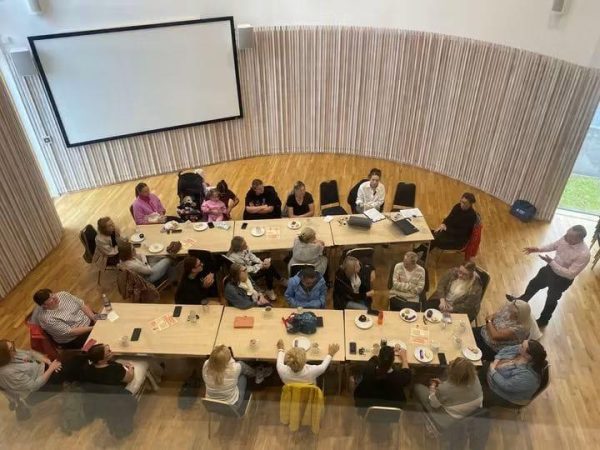
Making something invisible a little more visible.
Parents and carers who wished to participate were offered a brief Heart Rate Variability, or HRV, stress-awareness check.
HRV describes the small variations in time between one heartbeat and the next.
Despite what we might imagine, a healthy heart does not beat like a perfectly regular metronome. The timing between beats continually changes and is influenced by several physiological processes, including breathing and the activity of the autonomic nervous system.
Using a simple sensor, participants could see information derived from their heartbeat patterns during a short measurement.
I sometimes describe biofeedback as giving us a “mirror for the nervous system.”
But it is important to be very clear about what we were – and were not – doing.
This was not a medical test. It was not a diagnostic assessment.
An HRV reading cannot tell somebody that they have anxiety, chronic stress or a mental-health condition.
HRV can be affected by age, breathing, medication, physical health, movement and many other factors.
The purpose was much simpler.
The technology provided a reason to stop for five minutes.
It made something normally hidden inside the body visible on a screen and created an opportunity to ask: Does this fit with how you have been feeling? What has been happening in your life recently? How are you sleeping? How are you coping? And perhaps most importantly: What do you need?
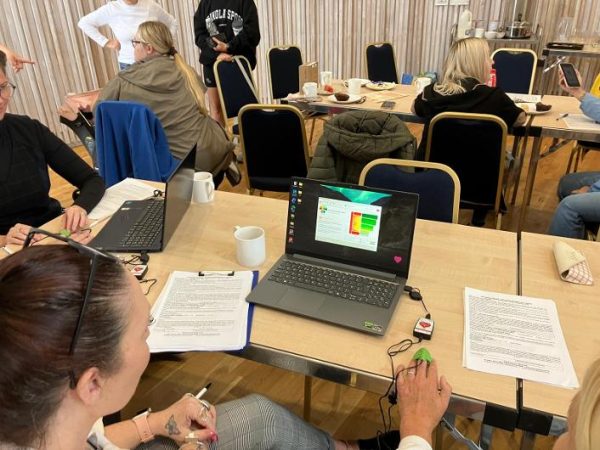
What did we find?
Twenty-four measurements were collected during the project. For the preliminary group analysis, I included the 19 records for which explicit consent to use anonymised findings had been identified.
Before looking at the results, it is helpful to understand what the StressChecker number represents.
The StressChecker uses heart rate and heart rate variability (HRV) to provide an indication of a person’s physiological stress resistance – in simple terms, how well the body appears able to cope with demands and recover at that particular moment. Lower scores are towards the lower end of stress resistance, suggesting that the body may have less capacity available to deal with additional demands. Higher scores indicate greater stress resistance and a better physiological capacity to relax when circumstances allow and respond when action is needed.
Importantly, this is not the same as saying that a person with a low score is “highly stressed” or that somebody with a higher score is “not stressed”. HRV is influenced by many factors, including sleep, physical health, medication, breathing, activity and the circumstances at the time of measurement. The StressChecker is therefore best understood as a wellbeing and self-awareness tool rather than a diagnostic test.
In our group, the scores ranged from 0.2 to 12.5, with an average of 5.77.
What stood out most was not one particular number. It was the variation between people.
Some participants showed relatively low stress resistance at the time of measurement, while others showed considerably greater physiological capacity to manage stress and recover.
That is important because it reminds us not to tell a predetermined story about carers.
There is no single “carer stress profile”.
Simply knowing that somebody is a parent or unpaid carer does not tell us how that person is coping at a particular moment.
Equally, somebody appearing calm or continuing to function does not necessarily mean that they do not need support.
A lower physiological measurement should therefore never automatically be interpreted as a diagnosis or labelled as “severe stress”.
The measurement is a starting point for a conversation, not the conclusion of one.
The conversation may matter more than the number.
For me, one of the most interesting parts of the morning was not the data. It was what happened around the measurement.
For approximately five minutes, attention shifted.
The conversation was no longer primarily about a child’s diagnosis, behaviour, education, medication, or needs.
Instead, it became: How are you? Does this fit with what you have been experiencing? What is happening for you at the moment? What might help?
That shift can be surprisingly powerful.
When caring responsibilities continue for years, people can become accustomed to putting themselves second.
Tiredness becomes normal. Poor sleep becomes normal. Worry becomes normal. Cancelling your own plans becomes normal. Missing your own healthcare appointments becomes normal. Constant vigilance becomes normal.
And because the person continues functioning, everyone – sometimes including the carer themselves – can assume that everything is manageable.
This is one reason why awareness matters.
Awareness does not solve the problem. But it can be the first step towards recognising that something needs to change.
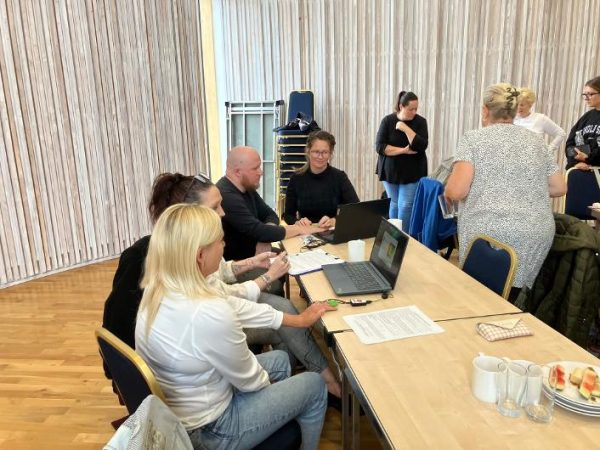
Support does not always look the same.
One of the dangers when discussing stress is assuming there is one solution. There isn’t.
Technology cannot solve the structural pressures associated with caring.
A breathing technique cannot provide respite. A sensor cannot shorten an NHS waiting list. An HRV score cannot secure appropriate educational provision or resolve financial hardship.
And we should certainly never send carers the message that they simply need to become more “resilient”.
Sometimes what somebody needs may be learning a breathing or self-regulation technique. Sometimes it may be a short break. Sometimes it may be practical help. Sometimes it may be advice about carers’ rights or financial support. Sometimes it may be speaking to a GP, psychologist, social worker, or another healthcare professional.
And sometimes it may simply be another parent and a cup of coffee.
The point is not that everyone requires the same intervention. The point is noticing the person early enough to ask the question.
Why community matters
There was another lesson from the project that had very little to do with technology.
Where we meet people matters.
The Gellideg Foundation Group provided the community environment in which Spectrum Hub families were already meeting.
Spectrum Hub provided something even more difficult to manufacture: relationships and trust.
Celtic Neurofeedback contributed professional time, knowledge, and access to the biofeedback technology.
None of those elements worked in isolation.
Sometimes we expect people to come to professionals. But sometimes the professional can go to where the community already feels safe.
That distinction is particularly important for people who may never describe themselves as being “in crisis” or actively seek professional help, but who might nevertheless benefit from an opportunity to think about their own wellbeing.
Carers should not have to reach breaking point.
Wales already has important support available for unpaid carers, including carers’ needs assessments, community organisations, short breaks, peer support, information, and financial assistance.
The Making Stress Visible project is not intended to replace any of these.
It raises a slightly earlier question: How do people recognise that they need that support in the first place?
Research from Wales has already demonstrated the importance of this issue.
A large population study involving more than 91,000 unpaid carers found higher risks of a wide range of long-term health conditions and multimorbidity compared with matched non-carers.
Other Welsh research has documented emotional pressures, isolation, and the importance of social support among unpaid carers.
The Welsh approach to carers also increasingly emphasises prevention and early intervention.
That is important because strain does not always arrive dramatically.
It can accumulate quietly. Sleep deteriorates. Social contact reduces. The carer’s own health needs are postponed. Exhaustion increases. Yet the person continues doing what needs to be done.
We should not have to wait for a carer to break down before becoming interested in how they are coping.
What could come next?
Making Stress Visible was a very small project.
It involved one community event and a small self-selected group of participants.
It cannot tell us how stressed carers are across Wales. It cannot prove that caring responsibilities caused a particular physiological reading. And it cannot establish whether an HRV-based conversation prevents future difficulties.
But small projects can ask useful questions.
The next stage could examine HRV alongside simple measures of perceived stress, sleep and wellbeing.
People could experience a short breathing or HRV-biofeedback exercise and then repeat the measurement.
Follow-up could explore something even more important than whether a number changed: Did the person understand their own wellbeing differently? Did they recognise that they needed some support? Did they take a break? Did they speak with their GP? Did they access a carers’ assessment? Did they connect with another parent or community organisation? Did anything meaningful change?
That, ultimately, is the outcome that matters.
From making stress visible to making regulation visible
The first project concentrated on awareness.
Biofeedback offers the possibility of going one step further.
Rather than simply asking, “What is my body doing?”, someone can begin asking: “What happens when I change something?”
For example, slow and controlled breathing can influence physiological regulation, and HRV biofeedback has been researched internationally for many years.
A large systematic review published in 2023 examined 143 HRV-biofeedback studies, while an earlier meta-analysis reported reductions in self-reported stress and anxiety across multiple studies.
More recently, research involving mothers of children with disabilities has specifically begun exploring physiological regulation and slow-paced breathing in the context of long-term caring responsibilities.
This does not mean biofeedback is an answer for everybody.
It means there is enough established science to justify carefully exploring how it might be used safely and meaningfully alongside existing community support.
Start small, evaluate properly and scale only what works.
A small project with a bigger question
Making Stress Visible began with a coffee morning.
There was no laboratory. No major research infrastructure.
Just parents and carers, a community organisation, volunteers, professionals, a small piece of technology, and a willingness to ask a different question.
Perhaps its most important contribution was not making physiological information visible on a screen.
Perhaps it was making the carer visible.
Supporting carers does not take anything away from supporting children and adults with neurodevelopmental or learning needs. It strengthens the network around them.
Sustainable caring requires us to think about the sustainability of the person doing the caring.
Sometimes technology can help start that conversation. But technology is only the beginning.
The technology makes something visible.
Awareness gives it meaning.
Conversation helps identify what may be needed.
Support is what ultimately makes the difference.
Who supports the people who are doing the supporting?
About the project
Making Stress Visible is an exploratory community wellbeing initiative developed by Dr Nistor Becia of Celtic Neurofeedback in collaboration with Natalie Croll and Kate Williams, with acknowledgement and thanks to Rebecca Curtis and Lynne Dockerty of Spectrum Hub.
The first session was delivered during a Spectrum Hub parent/carer coffee morning at the Gellideg Foundation Group Wellbeing Centre in Merthyr Tydfil in September 2026.
The HRV Stress Checker was used only as a non-invasive wellbeing and physiological stress-awareness tool. It was not used as a medical or diagnostic test.
References
Goessl, V. C., Curtiss, J. E., & Hofmann, S. G. (2017). The effect of heart rate variability biofeedback training on stress and anxiety: A meta-analysis. Psychological Medicine, 47(15), 2578-2586. https://doi.org/10.1017/S0033291717001003
Gellideg Foundation Group. (n.d.-a). About us. https://gellideg.net/about/
Gellideg Foundation Group. (n.d.-b). The Wellbeing Center. https://gellideg.net/the-wellbeing-center/
Im, C.-H., Lee, S., & Woo, M. (2026). Heart rate variability and slow-paced breathing in mothers of children with disabilities: Autonomic flexibility under chronic caregiving stress. Applied Psychophysiology and Biofeedback. Advance online publication. https://doi.org/10.1007/s10484-026-09771-z
Lalanza, J. F., Lorente, S., Bullich, R., García, C., Losilla, J.-M., & Capdevila, L. (2023). Methods for heart rate variability biofeedback (HRVB): A systematic review and guidelines. Applied Psychophysiology and Biofeedback, 48(3), 275-297. https://doi.org/10.1007/s10484-023-09582-6
Lancastle, D., Hill, J., Faulkner, S., & Cousins, A. (2022). “The stress can be unbearable, but the good times are like finding gold”: A phase one modelling survey to inform the development of a self-help positive reappraisal coping intervention for caregivers of those with autism spectrum disorder. PLOS ONE, 17(3), e0264837.
Public Health Wales. (2021). Voices of carers during the COVID-19 pandemic: Messages for the future of unpaid caring in Wales. Public Health Wales NHS Trust.
Quigley, K. S., Gianaros, P. J., Norman, G. J., Jennings, J. R., Berntson, G. G., & de Geus, E. J. C. (2024). Publication guidelines for human heart rate and heart rate variability studies in psychophysiology – Part 1: Physiological underpinnings and foundations of measurement. Psychophysiology, 61(9), e14604. https://doi.org/10.1111/psyp.14604
Shaffer, F., & Ginsberg, J. P. (2017). An overview of heart rate variability metrics and norms. Frontiers in Public Health, 5, 258. https://doi.org/10.3389/fpubh.2017.00258
Spectrum Hub. (2026). Spectrum Hub booking programme. Bookwhen. https://bookwhen.com/spectrumhub
Wang, Y., et al. (2024). Health of unpaid carers in Wales, UK: A population data linkage study. Journal of Public Health, 46(1), 144-150. https://doi.org/10.1093/pubmed/fdad207
Welsh Government. (2025a). £15.75m Welsh Government funding to support unpaid carers. https://www.gov.wales/1575m-welsh-government-funding-support-unpaid-carers
Welsh Government. (2025b). Written statement: Short Breaks Scheme and Carers Support Fund. https://www.gov.wales/written-statement-short-breaks-scheme-and-carers-support-fund
Welsh Government. (2025c). Charter for unpaid carers. https://www.gov.wales/charter-unpaid-carers-html
Welsh Government. (2021). Strategy for unpaid carers. https://www.gov.wales/strategy-unpaid-carers-html
Welsh Government. (2026a). Programme for government 2026 to 2030: Well-being statement. https://www.gov.wales/programme-for-government-2026-to-2030-well-being-statement-html
Welsh Government. (2026b). Written statement: Public consultation on the National Strategy for Unpaid Carers.
Welsh Government. (2026c). “A chance to do something just for me” – 13-year-old carer on the importance of short breaks.
All Images by Dr Nistor Becia
About the Author: Dr Nistor Becia