
How Rhythm & Movement Can Support Wellbeing
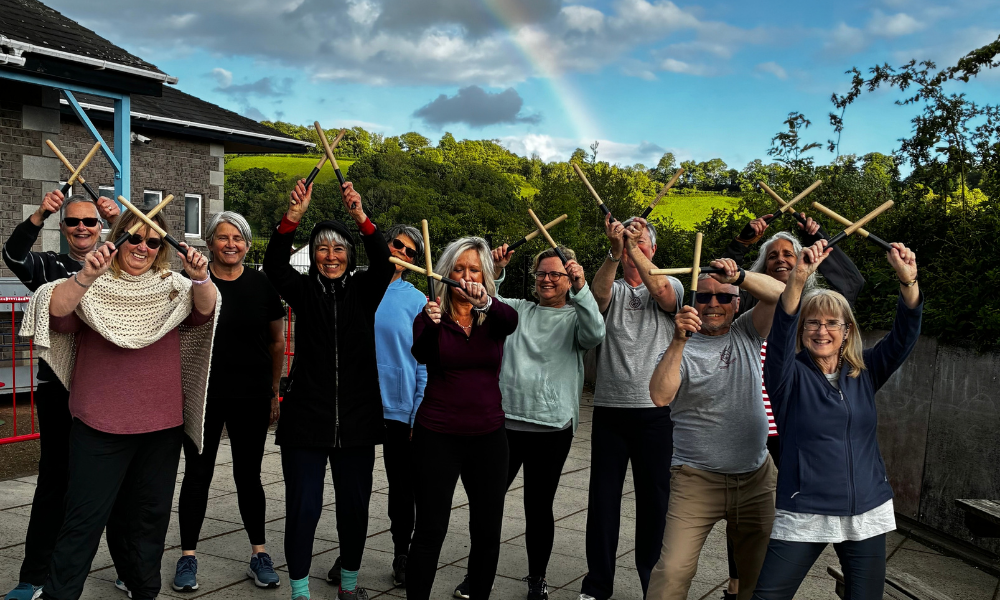
There is something wonderfully immediate about a drum. You do not need to read music, remember complicated steps or consider yourself musical. You make a sound, someone answers, and a shared experience begins. That sense of accessibility is at the heart of Drums4Health, an inclusive approach combining rhythm, purposeful movement and social connection.
I created Drums4Health after nearly three decades in education, including leadership in music and specialist provision, alongside my work as a qualified personal trainer and exercise referral professional. I could see a gap between conventional exercise classes and music activities. Many people wanted to move more and connect with others, but did not necessarily feel comfortable in a gym, dance class or formal music group. Rhythm offered another doorway.
What happens in a Drums4Health session
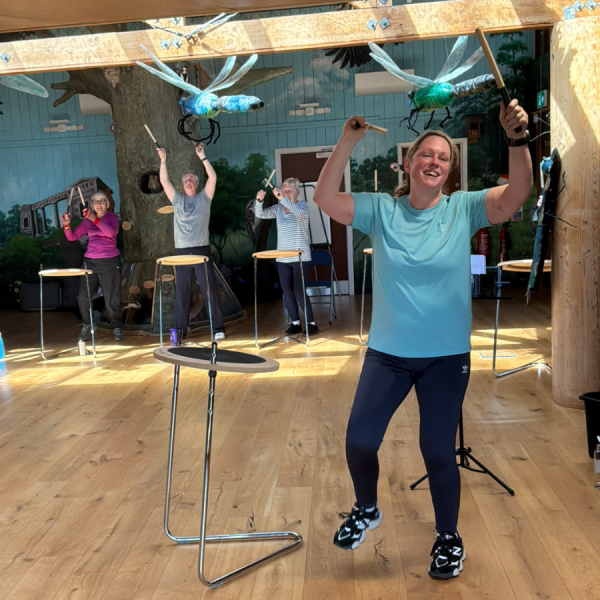
A session brings together drumming and low-impact movement in a format that can be adapted for participants who are seated or standing. Simple rhythmic patterns may be combined with reaching, coordination, cross-lateral movement, posture work and gentle cardiovascular activity. The emphasis is not on performing perfectly. It is on taking part safely, responding to the rhythm and enjoying a shared experience.
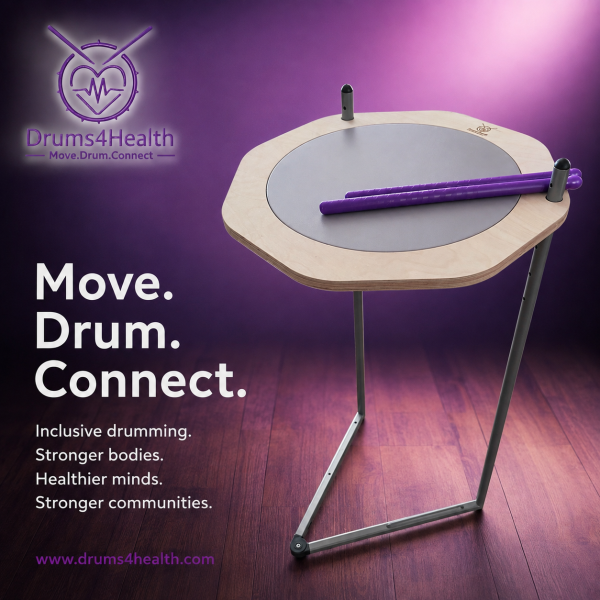
The purpose-built Drums4Health drum was developed to support this inclusive approach. It is portable and height-adjustable, with different tonal areas that allow participants to explore sound while moving in varied directions. This means the same core activity can be adjusted for a community class, a school, a care setting or a mixed-age family event.
Why rhythm & movement work so naturally together
Rhythm gives movement structure. A steady pulse can help people anticipate what comes next, while changing patterns invite attention, memory and coordination. Drumming also offers immediate feedback: participants can hear and feel their response. When this happens in a group, people are not simply exercising alongside one another; they are listening, responding and contributing to something collectively.
This combination can engage several aspects of wellbeing at once. The movement can be adapted to work the upper body, mobility and coordination. Remembering or copying a pattern adds cognitive challenge. Making music together encourages eye contact, shared attention and conversation. Just as importantly, it can feel playful. Enjoyment matters because people are more likely to return to an activity that feels welcoming and achievable.
What does the research tell us
The evidence base around music, rhythm and movement is encouraging, although no single study proves that one programme will produce the same result for everyone. A 2016 exploratory study led by Daisy Fancourt found that ten weeks of group drumming was associated with improvements in anxiety, depression, mental wellbeing and social resilience among mental health service users. Research with older adults has also identified potential benefits. A randomised controlled trial of music-based multitask exercise reported improvements in gait and balance and a reduction in falls among older people at increased risk.
In dementia care, a randomised study of regular singing and music listening found cognitive, emotional and social benefits for people with mild to moderate dementia. A later pilot randomised trial involving nursing-home residents with cognitive impairment or dementia reported that a three-month drum communication programme was associated with improvements in cognitive function and upper-limb range of motion. These findings are promising, but the drum study was preliminary and further research is needed.
For me, this careful distinction is important. Drumming should not be presented as a cure or a replacement for clinical treatment. Its value lies in offering a flexible, engaging activity through which people can move, think, express themselves and connect with others.
Inclusion is more than offering a chair
An inclusive session begins with the person, not the diagnosis. Some participants may enjoy energetic movement; others may use a smaller range of motion, drum with one hand or take time to observe before joining. Volume, pace, instructions and sensory demands may all need adapting. In dementia and specialist settings, familiarity, choice and emotional safety are particularly important. There should be no pressure to get the pattern right.
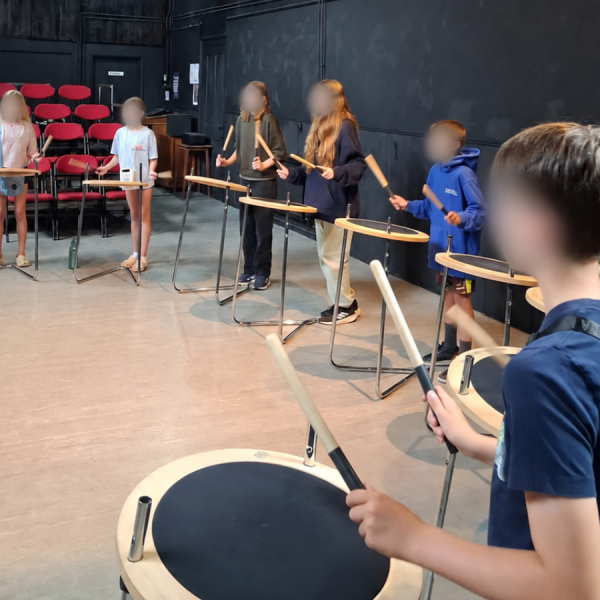
This person-centred approach enables people of different ages and abilities to participate together. It can be especially powerful in family and community sessions, where the drum creates a shared focus and age becomes less important. Children, parents, grandparents and individuals attending alone can all contribute to the same rhythm in their own way.
Building something that lasts
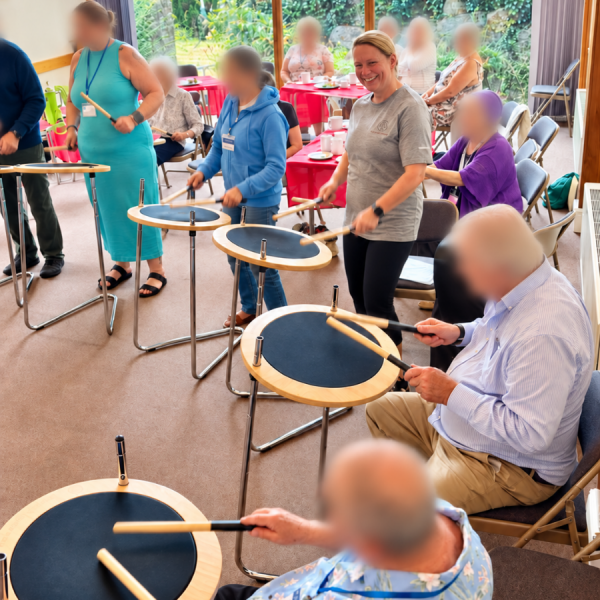
Visiting specialists can bring valuable energy and expertise, but sustainable provision also depends on the people who already know a community well. Drums4Health therefore trains and supports staff within care, education and wellbeing organisations to deliver sessions as part of their regular programme. Existing teams understand participants’ needs, preferences and relationships. With suitable training, resources and ongoing support, organisations can provide sessions more consistently while reducing repeated external-provider costs.
As a Creative Health placement partner with the University of Exeter, Drums4Health gives student nurses opportunities to observe preventative community wellbeing. Work with research partners is also strengthening evaluation and exploring rhythm and movement in dementia and Parkinson’s.
Wellbeing does not always begin with a treadmill, a treatment room or a complicated programme. Sometimes it begins with a beat, a smile and the realisation that everyone in the room has something to contribute.
Sources
- Fancourt, D. et al. (2016). Effects of Group Drumming Interventions on Anxiety, Depression, Social Resilience and Inflammatory Immune Response among Mental Health Service Users. PLOS ONE, 11(3), e0151136.
- Trombetti, A. et al. (2011). Effect of Music-Based Multitask Training on Gait, Balance, and Fall Risk in Elderly People. Archives of Internal Medicine, 171(6), 525-533.
- Särkämö, T. et al. (2014). Cognitive, Emotional, and Social Benefits of Regular Musical Activities in Early Dementia. The Gerontologist, 54(4), 634-650.
- Miyazaki, A. et al. (2020). Drum Communication Program Intervention in Older Adults With Cognitive Impairment and Dementia at Nursing Home. Frontiers in Aging Neuroscience, 12, 142.
All images by Tamsin Ward
About the Author: Tamsin Ward