
A Healthier Approach To Learning
As a swimming teacher, coach, parent and educator, I have spent much of my life around swimming pools. Ill soon be celebrating 50 years in aquatics.
Over the years, I have taught thousands of children, adults, SEND, worked with parents from all walks of life and observed countless different approaches to teaching swimming.
One question I find myself asking more and more is this…
If we were designing swimming lessons from scratch today, knowing everything we now know about child development, psychology and learning, would they look the same as they did thirty years ago, I’m not convinced they would.
Swimming has traditionally been viewed through the lens of water safety and rightly so.

Photo by Masood Bakhtyar
Learning to swim is one of the most important life skills a child can acquire.
However, swimming lessons should be about far more than simply teaching children how to move from one side of the pool to the other.
Swimming has the power to improve physical health, mental wellbeing, confidence, resilience and independence.
The question is whether our teaching methods are always making the most of those opportunities.
For many years, success in swimming lessons has often been measured by badges, certificates, distances achieved and how quickly a child progresses through a programme.
While these milestones have their place, I sometimes wonder if we have been measuring the wrong things.
Parents rarely tell me their biggest goal is for their child to swim 25 metres by a certain age.
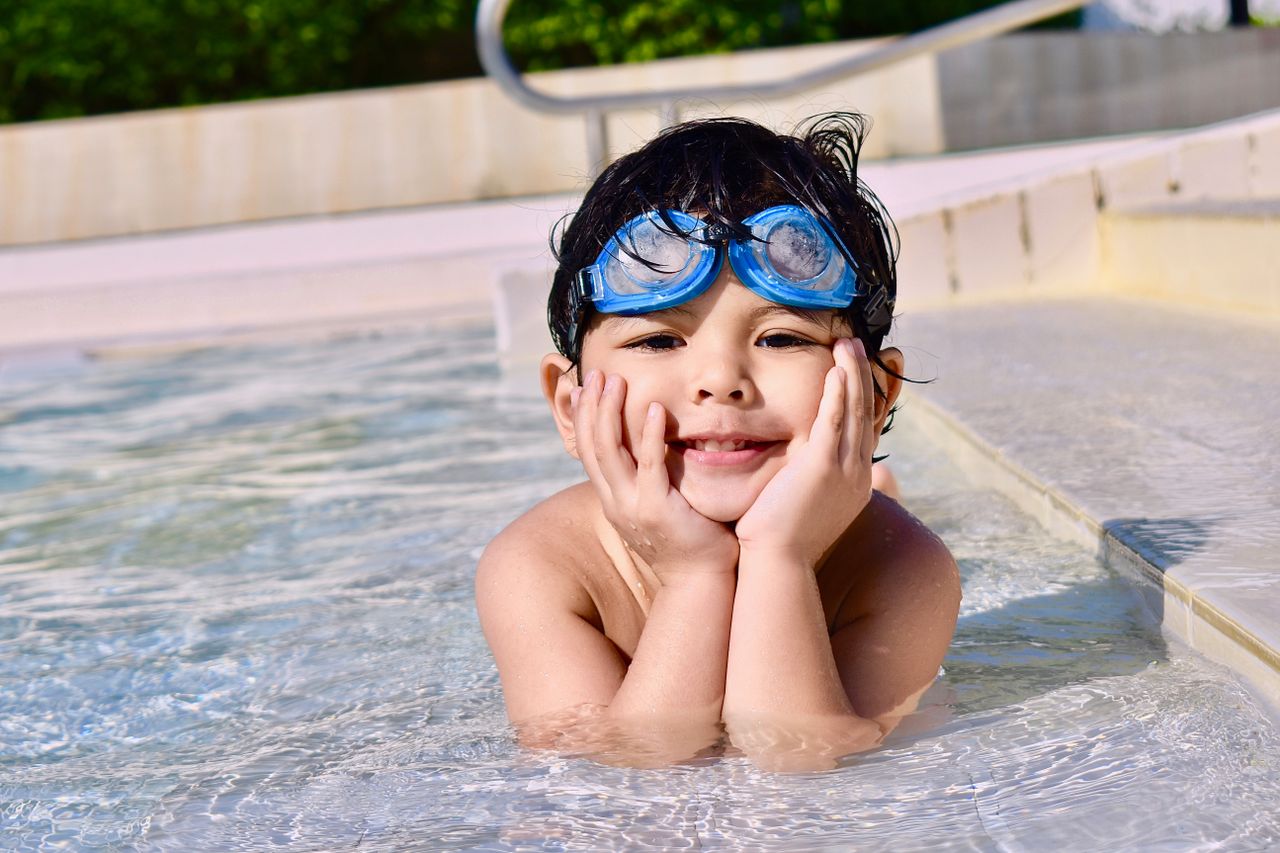
What they really want is for their child to feel safe, confident and happy in the water.
They want their children to enjoy swimming and develop skills that will stay with them for life.
A child who leaves every lesson smiling and eager to return is often on a far healthier learning journey than a child who can perform skills but feels anxious or pressured.
Our understanding of how children learn has changed dramatically over the last few decades. Modern research continues to show that children learn best when they feel emotionally safe, engaged and actively involved in the learning process.
Confidence is not simply a reward that appears at the end of learning, it is often a vital ingredient that helps learning happen in the first place.
When children feel confident, they are more willing to take risks, try new skills and recover from mistakes. When they feel fearful or overwhelmed, learning becomes much more difficult.
This is why I believe confidence should be viewed as a core objective of swimming lessons rather than a happy by-product.
One area that deserves greater attention is the issue of dependency.
Many traditional teaching methods unintentionally encourage children to become dependent on constant support, whether that support comes from an instructor, the poolside, a parent or excessive flotation.
Photo by Brunxs
True confidence comes from discovering what you can do for yourself.
Some of the most rewarding moments I witness are not when a child performs a perfect stroke. They happen when a child suddenly realises they can solve a problem independently. Perhaps they recover their balance, regain their footing or confidently return to the side after venturing away from it.
These moments may seem small, but they create powerful psychological shifts.
Children begin to trust themselves and that trust is often the foundation upon which real swimming ability is built.
The equipment and teaching aids we use can also influence the learning process more than many people realise.
Historically, most swimming aids were designed primarily to keep children afloat.
Modern thinking encourages us to ask a different question… how can we help children learn more effectively?
There is an important difference between keeping a child on the surface and helping them develop confidence, independence and natural movement in the water.
As the creator of SwimFin, this was something I thought about extensively. I wanted to develop a teaching aid that encouraged children to move naturally, feel secure and gain confidence without becoming overly dependent upon support.
What surprised me over the years was not simply the physical impact it had, but the psychological effect.
Children often see the shark fin and immediately engage with it.
They become playful, imaginative and excited.
Their focus shifts away from fear and towards exploration they stop worrying so much about what might go wrong and start concentrating on what they can achieve.
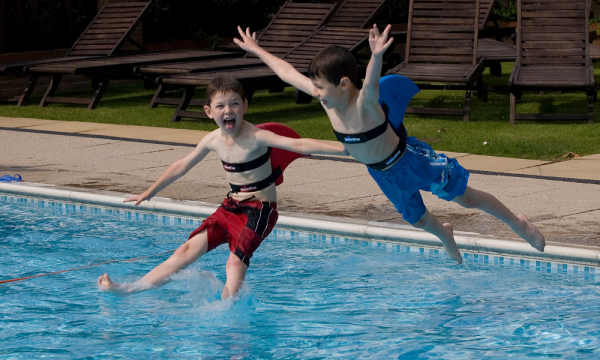
Photo by SwimFin
The change in mind set can be incredibly powerful.
The more we understand child psychology, the more we recognise the importance of creating positive emotional experiences in the water.
Learning should not feel like something being done to a child.
The most effective lessons often happen when children are actively involved, exploring, discovering and building confidence through experience.
This is one reason why play should never be underestimated.
To adults, it may look like fun and games, to children, it is often how learning happens best.
Through play they develop coordination, problem-solving skills, body awareness and confidence, often without realising it.
I have always believed that enjoyment and learning are not opposites. In fact, they are often partners.
Children who enjoy swimming lessons are more likely to attend enthusiastically, practise regularly and continue swimming long after formal lessons have ended.
They develop a healthy relationship with water rather than viewing it as something to fear or simply endure.
Of course, every child is different.
Some are naturally adventurous and eager to jump straight in, others need more time, reassurance and encouragement.
There is no single approach that works for every child, which is why good teaching should always adapt to the individual rather than expecting every child to adapt to the system.

Photo by SwimFin
Parents play an important role too.
Children are remarkably sensitive to the emotions of the adults around them.
Calm encouragement, patience and celebrating progress rather than perfection can make a significant difference to a child’s confidence and enjoyment.
Perhaps the biggest lesson I have learned throughout my career is that swimming is about far more than swimming.
Every lesson presents an opportunity
To build confidence, resilience and independence.
These qualities do not stay at the pool, children carry them into school, friendships, sport and many other areas of life.
When we focus solely on outcomes, we can sometimes overlook the journey, yet it is often the journey that shapes the child.
A healthier approach to learning is not necessarily about teaching children faster.
It is about teaching them better, it’s about helping them feel safe, capable and confident in an environment that can initially feel challenging.
Perhaps the most important question is not how quickly a child can pass the next stage of a swimming programme, but how they feel when they leave the pool.
Do they feel proud?
Do they feel confident?
Do they feel capable?
If the answer is yes, then we are doing far more than teaching a life-saving skill.
We are helping to develop happier, healthier & more confident young people who can enjoy the water for the rest of their lives.
Main – Photo by Edneil Jocusol
About the Author: Kev Moseley