
Welcome, to Health & Wellbeing Magazine’s Spirit Keeper monthly column. This is the place where you will discover tips and practices for creating, developing and maintaining a personalised self-care practice as a Spirit Keeper. If you are new to this month’s Spirit Keeper column, I recommend reading past articles to find out what a spirit keeper is and subjects already covered around self-care practices.
Since July 2025 I have been expanding upon different exercises (rituals) which are spirit centred, mind centred and body centred. Each month comes with a monthly challenge. The idea is to prove to yourself and your own clients’ the power of specific exercises (rituals) in integrating mind, body and spirit. After all, in order for there to be change within the world, we need to be the ones who are embodying it and grounding it.
This is what you can look forward to in the months’ ahead.
- Body centred practice – dancing and spiritual connection
- Body centred practice – body and nutrition
In this month’s column we will be focusing on the focusing on the body centred practice of massage and detoxification.
If you are new to this month’s Spirit Keeper column, I recommend reading past articles to find out what a spirit keeper is and subjects already covered around self-care practices.

METAPHORICAL STORY ABOUT MASSAGE & DETOXIFICATION AS A SPIRITUAL SELF-CARE PRACTICE & HEALING TOOL
The Alchemy of the Glade
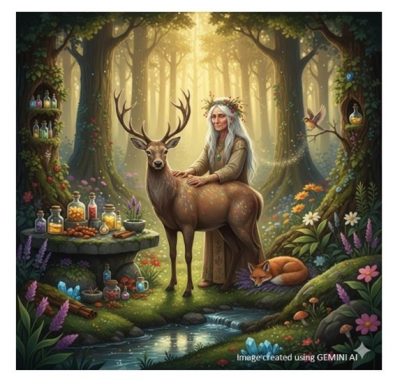
In the heart of the Whispering Woods, where the sunlight filters through the canopy like liquid amber, lies a glade which remains untouched by the frantic ticking of the outside world. This is the home of Mother Sela, a woman whose skin is etched with the maps of a thousand seasons and whose eyes hold the quiet depth of a forest pool. Her aura shines with warmth and calmness, making anyone and everyone (including animals and birds) feel safe in her presence.
Yasmina arrived at the glade with a heavy heart and a clouded spirit. Living life was leaving her feeling jaded and overwhelmed. She had come to learn the craft of the “Sacred Weave”, the ancient practice of healing through touch, scent, and leaf.
The First Lesson: The Body as a Temple
On the first morning, Mother Sela did not speak of muscles or anatomy. Instead, she pointed to a stag resting near a stream, its coat vibrant and shimmering in the sun’s rays filtering through the tree tops. The stag looked rested and a quiet beauty radiated from it as it stood by the gurgling water of the stream.
“To massage,” Mother Sela whispered, “is to remind the soul that it lives in a temple. When the temple is dusty and unkempt, the spirit grows dim. We touch not just to relax, but to restore the sanctity of the vessel.”
She led Yasmina to a stone table covered in soft moss. “The first benefit is the lifting of the veil through touch, which is the improvement of mood. When the hands move with intention, they sweep away the grey mists of anxiety. A body that feels cared for is a body which remembers how to hope. When we have hope we can make the next step forward and cope and coping leads to better mental and emotional wellbeing which leads to better activity in daily living.”
The Song of the Herbs
Mother Sela’s glade was a living apothecary. Here, herbs and spices were not merely ingredients, but ancient allies for integrating mind, body and spirit.
“For centuries,” Mother Sela explained as she ground dried roots in a stone mortar, “our ancestors knew what modern eyes are only now rediscovering. These plants are the earth’s own immune system.”
She showed Yasmina the golden dust of Turmeric and the pungent warmth of Ginger. “These are the fires which fight inflammation,” she said. “They quiet the heat of internal battles we do not even know we are fighting.”
Next, she held out a sprig of Rosemary and a handful of Cinnamon. “The Cinnamon balances the internal tides, decreasing blood sugar levels to keep the spirit steady. The Rosemary awakens the mind and increases antioxidant levels, shielding the body from the rust of time.”
The Sacred Detoxification
The core of Mother Sela’s teaching was the sacred detoxification. She taught Yasmina how to infuse oils with these botanicals, creating elixirs which could penetrate deep into the “clay” of the body.
“We carry weights which are not our own,” Mother Sela taught as Yasmina practiced the long, rhythmic strokes of the massage on a weary fox which had sought refuge in the glade. “Toxins of the air, the water, and the mind. Through the right pressure and the right oils, we coax these poisons to leave their hiding places in the deep tissues.”
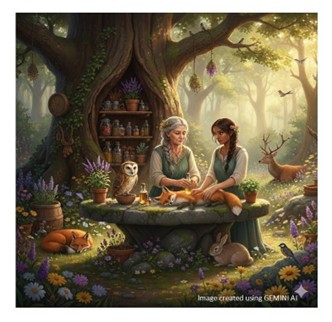
As Yasmina worked, she felt the fox’s body soften and relax. The detoxification was not just physical; it was a spiritual purging. By stimulating the flow of the body’s hidden rivers, the immune system was strengthened, turning the body into a fortress of vitality rather than a house of glass. Yasmina also found the massage could also become rhythmic as she used her breath in unison with the strokes and as she relaxed and became present, she experienced a deep connection with the fox.
Yasmina found the practising of massage on animals and birds was a great way to learn to become present through the breath and movement. With this increasing ability to be present, the massage became a sacred connection between human and other forms of nature. It made her feel part of something much larger than herself.
The Transformation
The weeks passed. Yasmina’s hands, once clumsy, became conduits of grace. She watched as birds with tattered wings regained their flight after being anointed with lavender and peppermint. She saw the heavy-hearted forest creatures leave the glade with a spring in their step, their moods brightened by the aromatic vapours and the healing touch.
One evening, as the moon rose over the glade, Yasmina looked at her own hands. They were stained with the green of chlorophyll and the gold of spice, smelling of earth and sky.
“I feel… different,” Yasmina said.
Mother Sela smiled. “You have learned the greatest secret. When you heal another, you heal yourself. By honouring the body as sacred, by using the gifts of the earth to cleanse the blood and quiet the fire within, you have aligned your heartbeat with the rhythm of the world.”
Yasmina realised massage was a prayer, the herbs were the liturgy, and the body when vibrant, clean, and strong, was the ultimate miracle.

The History of Therapeutic Massage & Spiritual Development
Throughout history, therapeutic massage has been more than a physical treatment; it has been a sacred vehicle for spiritual development, purification, and the harmonising of the Soul with the cosmos. In many ancient cultures, the roles of “doctor” and “priest” were one and the same, making touch a primary tool for medicine, spiritual initiation and maintenance.
Ancient Egypt: Purification & the Afterlife (2500 BCE)
For the Egyptians, massage was a ritualistic act of purification.
- Preparation for the Soul: Massage was also used in the embalming process to honour and preserve the “Ka” (Soul), ensuring the spirit was prepared for its journey into the afterlife.
- Priestly Healers: Massage was often performed by priests and priestesses who used sacred oils like myrrh and frankincense. These oils were seen as “sweat of the gods,” and applying them via massage was a way to infuse the patient with divine properties.
Ancient China: Cultivating Qi (2700 BCE)
Massage in China (Anmo or Tui Na) evolved alongside Buddhism and Taoism.
- Harmony of Yin and Yang: Practitioners used touch to balance Qi (life force). A spiritual blockage was thought to manifest as a physical ailment; therefore, massage was used to refine the spirit and bring the individual into alignment with the Tao (the Way).
- Spiritual Yoga Training: Early texts like The Yellow Emperor’s Classic describe massage as essential to “spiritual yoga training.”
Ancient Greece & Mesopotamia: Ritual Healing (c. 3000 BCE – 300 CE)
The Greek timeline shows the transition from myth-based healing to the birth of clinical medicine.
- Asclepian Temples: In Greece, massage was part of a broader “dream healing” ritual at temples dedicated to Asclepius (the god of medicine). Pilgrims would receive massages, baths, and herbal treatments to purify their spirits before sleeping in the temple to receive divine visions.
- Babylonian Incantations: In Mesopotamia, massage was a spiritual ritual. Healers combined physical kneading with prayers and incantations, believing that massage could drive out “demons” or spiritual impurities causing illness.
Ancient India: The Sacred Science of Ayurveda (3000 BCE)
In the Hindu tradition, massage (specifically Abhyanga) is one of the cornerstones of Ayurveda (the “Science of Life).
- Marma Points: Healers manipulate 107 Marma Intersections where matter and consciousness meet. Stimulating these is believed to awaken dormant spiritual energy and enhance meditation practices.
- The Temple Body: The body is viewed as a temple for the Soul (Atman). Massage is a form of spiritual hygiene meant to clear the “Srotas” (channels) so the divine energy can flow without obstruction.
What Are The Benefits of Massage & Oils?
Therapeutic massage combined with essential oils (aromatherapy) and herbs (such as herbal poultices or Ayurvedic oils) offers a “multi-sensory” healing experience. By engaging the sense of smell, the physical manipulation of tissue and the skin’s absorption, this practice addresses wellness across three primary layers:
Physical Benefits
The physical effects are driven by both the manual massage and the pharmacological properties of the plants absorbed through the skin.
- Improved Circulation & Detoxification: The massage strokes stimulate blood flow, while oils like grapefruit, lemon and rosemary support the lymphatic system. The massage and oils help the body to flush out metabolic waste and reduce fluid retention
- Pain & Inflammation Relief: Many herbs (ginger, turmeric) and essential oils (eucalyptus, frankincense, peppermint) contain natural anti-inflammatory and analgesic compounds. These help reduce joint pain, muscle soreness and tension headaches.
- Respiratory Support: When inhaled during the session, oils like eucalyptus and pine can clear sinus congestion and support deeper, more effective breathing.
- Skin Health: Herbal oils (like aloe-based Kumari oil, coconut or sesame) deeply hydrate and nourish the skin. Some ingredients, like kaffir lime or lemongrass, act as natural astringents to tone and brighten the skin. Ayurveda is well known for its use of oils and skincare.
Mental Benefits
The brain’s olfactory system is directly linked to the limbic system, which controls memory and mental state.
- Cognitive Clarity & Focus: Invigorating scents like peppermint, neroli and rosemary are known to reduce “brain fog” and improve mental alertness.
- Improved Sleep Quality: Sedative oils like chamomile, lavender and sandalwood calm the central nervous system, making it easier to fall into a deep, restorative sleep.
- Mental Fatigue Relief: The combination of rhythmic touch and scent helps the mind “unplug,” providing a mental reset after periods of high productivity or burnout.
- Stress Hormone Regulation: Studies show aromatherapy massage significantly lowers cortisol (the stress hormone) and triggers the release of endorphins, the body’s natural “feel-good” chemicals.
Emotional Benefits
Because scents can trigger immediate emotional responses and memories, this therapy is a powerful tool for emotional regulation.
- Anxiety & Depression Support: Essential oils like bergamot, ylang-ylang, and rose have been shown to alleviate symptoms of mild depression and anxiety by fostering a sense of safety and tranquillity.
- Emotional Release: The “nurturing touch” of a massage can provide a safe space for individuals to process, and release stored emotional tension or grief.
- Mood Elevation: Citrus-based oils (grapefruit, lemon, orange) are naturally uplifting and can shift a “low” mood into a more positive, energized state.
- Stabilisation: Grounding oils like cedarwood, frankincense and vetiver help create a sense of emotional balance and stability during times of life transition or turmoil.
Popular Pairings & Benefits
Essential oils are truly a gift from nature. However, it is important that you always dilute the oils in a carrier oil such as cold pressed almond oil. Do your research online and follow guidelines, or better still take level 1 training in aromatherapy and massage.
Deep Relaxation: Chamomile, Lavender and Sandalwood
Emotional Uplift: Bergamot, Jasmine and Orange
Energy & Focus: Lemon, Rosemary and Spearmint
Pain & Soreness: Ginter, Peppermint and Turmeric
Using Scent as a Spiritual Practice
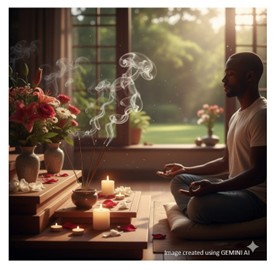
Scent has been a central pillar of spiritual practices from all cultures for over 5,000 years. Serving as a sensory “bridge” between the physical and the divine. From the temples of Ancient Egypt to modern meditation spaces, fragrance is rarely used just for its smell, it is used as a functional tool for transformation and mental-emotional wellbeing.
Historical Use in Spiritual Traditions
Across history, scent has been used to mark sacred time and space, separating the “ordinary” world from the spiritual.
Abrahamic Faiths:
- In Christianity, the smoke of Frankincense and Myrrh symbolizes prayers rising to heaven (Psalm 141:2).
- In Islam, the Prophet Muhammad emphasized cleanliness and fragrance; Oud and Musk are highly valued for purifying mosques and homes.
- In Judaism, the Havdalah ceremony uses fragrant spices to mark the transition from the holy Sabbath back to the workweek.
Ancient Egypt:
Regarded as the masters of sacred scent, Egyptians used a complex 16-ingredient blend called Kyphi in their temples. They believed scents were the “sweat of the gods” and used them to guide souls in the afterlife.
Hinduism & Buddhism:
Incense (Agarbatti) is used daily to purify the air and represent the “purity of the mind.” Sandalwood is particularly sacred, believed to bring the practitioner closer to enlightenment by cooling the mind.
Indigenous Traditions: Native American “smudging” rituals use White Sage or Sweetgrass to “wash” the air of negative energy and prepare a space for ceremony.
The Benefits & Why It Works
The benefits of scent in spirituality are both psychological (brain-based) and symbolic.
Neuro-Psychological Grounding
The olfactory bulb is directly connected to the limbic system, the part of the brain that processes emotions and memories.
- Conditioned Response: By consistently burning a specific scent (like Lavender or Frankincense) during prayer or meditation, you “train” your brain. Eventually, simply smelling that scent can instantly trigger a state of calm and focus.
- Stress Reduction: Scents like Sandalwood and Palo Santo have been shown to lower cortisol levels, making it easier to slip into a meditative state.
A Sensory Anchor
During spiritual practices, the mind often wanders. Scent acts as a sensory anchor – a physical reminder of your intention. When your mind drifts, the aroma brings your awareness back to the “now” and the purpose of your ritual.
Symbolic Purification
In almost every tradition, scent is a metaphor for cleansing. Just as smoke fills a room and replaces stale air, the spiritual practice intends to replace negative thoughts or “heavy” energy with a lighter, more divine presence.
Summary & Conclusion
Combining massage and aroma as a spiritual practice creates a powerful synergy which addresses the human experience as a whole – mind, body, and spirit. While scent bridges the physical and divine through the air, massage grounds connection into the physical body. In Buddhism, the first level of conscious awareness is about ‘coming into the body and being present in the body’. Self-massage with sacred essential oils is a powerful way to reconnect with the body as a sacred vessel for your Soul.
The importance of using them together can be summarized through these three pillars:
The Synergy of “Grounding” & “Ascension”
In many spiritual traditions, there is a tension between wanting to connect with the “higher” divine (ascension) and needing to remain present in the physical world (grounding).
- Aroma (The Air): Represents the “breath of life” or spirit. Scents like Frankincense or Sandalwood are used to lift the mind into a meditative, elevated state.
- Massage (The Earth): Represents the vessel. Physical touch pulls the awareness back into the body, ensuring that spiritual growth is integrated and felt physically rather than just living as an abstract thought.
Somatic Release of Spiritual Blocks
Many practitioners believe that the body stores “stagnant energy” or emotional trauma in the muscles and fascia (often called “somatic memory”).
- The Benefit: Massage physically breaks up these “knots,” while aromatherapy supports the emotional release. For example, using Lavender or Rose during a heart-centred massage can help a person release grief or blockages that prevent them from feeling spiritual peace.
- The Result: A “cleansing” happens on both a cellular and an energetic level.
Entering “Sacred Time” via the Senses
The most difficult part of a spiritual practice is often silencing the “monkey mind.” Combining touch and scent creates a sensory “lock” which shuts out the external world.
- The Limbic Connection: Aroma bypasses the logical brain and hits the emotional centre (the limbic system) instantly.
- The Oxytocin Effect: Massage triggers the release of oxytocin (the “connection hormone”) and lowers cortisol.
- The Result: Together, they move the practitioner from a state of “doing” and “thinking” into a state of “being”. This state of deep presence is the foundation of almost all spiritual breakthroughs.
Monthly Challenge
If you are an active practising healing practitioner, I would recommend using essential and cold pressed oils as part of your self-care practices with the focus on the body being a sacred vessel for the Soul. If you are a spirit keeper, I would recommend using self-massage or a monthly massage with an aromatherapist.
It is not recommended you wear perfume when treating clients as some of them may have an allergic reaction or get distracted by the scent. You could use essential oil burners to create a ‘room mood’ where the patient chooses their scent for their treatment.
I have found as I have got older, that using the Ayurvedic skin oils work really well for me as I am nourishing the skin and also purifying the blood. I am into my golden years now and people often comment on how youthful the skin on my face looks. I definitely put this down to nourishing the skin appropriately with massage.
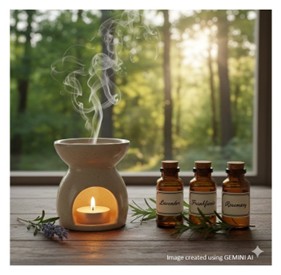
I find using essential oils for quiet times of prayer, meditation and contemplation really useful by burning the oils in a burner. It is worth reading about aromatherapy and how best to use it as a spiritual practice for your own self-care as a Spirit Keeper.
This month try out different ways of using scent and self-massage for yourself and observe whether others find your energy, aura and skin have a glow about them.
Next month …
In next month’s column we will be focusing on the body centred practice of dancing and spiritual connection. Trance dance is well known in all societies as a way of connecting with the divine.
Until next month. From one kindred spirit to another – be safe, be well, be authentically you.
In gratitude
Kathleen
About the Author: Kathleen Ginn