
The Truth About Catfishing, Ghosting & Online Dating
Online Dating
Advantages
Multiple Connections at Once
Online dating allows you to explore more than one connection at a time and discover who you truly resonate with. It gives you greater choice and flexibility as you search for a compatible partner.
More Meaningful Conversations
The distance and anonymity of the online space often make it easier to ask deeper questions earlier on. Many people find they can open up more naturally, discussing personal topics without feeling as vulnerable.
Anonymity & Low Pressure
Online platforms create a buffer that removes the pressure of instant physical impressions or face-to-face conversation. This can make early interactions feel safer and more relaxed, especially for those who find in-person dating intimidating.
Convenience
From messaging on your sofa to connecting at a time that suits your schedule, online dating fits easily around modern life. There's no need to travel, dress up, or plan logistics in the early stages — everything happens at your pace.
Matching Algorithms
Many apps use algorithms to pair you with people who share your values, interests, and preferences. When profiles are authentic, this can improve compatibility and reduce the randomness of traditional dating encounters.
Unlimited Choice
With countless apps, websites, and social platforms to choose from, online dating opens up a world of possibilities — far beyond the limits of your usual social circle.

Photo by Andrea Piacquadio
Disadvantages
Distanced Interaction
Online dating can feel removed from real-world social connection. With fewer spontaneous, in-person encounters, relationships may develop with people who live far away or are difficult to visit, making genuine connection more challenging.
Risk of Unfair Treatment
You may not receive as much interest as you expected, which can feel disappointing or impact self-esteem. The online space also tends to favour quick, appearance-based judgments over deeper insights into personality and compatibility.
Risk of Overwhelm
Managing multiple conversations across several apps can quickly become too much. With an abundance of platforms and profiles to choose from, the paradox of choice suggests that too many options can make decision-making harder rather than easier.
Authenticity Issues
One common drawback is determining who is genuine and who may be presenting a superficial version of themselves. Many users are judged primarily on looks rather than character, which can feel discouraging or unfair.
Impact on Self-Esteem
Social media-style dating content and comparison culture can create pressure to meet certain appearance or lifestyle expectations. This constant exposure may negatively influence confidence and overall mental well-being.
Unrealistic Expectations
The world of online dating can sometimes lead to dissatisfaction with real-life relationships. When expectations aren't met, you may become hesitant to give new connections a chance, assuming they won't live up to imagined standards. Love often takes time, patience, and understanding.
Trust Issues
Repeated disappointments or experiences such as "ghosting" can make it harder to trust future matches. This lack of trust can impact your ability to build meaningful relationships moving forward.
Anonymity & Lack of Accountability
The anonymity of online platforms allows some people to behave in ways they wouldn't in person. Without the usual social accountability, interactions can feel less respectful and more unpredictable.
Miscommunication and Misunderstanding
Text-based communication is vulnerable to misinterpretation—tone and intent can easily be lost. When messages are misconstrued, it becomes harder to build strong, meaningful connections.
Different Dating Standards
Expectations and behaviour on dating apps often differ from real-life interactions. This gap can create confusion or mismatched assumptions about what each person is looking for or how quickly connections should progress.
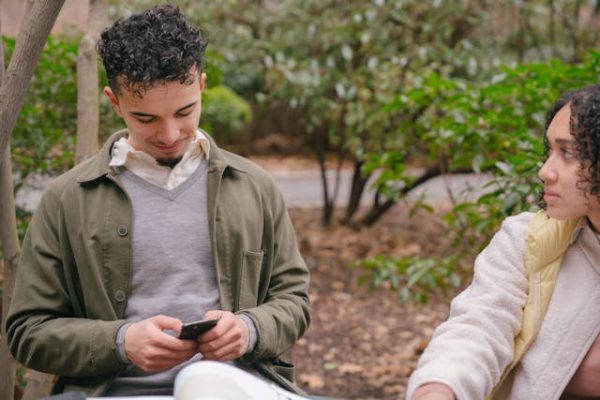
Photo by Budgeron Bach
One major issue with online dating is the anonymity it provides, which can lead to deceptive behaviour—since interactions are detached from the real world, people may feel emboldened to misrepresent themselves. The internet creates a more fantasy-driven environment, where it's easy to portray an idealised version of oneself. Airbrushed photos and inventive text allow individuals to potentially present themselves as exactly who they want to be. It's all too easy to hide or distort one's real identity, including things like age, profession, hobbies, and other personal details. The problem arises when people are not transparent about their goals on the app—both parties may think they are on the same page, when in fact they are not, leading to confusion, frustration, and wasted time. This lack of honesty can also contribute to growing cynicism about online dating apps.
Catfishing and ghosting—both deceitful behaviours—are increasingly common in online interactions, and they can have a profound effect on one's mental health. In a survey of 5,000 participants in the US, 76% reported having either ghosted someone or been ghosted themselves during their dating experiences. [1] The most common reason for ghosting was having different expectations for the relationship compared to the other person. Ghosting, along with breadcrumbing (leading someone on without intent), offer an easy way out of a relationship without directly confronting the other person. People who engage in these behaviours often lack the courage to communicate their true feelings and avoid conflict, which results in unhealthy digital communication. Another phenomenon contributing to this issue is the rise of the situationship, where individuals date without any clear commitment. Though initially appealing to some, this often becomes emotionally complicated as time goes on, and it's hard for most people not to develop feelings.
People who engage in ghosting or enter situationships might be using such behaviours as protective mechanisms—trying to shield themselves from potential emotional harm. This defensiveness can contribute to the growing mistrust in online dating and make it harder to form lasting, genuine relationships.
The Changing Nature of Love & Relationships Online
While online dating platforms may offer a more comfortable space where rejections are handled with minimal exposure, this convenience comes at a cost. Online dating encourages short-term gratification, which often stands in contrast to the long-term persistence required for lasting relationships. The quick swipe culture and immediate connections might not allow the time and emotional investment necessary for a deep, committed relationship. The digital environment has also influenced the way we communicate so that we message one another or use other forms of digital communication rather than communicate in person. Online dating also discourages interaction with the local community; instead, hours are spent searching online, focusing on personal interests rather than collective engagement.
Social media has become an essential part of young people's lives with 97% of US teens,[3] and 95% of 16-24 year olds[4] actively using it. It enables connections to be made but there is definitely evidence that it can have a negative effect on relationships. Features such as status posts, the visibility of likes, comments from others and the knowledge of whether messages have been read or left ignored can create tension and provoke potential conflict. It has been suggested that social media in fact hinders couples from talking and resolving their problems earlier on than would be the case through in person communication.[5]
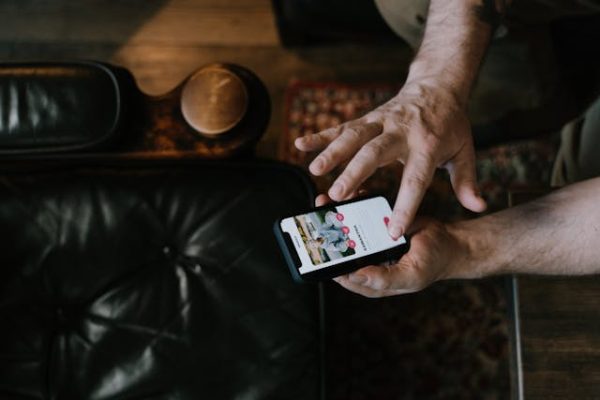
Photo by cottonbro studio
The internet creates a more fantasy-driven environment, where it's easy to portray an idealised version of oneself.
Online dating raises concerns about safety and accountability, as the absence of a shared social circle makes it harder to trust the person you're interacting with. It is difficult to tell whether we are interacting with a real person or with AI, especially as technology continues to evolve. In the future AI is likely to play a larger role in the dating world, potentially altering interactions in ways that we may not even notice. For now, many dating platforms still rely on human profiles, but the growing use of AI-driven chatbots could make it even more challenging to detect real human connections.
Are We Falling in Love the Way Nature Intended?
Digital communication has undoubtedly enabled unions that would not have been possible in the past. However, it also means that potential partners once found through real-world interaction may now be overlooked in favour of online connections.
Pornography has also filled a void and plays a role in fulfilling sexual desires without the need for real-world interaction. The constant exposure to idealised beauty and sexualized content has no doubt altered our perception of what is attractive. This may well be setting us up with unrealistic expectations when it comes to finding a partner. Even if someone doesn't end up with someone they have met online, the sheer number of profiles they've seen can influence their decision-making and behaviour when selecting a partner in real life.[6] The awareness of alternatives may indeed encourage breakups. Research suggests that the internet "encourage(s) people to behave differently, opt for casual sex rather than search for a permanent partner." The rise of social media also contributes to dissatisfaction from comparison, distorting expectations and making real-life relationships feel less satisfying. This might then make you start to question your own self-worth, which can result in lowered standards and potential depression. If you are not getting constant validation through likes and contact requests this can affect your self-confidence. These external pressures make it harder for some people to portray themselves as attractive or to feel confident in romantic pursuits. We might potentially be missing out on people who are much more attractive in person. The emphasis on superficial values online—such as photos or profiles—can lead us to overlook other qualities that might make someone a better partner in the long run. The online world rewards surface-level judgments and doesn't allow the same depth of understanding that occurs through real-world interactions.
In online dating, you're presented with a wealth of information about a person right from the start, from photos to bios, preferences, and more. In contrast, real-world interactions offer a slower, more organic process of discovery through conversation and shared experiences. This has transformed the whole ritual of courtship. It is the influence of algorithms—not your family, friends, or community, that dictates who is potentially a good match based on pre-set criteria. While algorithms can match individuals based on compatibility, they fall short in gauging chemistry or physical attraction. These intangible aspects of a connection are simply beyond their reach. Moreover, algorithms can't assess whether the environment or lifestyle of a potential match aligns with your personal preferences. There's also the risk that algorithms could limit diversity—after all, how can an algorithm truly understand who you find attractive or connect with on a deeper, more personal level?
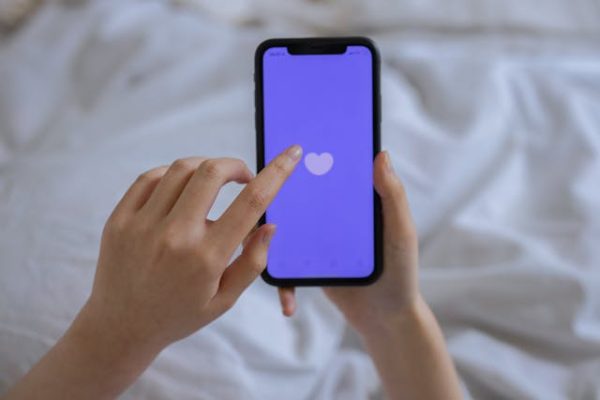
Photo by cottonbro studio
The quick swipe culture and immediate connections might not allow the time and emotional investment necessary for a deep, committed relationship.
Has Digitalisation Made Dating Harder: Statistics Suggest that it's Complicated
In 2023, 3 in 10 adults in the U.S. reported using a dating app, with 53% of them being under 30 years of age.[7] A recent study by Forbes revealed that 45% of participants stated that online dating apps are the most popular place to meet people today. [8] However, despite the use of these platforms, 62% of Americans report that dating is more difficult today than it was just a decade ago. [9] This suggests a growing dissatisfaction with the current dating landscape despite the convenience that online dating offers.
In a different survey of 1,000 Americans, 78% of respondents stated that they are exhausted by using dating apps. [10] Gen Z feels this burden the most, with 18% of participants expressing frustration over the constant need to update profiles and manage multiple apps. This exhaustion highlights a key issue in modern dating—an overwhelming sense of burnout that might be reducing people's motivation to engage with these platforms.
While digital communication has revolutionised the way we meet and connect with potential partners, it has also raised important questions about the quality and depth of these connections. The shift to the digital space has introduced challenges such as misrepresentation, superficial interactions, and a decline in face-to-face socializing, which can undermine our ability to form authentic, lasting relationships. With fewer opportunities for real-world interaction, many people miss out on the social and emotional skills needed for deeper romantic connections. This could explain why around 44% of Gen Z adults in the U.S. didn't have a romantic relationship during their teenage years. [11]

Online dating offers convenience and flexibility in our busy lives, and part of its popularity stems from the difficulty people face in building a real-world social network—especially for those who struggle with initiating connections in person. Its impact extends beyond romantic relationships, affecting family dynamics and local communities. While online dating is often a necessary starting point for many, it's important to remember that true, meaningful connections still happen in the real world. If an online dating service brings people together to then socialise in the real world then it is definitely a benefit. As long as we don't lose sight of this, then we can harness the best of both worlds—using digital tools to connect while nurturing the in-person interactions that build lasting relationships .
Ultimately, the digital transformation of love comes with its costs, urging us to balance online interactions with real-world engagement in our pursuit of meaningful relationships.

References
[1] https://www.forbes.com/health/mind/modern-dating-mental-health/
[2] https://www.forbes.com/health/dating/dating-app-fatigue/
[4] Ofcom. (2023). Online Nation: 2023. Ofcom
[5] Bouffard, Skye & Giglio, Deanna & Zheng, Zane. (2022). Social Media and Romantic Relationship: Excessive Social Media Use Leads to Relationship Conflicts, Negative Outcomes, and Addiction via Mediated Pathways. Social Science Computer Review. 40. 1523-1541. 10.1177/08944393211013566.
[6] Goetz CD, Pillsworth EG, Buss DM, Conroy-Beam D. Evolutionary Mismatch in Mating. Front Psychol. 2019 Dec 4;10:2709. doi: 10.3389/fpsyg.2019.02709. PMID: 31866904; PMCID: PMC6904347.
[7] https://www.pewresearch.org/short-reads/2023/02/02/key-findings-about-online-dating-in-the-u-s/
[8] https://www.forbes.com/health/dating/dating-statistics/
[10] https://nypost.com/2024/06/21/lifestyle/eight-in-ten-americans-burnt-out-with-dating-apps-research/
Main – Photo by cottonbro studio
About the Author: The Informed Perspective