
Why Self-Awareness Is Central to Wellbeing
Samantha Newton FCIPD is the founder of Magenta HR Consulting. She supports leaders in professional services to handle people pressure with calm judgement and fair, defensible decisions, because work should support wellbeing, not quietly erode it.

Most people don’t neglect their wellbeing intentionally.
They simply keep going, until tiredness feels normal, irritability feels justified, and rest becomes something they promise themselves “once things calm down”. By the time they pause to notice how depleted they are, their body has often been signalling for a long time.
In the earlier weeks of this series we’ve looked at how work quietly shapes wellbeing, why wellbeing is a system (not a checklist), and why stress is information rather than failure. This final piece is about what ties all of that together: self-awareness.
Not the fluffy kind. The practical kind. The kind that helps you notice patterns early — before you’re running on fumes.
Wellbeing thrives on awareness, not crisis
Many people only take wellbeing seriously when something breaks.
Sleep collapses. Patience disappears. A small problem feels enormous. Motivation drops off a cliff. You get ill more often. You stop enjoying things you normally like. You feel strangely emotional, or strangely numb.
None of that happens overnight. It’s usually the end point of a long period of “I’ll deal with it later”.
Self-awareness is what interrupts that pattern.

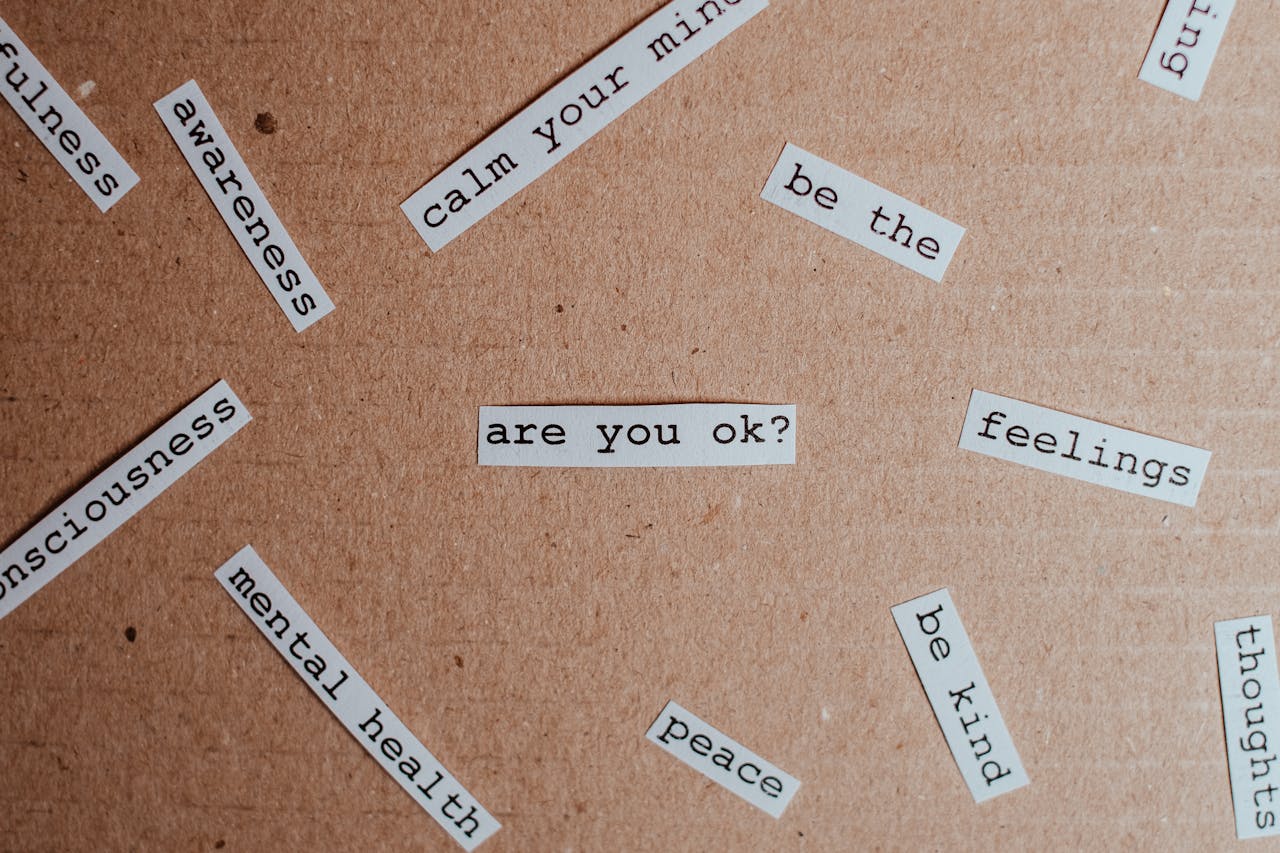
Photo by Vie Studio
It doesn’t require a perfect routine or a new identity as someone who “does wellbeing”. It requires a willingness to notice what’s true — even when it’s inconvenient.
Why checking in works (when other things don’t)
A lot of wellbeing advice focuses on adding: add a habit, add a practice, add a routine.
Checking in is different. It’s subtractive. It reduces guesswork. It stops you drifting.
When you check in regularly, you start to see:
- what drains you repeatedly
- what restores you reliably
- what you tolerate until it becomes resentment
- what you avoid naming because it feels awkward
- what your body is signalling long before your mind catches up
That’s not self-indulgence. That’s data.
And data is what allows change without drama.
The trap: waiting for life to “calm down”
Many people wait for things to calm down before they rest, reset, or make adjustments.
Often, that moment never comes.

Photo by Linus Nylund on Unsplash
There is always another deadline, another demand, another “just this week”. And if you’re capable and conscientious, you can keep meeting those demands for a long time.
But the cost shows up somewhere: sleep, mood, health, relationships, patience, joy.
Checking in is how you stop negotiating with your limits.
What a check-in actually looks like
A check-in doesn’t need to be long. It needs to be honest.
You might do it weekly (Sunday evening, Friday afternoon, Monday morning — whatever fits). The point is consistency, not perfection.
Start with a few questions that create clarity:
- How is my energy this week – steady, depleted, wired, flat?
- What has felt nourishing?
- What has drained me?
- Have I allowed enough recovery, or am I running on adrenaline?
- What am I carrying that isn’t mine to carry?
- What have I been ignoring because it feels inconvenient to name?
Notice these aren’t “how-to” questions. They’re reality questions.
They don’t demand that you fix everything. They simply stop you pretending you don’t know.
A short vignette: the week that changed because someone noticed
Someone once described their check-in like this:
They realised they weren’t actually exhausted by the work itself. They were exhausted by the anticipation of the work, the constant low-level bracing for interruptions, last-minute changes, and unclear expectations.
That single insight changed their week.
Not because it solved everything, but because it gave them a clearer target. They stopped trying to “rest more” as a vague solution and started focusing on what was keeping their nervous system switched on: uncertainty, open loops, and the feeling of never being finished.
Awareness didn’t remove pressure. It gave them leverage.
Self-awareness creates choice
Without awareness, you default to coping.
With awareness, you gain choice.

Photo by Javier Allegue Barros on Unsplash
You start to see where small adjustments matter most, not because you’re chasing an ideal lifestyle, but because you’re protecting your capacity.
You might notice:
- you need clearer boundaries around availability
- you need fewer open-ended conversations and more decisions
- you need a proper end to the day, not just a collapse into the evening
- you need one honest conversation rather than another week of silent frustration
- you need recovery that actually restores you, not “rest” filled with scrolling and mental noise
The point isn’t to become a perfectly balanced person. The point is to become someone who notices early, and responds with steadiness rather than crisis.
Checking in isn’t indulgent. It’s preventative.
Many people feel guilty for paying attention to themselves.
They treat self-awareness as self-absorption, or rest as something to earn. But if you’ve been following this series, you’ll recognise the pattern: when wellbeing is ignored, the system eventually forces attention, usually at the worst possible time.
Checking in is preventative. It’s how you keep your life from becoming a series of recoveries.
It’s also an act of respect: for your body, your mind, and the people who live with the version of you that work leaves behind.
A steadier relationship with yourself
Wellbeing isn’t a destination. It’s an ongoing relationship with yourself, especially in working lives that are demanding.
Checking in is one of the simplest ways to keep that relationship honest.

Photo by Gaelle Marcel on Unsplash
Not dramatic. Not performative. Just real.
A question to sit with this week: what do you already know about your wellbeing that you’ve been too busy to admit?

Book your free 15-min HR SOS call. Because meaningful work needs meaningful protection.
Miss Managed, HR without the sugar-coating: behind-the-scenes people issues no one else dares talk about. Subscribe here
Core Insights, leadership, culture and cutting through corporate noise. Subscribe here
And if you’d like to learn more about my consultancy work click here
Main – Photo by Vie Studio
About the Author: Samantha Newton