
When the Strongest Choice Is to Stop
What Sporting Setbacks Can Teach Us About Resilience
There is often a temptation in sport to view resilience as the ability to keep going, no matter what.
To push through discomfort. To overcome adversity. To refuse to give up.
But sometimes, true resilience looks very different.
Sometimes, the strongest decision an athlete can make is to stop.
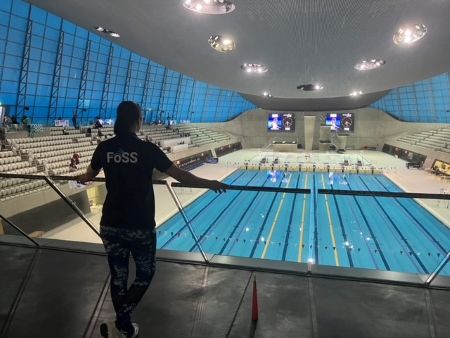
For competitive swimmer Reese Huckle, that became an unexpectedly difficult lesson at the end of what had otherwise been an incredible season.
When Everything Changes in a Moment
After months of training, competing and preparing to finish her season at the National Championships, Reese’s plans changed following an unexpected trip and fall.
It wasn’t during training. It wasn’t the result of pushing herself too hard in the pool. It was simply a freak accident that couldn’t have been predicted or prevented.
The result was a significant ankle sprain.
Thankfully, scans confirmed there were no fractures, and every effort was made to give Reese the best possible chance of recovering in time. Medical advice was sought, rehabilitation began and the hope remained that she might still be able to compete.
But bodies don’t always work according to our schedules.
As the championships approached, it became clear that her ankle simply wasn’t ready for the demands of racing.
The Courage to Step Back
For any athlete, withdrawing from a competition they have spent months working towards is difficult.
When that competition is a National Championship, it can be heartbreaking.
Reese ultimately made the mature decision to withdraw rather than risk causing further damage to her ankle and potentially jeopardising her longer-term recovery.
It meant letting go of an opportunity she had worked incredibly hard to earn.
But it also meant recognising something that can be difficult for athletes of any age to accept: protecting your health is not the same as giving up.
There is courage in pushing yourself when things become difficult, but there can be just as much courage in recognising when your body needs you to stop.

Photo by SHVETS production
A Season Worth Celebrating
An injury at the end of a season can easily overshadow everything that came before it.
But one disappointing chapter shouldn’t be allowed to rewrite the entire story.
Reese had enjoyed an outstanding season, including finishing fourth in the region in the 17–18 age group at the Open Water Championships and becoming the highest-placed swimmer from Kent.
She also qualified for the National Open Water Championships, although the injury unfortunately prevented her from competing there too.
Those achievements don’t disappear because the season ended differently from the way she had imagined.
And perhaps that is another important lesson—not only for athletes, but for all of us.
When Life Doesn’t Follow the Plan
We often measure success by outcomes.
The race. The result. The qualification. The medal.
But some of the most important moments happen when the outcome we have worked towards is suddenly taken away.
How do we respond when circumstances outside our control change our plans?
Can we recognise what we have already achieved rather than allowing one disappointment to define everything that came before it?
And can we give ourselves permission to recover without feeling as though we are somehow falling behind?
These questions extend far beyond competitive sport.
Illness, injury, work, relationships and everyday life can all force us to change direction unexpectedly. Resilience doesn’t mean pretending those moments aren’t disappointing. It means allowing ourselves to feel that disappointment while eventually finding a way forward.
Recovery Is Part of the Journey
For Reese, the focus now shifts from competition to recovery.
There is no race against the clock.
The priority is allowing her ankle to heal properly, returning to training when her body is ready and gradually rebuilding towards the next season.
It may not be the ending she wanted, but perhaps sporting careers—and life—aren’t really defined by perfect endings.
They’re shaped by all the chapters in between.
The successes. The disappointments. The unexpected detours. The difficult decisions. And the ability to begin again.
This season has already given Reese plenty to be proud of.
The National Championships will come around again.
For now, perhaps the biggest achievement is having the maturity to recognise that sometimes coming back stronger begins with knowing when to stop.
Main – Image by Claire Jones