
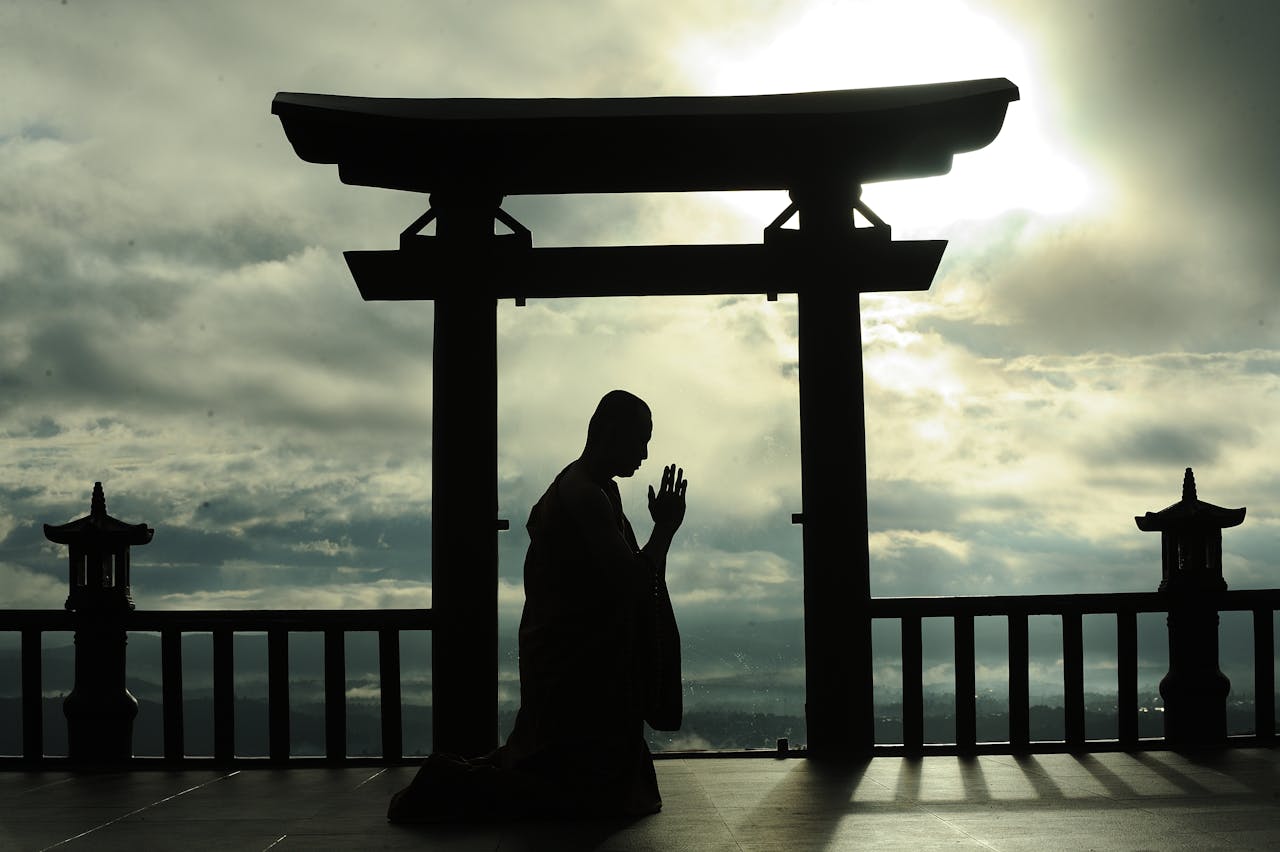
Someone asked me recently why I practice meditation, and not mindfulness. To say that I was gobsmacked and temporarily lost for words is an understatement.
To me, mindfulness, is a state that goes hand in hand with meditation, and yet, I can understand why it can be so confusing…
What is Mindfulness?
Mindfulness-Based Stress Reduction (MBSR) is an evidence-based approach developed by Dr Jon Kabat-Zinn in 1979 at the University of Massachusetts Medical School. MBSR is a structured 8 week programme combining mindfulness, body awareness, yoga and exploring patterns of behaviour, thinking, feeling and acting.

Photo by Brett Jordan
The secular form of mindfulness meditation Kabat-Zinn developed borrows from the teachings of Zen Buddhism, Hatha Yoga, Vipassana and Advaita Vedanta. His book Full Catastrophe Living aimed to embody the essence of Buddhist teachings in a manner that was accessible to mainstream America and has been cited in scholarly works and books over 15,000 times since its publication in 1990.
MBSR teaches non-judgemental present-moment awareness, in order to reduce suffering or distress, and increase well-being. It is a method that has been widely adopted by hospitals globally as an educational intervention.
So…if you practice present-moment awareness, that is taught in so many meditative traditions, you are cultivating the mind's ability to focus, and witness-consciousness, the capacity to observe what is happening moment-to-moment. And you are experiencing mindfulness…in a meditative state…
And if you learned mindfulness from a medical or corporate setting, you probably learnt a variation of MBSR mindfulness and will resonate more with the secular approach to mindfulness.
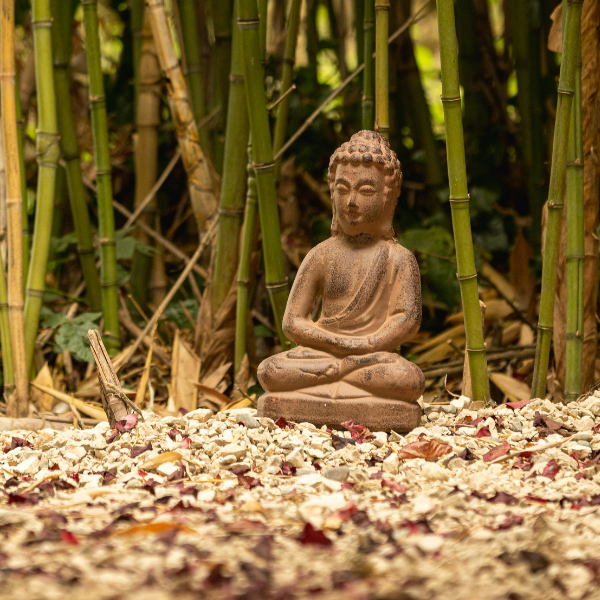
Photo by Andreas Ebner
What is Meditation?
I could tell you that meditation is a practice to train awareness, focus and stable emotions to achieve a clear, calm and quiet mental state by focusing on breath, mantra or an object…or I could return to the roots of meditation and share the story as I was taught…
Patanjali is deemed to be one of the great masters of yoga, an ancient Indian sage who documented the Yoga Sutras in approximately the 2nd century BCE and 5th century CE.
So why am I mentioning yoga along with meditation? Because the point of yoga, as described in the Sutras, is:
Yogascittavrttinirodhah[1] – yoga is mastery over the roaming tendencies of mind.

Photo by Artem Mizyuk
Patanjali is clear – the point of yoga is meditation, and asana, the postures taught so widely, are simply the foundational steps to prepare for meditation.
He lists the 8 limbs of yoga as the yamas (restraints), niyamas (observances), asana, pranayama (breath control), pratyahara (sensory withdrawal) and the internal focuses of dharana (concentration), dhyana (meditation) and samadhi (absorption, more commonly referred to as enlightenment)[2].
For thousands of years, Vedic and Yogic teachings have been passed down from teacher to student in an unbroken lineage, often solely in oral form. Traditionally, we are taught that uniting breath and asana, along with pranayama practices, such as nadi shodhana, alternate nostril breathing, are ways to attain a focused mind suitable for meditation, the state of pratyahara (sensory withdrawal).

Photo by luizclas
Once this state has been reached, then the mind can turn inward, and the 3 final limbs of yoga can be explored:
- Dharana – concentration
- Dhyana – meditation
- Samadhi – liberation, or freedom from mind[3]
Dharana
Dharana derives from the Sanskrit dudhan that has a dual meaning; to hold, contain, retain and nourish, as well as to heal, rejuvenate and sustain…meaning that it is both the process of anchoring and containing the mind, as well as nourishing, healing and sustaining it. Through concentration, the mind achieves clarity and one-pointed focus that results in the state of dhyana. Mindfulness is one of the qualities cultivated at this stage, to support the mind turning inward.

Photo by Marcos Flores
Traditionally, this 6th limb of yoga is also interpreted to mean that the yogic path is one that allows us to explore the limitless potential of our minds to materialise life's purpose: bhoga (fulfilment) and apavarga (freedom). The dual journey of the soul is to first experience the material world through our senses and actions, then to cultivate knowledge and detachment that allows us to be finally liberated from it.
Dhyana
Dhyana, meditation, is an advanced stage of dharana, when the mind remains effortlessly focused one-pointedly on the object of concentration for a long period of time. In dhyana, there is solely union and awareness of the flow of pranic pulsation in the space of the forehead.
Yogis place more emphasis on refining the practice of dharana than on achieving dhyana, as it is the effortless state of dharana that results in dhyana – a beautiful contradiction. In this state, the meditator is still aware of the object of meditation, and the process of meditation.

Photo by Rachel Claire
Samadhi
As the mind becomes still, and soaked in luminous pranic essence, eventually, the mind is drawn into the pranic pulsation, and the mind is no longer aware of the meditator or the process of meditation, it is solely focused on the object of meditation, pranic pulsation. This is samadhi. As this state matures, the mind transcends awareness of itself, and is said to no longer exist, a state known as freedom from mind.
Samyama
The three internal states of dhyana, dharana and samadhi should be viewed as a continuum, where they are actually practised together and not deemed to be as separately as we classify them for study; Patanjali refers to this triadic process as samyama.
Samyama translates as balanced discipline, helping us to understand that this is a path of practice that requires prolonged and dedicated discipline. Eventually, through the practice of samyama, the state of vishoka, absolute sorrowless joy, emerges.
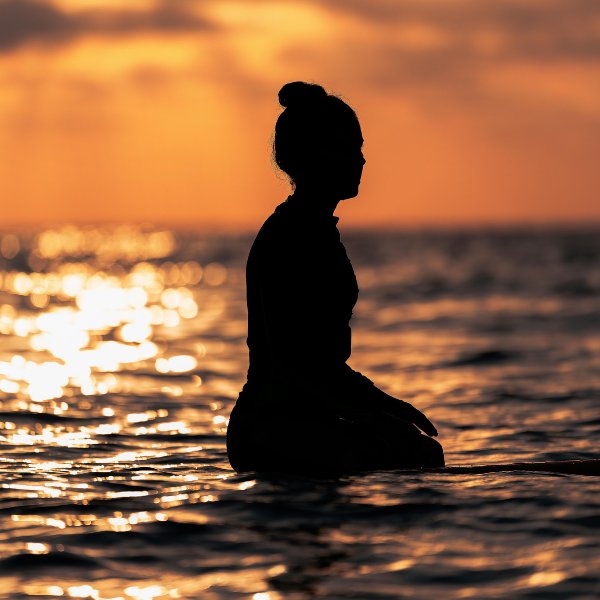
Photo by Vladislav Lolenko
Why Meditate?
The ancient yogis practiced meditation as an alchemical and spiritual path of inner transformation that we might live with fulfilment in this world and also discover freedom from the tyranny of mind.
For me, it is all of the above, and something much simpler. In meditation, I find deep joy, and a connection with source, a fathomless peace and stillness that nourishes my soul.
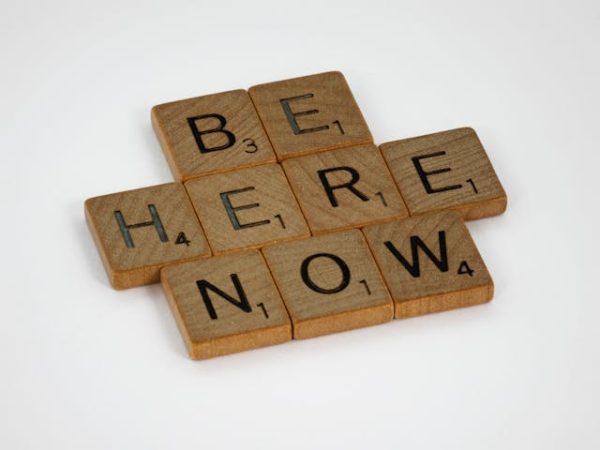
Photo by Brett Jordan
It is said that we measure the quality of our practice not through the experience of practice, but through the quality of our presence in the day that follows. I know that if I miss practice, I am more cranky, less tolerant and feel less balanced. When I practice consistently, I feel centred and clear. It's certainly enough of an incentive to make this much reluctant yogi commit to practice!
And the short answer to do I practice mindfulness?
Sure I do! It's part of dharana, one of the three internal samyama states of meditative practice.
May you find the practice that calms your mind, nourishes you within & lights up your soul.
 References
 References
[1] Sutra 1:2, p5. The Secret of the Yoga Sutra: Samadhi Pada, Pandit Rajmani Tigunait, 2014, 2018
[2] Sutra 2:29, p161. The Practice of the Yoga Sutra: Sadhana Pada, Pandit Rajmani Tigunait, 2017
[3] Awakening Power in the Yoga Sutra: Vibhuti Pada, Pandit Rajmani Tigunait, 2022
Main – Photo by THÁI NHÀN
About the Author: Winnie Man