

Why am I so obsessed with breath?
Well…in part it sparks joy for my inner geek. And I meditate.

Photo by RAY LEI
In my tradition, the Himalayan Tradition, an unbroken teacher, student lineage of over 5,000 years with Vedic roots, we have a simple teaching:
We don’t seek to manage the monkey mind. The sages discovered something else far more powerful – by managing our breath, we manage our mind.
The word prana has multiple meanings and layers. Generally, prana correlates to the energy of the subtle body accessed through the chakras. We have an experience of prana each time we get a spark of static going from a humid, warm heated building into the cold.

Photo by Landiva Weber
Or, you can try the old martial arts trick.
Generating chi or prana:
- Bring your palms together
- Generate heat by rubbing your palms together, speeding up as you do so
- When you can’t bear it anymore, and your palms are tingling, pause
- Gently bring your palms together, until you find an energetic resistance, somewhere between 1cm to 5cm between the palms
- Play with that energy, stretching it like you would dough for bread or fresh pasta, and see what evolves
- You may find that you hold a ball of energy, or a long baton
- This is you experiencing what we call energy, or prana in Sanskrit, and chi in Eastern systems

Photo by Nunzio La Rosa
The second meaning of prana is breath. In Vedic and yogic teachings, breath and energy share the same word, suggestive of the relationship between the two.
Prana is also the word for mind.
This triple meaning of prana gives you a clue in its importance in the role of meditation and the breath. The secret is that we don’t try to battle the mind. We take an easier route. We focus on managing the breath, and influencing it with energy, and managing these two bases of the triangle, allows management of the mind. When breath is calm, so is mind.
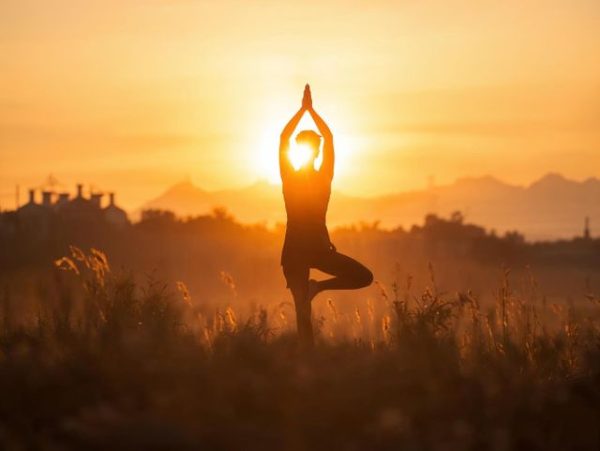
Photo by Lovish Jain
When the mind is agitated, due to rumination, anxiety or other reasons, breath is disturbed. For example, if someone is emotionally overwhelmed or ruminating, then breath is likely to be ragged, shallow, and uneven. We don’t try and fight the mind, we focus on managing the breath, influencing into the vagus nerve, the 10th cranial nerve, to calm the nervous system, and calm the mind.
The reason why asana, the physical postures of yoga is often taught as a precursor to meditation, is to eliminate physical constraints that prevent good posture to support sitting in meditation. Believe me, sitting for periods of longer than an hour in meditation is extremely physically challenging, and we train for that in ways akin to marathon training!
So, smart meditators know that by managing the body allows greater access to manage breath, and managing breath allows us to manage the mind. When breath is calm, the nervous system calms, and so does the mind.

Photo by Naveen Ketterer
One of the areas that often gets missed is the difference between mouth breathing and nasal breathing. There is a reason why most pranayama preparation for meditation teaches closed mouth breathing and focuses on healthy diaphragmatic breathing through the nostrils.
Five reasons why you shouldn’t mouth breathe:
- Dry mouth
- Snoring
- Respiratory issues
- Atypical face and teeth shape
- Ear, nose, and throat infections
1. Dry Mouth
Breathing through the mouth dries out your saliva. Saliva protects against, gum disease, tooth decay and bad breath. So breathing through your mouth means you’re more likely to have to be friendly with your dentist and invest in chewing gum and mouthwash!
2. Snoring
Mouth breathers are more likely to snore. Snorers are more likely to suffer daytime fatigue and brain fog. That is all.
A simple way to manage this is to use a vertical strip of surgical tape over your lips last thing at night, to encourage the mouth to stay closed as you sleep. Also, make sure your pillow is firm enough that your head doesn’t roll back, exposing and tilting your throat forward, a position that increases snoring opportunities.
3. Respiratory Issues
The human body is designed to inhale clean, filtered air, minus dust and germs, through nasal hairs. As air passes through the nasal passages, it warms up and becomes more humid.
Mouth breathers inhale unfiltered cold air direct into the lungs, causing the lungs to have to labour more, and can worsen respiratory issues like asthma.
4. Atypical Face & Teeth Shape
Chronic mouth breathing in children results in changed bone structure, including jaw, chin and crooked teeth. And smaller chin, jaw and crooked teeth suggests orthodontic bills…
5. Ear, Nose & Throat Infections
You’re more likely to breathe in more pathogens or germs through mouth breathing, increasing the likelihood of catching a virus or infection in the ear, nose of throat!
Three more reasons to focus on breathing through the nose:
- Nitric oxide production
- Nervous system regulation
- Improved endurance
1. Nitric Oxide Production
Nasal breathing produces nitric oxide, necessary for widening blood vessels and boosting blood circulation. This helps the body absorb oxygen more efficiently, boosting immunity.
2. Nervous System Regulation
Nasal breathing invokes the parasympathetic nervous system, the “rest and digest” part of the nervous system. This lowers heart rate and reduces anxiety.
3. Improved Endurance
Nasal breathing improves stamina during exercise and other physical activity by regulating carbon dioxide and oxygen balance. Who doesn’t want to improve physical performance simply by closing your mouth and not having to make any other training changes?
So now you understand why I think breath is so endlessly fascinating!
Photo by molochkomolochko

Historically, the Vedic traditions have utilised pranayama, breathwork, including nadi shodhana, alternate nostril breathing, to manage breath. Yoga nidra helps cultivate and collate pranic flow, energy, as well as increasing our awareness of our subtle body.
And if you’re super serious about breath, take a look at how yogis have used nasya oil and neti pot to cleanse the nasal passages! Personally, I prefer nasya oil these days, and olive oil is a good standby option. Simply coat the tip of your little finger in oil, and place finger inside your ears, and then your nostrils. Allergens get stuck in the oil as a barrier, rather than moving further down the nasal passages.
Most yoga instructors aren’t trained in pranayama or meditation, so hunt out the traditionally trained geeks (we do exist, and most of us don’t hide our fascination with breath!), and experience the joy of breathing more freely.

Photo by Naveen Ketterer
Your body & mind will thank you for it! And who knows, this might be the beginnings of you as a meditator!
Main – Photo by Otto Rhino
About the Author: Winnie Man