I am looking around and it feels hard at the moment. Children, people, animals, nature, the world, our world, our humanity, what makes us human. The further out I look, the harder it feels. I was told by a fellow practitioner that, according to her, not as many of us feel this way as strongly as her and I might. Is that true? Aren’t many of us looking around and feeling deeply about what’s happening?
These types of questions don’t usually politely knock on our inner door one fine morning. They build up silently and patiently in our reluctant deaf ears until a certain point where they abandon any sense of subtlety. That’s how, one day, they decide to open the door, uninvited. That’s usually when we consciously realise and admit to ourselves that something isn’t quite right; might not have been for while, but now we can no longer ignore it. In reference to one of my favourite movies and soundtrack, we could say that we are in The Big Blue.
Where do we go from there? Irony and obviousness having their place, I would genuinely say: please contact your therapist, now is the time. But that’s a given and that put aside, I want to talk about what we do outside of therapy when things don’t just feel hard, they simply are. I will never stop repeating that what we do outside sessions is as important as what we do during. And before we move forward, please remember and forbid yourself to compare “your hard” to someone else’s. In our dignity and singularity, we’re all worth much more than measuring up suffering.
In my online course “New Chapter”, one of my longest modules is about our “support systems” and there is a reason for it. We need one. What can be unsettling to navigate though is when our support system needs updating – technically it always does, nothing is set. But it can happen that you think you’re solid, you have your safeguards in place for when life does what life does, but every now and then it doesn’t seem to work out to the level you had hoped. Your most reliable people aren’t available, you need to find a specialist and you have no idea how to find the right person, you need time off but now your obligations are screaming “it’s the worst time for a break”. You see where I am going. The uncertainty is doubling down and with it the feeling of being a sinking boat on its way to the bottom of the ocean without anyone noticing and certainly not Jacques Mayol or a dolphin to our rescue.
Hence, the very first element of your support system, without giving all of the game away, is you. Please don’t roll your eyes thinking this is a cliché. The world is full of passive people waiting to be rescued and who won’t lift a finger to get themselves out of the hole they’re in whether it’s of their making or truly unfortunate. The point therefore remains; unless it’s an extreme case where we are incapacitated, when things get difficult, we have to rely on ourselves first and foremost. How we’re going to do this will vary. What you do to help yourself at 40 is, trust me, not what you do when you’re 20 years old – dare I say for the better.
Over time though we’ve accumulated some knowledge about ourselves. Life has experimented with us quite a bit and we have a sense of what works for us. This is critical information. In these hard moments, these foundations and basics matter because we aren’t necessarily in the right frame of mind to think critically, with discernment or to choose wisely. Even our own intuition can feel a bit out of whack and leave us unsure. So being able to reach for a few proven and trusted “support system” items of our own becomes precious. Like a life-line, we action them on auto-pilot until we can reach the surface, even for a second to get some air under our wings, if not in our lungs.
Lately I have been doing just that and for me that included a new type of journaling (credit to Nicole Sachs) much more framed, tight and with which I am regular like clockwork. After each journaling session, I do a short guided meditation (one that I have known and loved for years, nothing fancy, just something that works for me and soothes me). Then, forced rest, books / podcasts that inspire or guide me, as well as diving back into my spirituality in a more active and intentional way than when I am in cruising mode. I have currently added some Yoga Nidra to my regimen (a very bare and light version with no music), I use a free app to practise cardiac coherence breathing a few times a day and every few days I soak in a bath full of epsom salts. When I need to, I take the medication I require. Finally, I am tracking everything because it gives me a sense of control as well as some coordinates towards patterns worth noticing.
These are just examples but I want to emphasise two things. This isn’t forever, this is what I need right now. Also none of what I mentioned involves anyone else at this point. And it’s important because not everyone else I would have wanted to be there for me in a way or another could or wanted to be. That too is a lesson in dealing with life being life on its terms rather than ours. We are always invited to evolve and adapt.
A very wise patient of mine who I adore, said to me (talking about herself) no later than yesterday in her session: “j’ai ma part à faire” (“I have to do my part”). I smiled. My patients often are my inspiration for my articles and this time was no exception. In whatever we’re going through, we have to be present for ourselves. We can’t jump off our own boat every time it rocks. Imagine…
So the boat might be rocky right now, you might even be terrified that it might crash on the rocks or simply sink. I am not going to tell you it won’t, but I can guarantee that there is a lot you can still do before you’ve exhausted your options. Small repetitive actions of your choosing, which are the right ones for you, can help you remain in touch with yourself with gentleness and compassion. Each one is a win that brings you closer to the shore. Slow and steady.
I know she is over-quoted but Glennon Doyle said it so well in her book Untamed: “we can do hard things”. And by that, I am sure she also meant: we have our part to play.
Finally, and it’s important we all remember this; it might feel like it sometimes but I promise you’re not alone. Allow yourself to reach out and ask for some help.
Now go watch The Big Blue in French with English subtitles. It’s a wonderful movie and the music by Eric Serra is delightful.
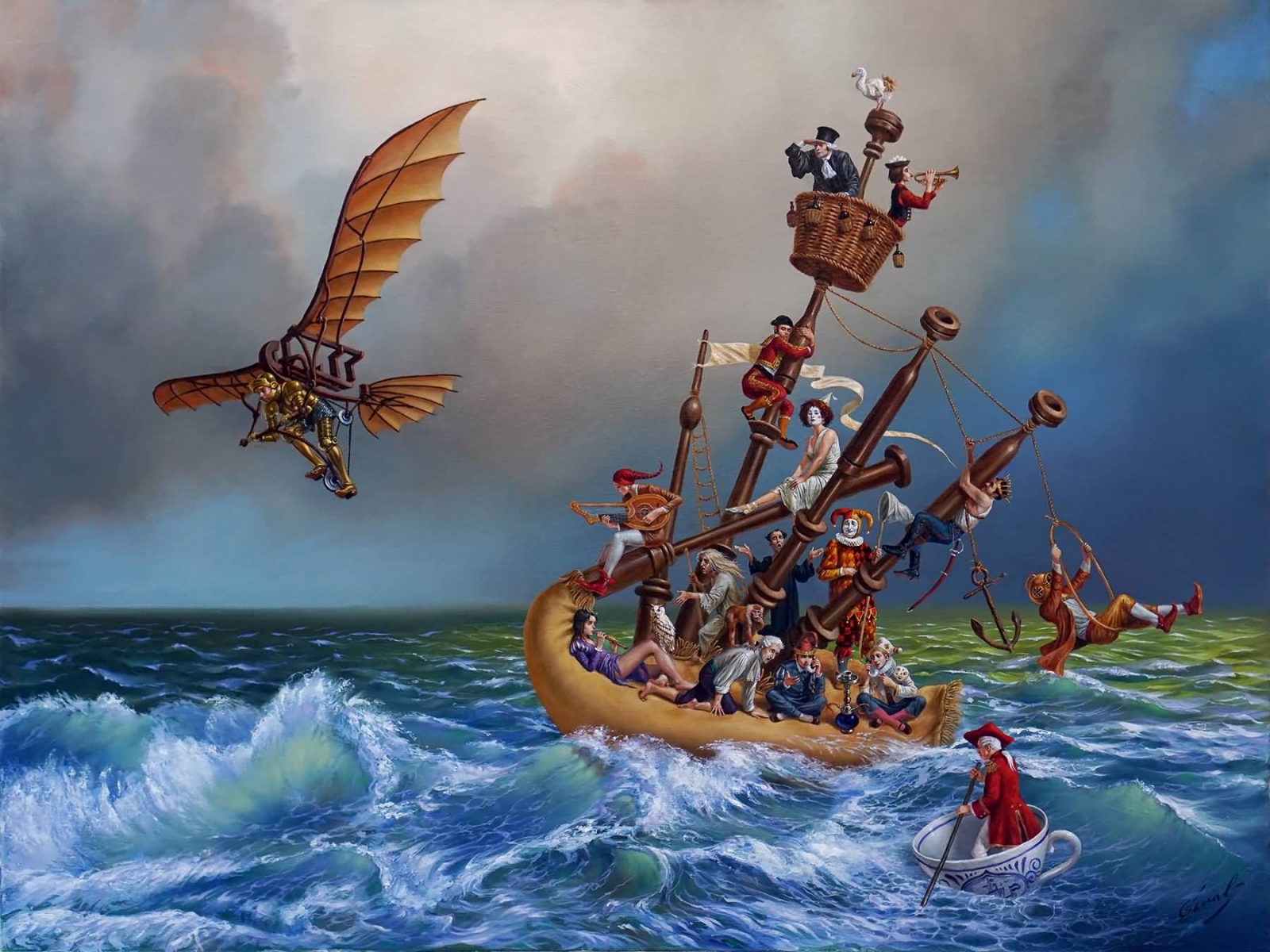
Photo by Michael Cheval
About the Author: Mahé Léa