

Helping Children Feel Safe in the Water.
For many adults, water represents freedom, it brings memories of holidays, laughter, family time and childhood adventure.
Yet for many children, entering the water can feel very different.
What adults see as fun and exciting, children may experience as unfamiliar, unpredictable and even frightening.
Learning to swim is not simply about teaching physical skills, it is deeply connected to psychology, emotional development and confidence.
Over the last 30 years, our understanding of how children learn has changed enormously.
Modern child psychology now shows us that emotional safety plays a major role in how effectively children absorb information, build confidence and develop lifelong skills.

Children do not learn well when they feel afraid.
When a child becomes anxious, overwhelmed or pressured, the brain naturally shifts into a protective state.
In this mode, learning becomes far more difficult, curiosity reduces, confidence disappears and the child’s focus moves towards self-protection rather than exploration.
For many children, the fear is not actually the water itself, it is the fear of losing control.
The fear of sinking, the fear of not being able to recover.
Water changes almost everything a child is familiar with,
- balance feels different,
- breathing feels different,
- movement feels different.
Some children adapt quickly, while others need time to feel emotionally secure.
This is why confidence cannot simply be forced.
Real confidence is built gradually through positive experiences, trust and emotional safety.
Children learn best in environments where they feel calm, supported and encouraged.
Swimming is no different, a child who feels safe is more likely to relax, experiment, make mistakes and quietly discover what they are capable of achieving.
That process of self-discovery is incredibly important.
Modern psychology strongly supports the idea that children develop deeper confidence when they are active participants in learning rather than simply following instructions.
When children are allowed to explore safely, solve problems and experience small successes independently, they begin developing genuine self-belief.
Sometimes the smallest achievements can have the biggest emotional impact.
Blowing bubbles for the first time, floating independently for a few seconds or letting go of the wall may appear minor to adults, but to a child these moments can feel enormous.
Confidence grows through accumulated success, praise and encouragement, even for very small steps forward, can have a remarkable effect on a child’s willingness to keep trying.
Play also plays a major role in the learning process.
For children, play is not simply entertainment, it is a well known fact that it is one of the most natural and effective forms of learning.
Through games, imagination and exploration, children develop coordination, body awareness, (and other Fundamental Movement Skills) emotional regulation and problem-solving skills without even realising it.
This is one reason why modern swimming programmes are increasingly recognising the importance of creating positive emotional experiences in the water rather than relying purely on repetitive drills or rigid instruction.
When children associate water with enjoyment and achievement, they are far more likely to develop confidence and continue swimming throughout life.
Even the design of swimming aids and teaching tools can influence how children feel emotionally in the water.
Some swimming aids can unintentionally create dependency or awkward and wrong movement patterns, increasing frustration or anxiety.
Others are designed to encourage more natural movement, independence and exploration.

One of the biggest causes of fear in young swimmers is the feeling of losing control.
Teaching aids that scaffold children while still allowing them to move naturally can often help reduce anxiety far more effectively than equipment that creates excessive buoyancy or unnatural body positions.
When children feel physically comfortable and unrestricted in the water, their focus shifts away from fear and towards learning and enjoyment.
Psychology also tells us that imagination has a powerful influence on confidence.
Something as simple as a child wearing the SwimFin swimming aid can completely change how they emotionally engage with the experience.
Rather than focusing on nervousness or uncertainty, children often become playful, adventurous and excited.
To adults it may appear to be just a piece of equipment, but to a child it can transform the emotional meaning of the entire lesson through imagination and discovery.
Children build confidence fastest when they feel successful without feeling completely dependent.
This is why independent exploration is so important.
A child quietly discovering “I can float” or “I can move myself back to safety” experiences a powerful psychological shift.
They begin trusting themselves rather than relying entirely on assistance and reassurance from others.
There has long been debate within the swimming industry about different teaching methods, particularly around more forceful survival-style approaches.
While some programmes may appear to produce quick visible results, it is important to recognise that compliance does not always equal confidence.
Some children may appear to perform skills while internally feeling anxious or distressed, others may become emotionally withdrawn or begin associating water with pressure and fear rather than enjoyment. We ask the question, is this paving the way for a lifetime of enjoyment in the water
Parents can often identify this through changes in behaviour.
A child who suddenly becomes clingy before lessons, reluctant to attend or unusually quiet around swimming may not necessarily lack ability, they may simply not feel emotionally safe.
A genuinely confident child often shows very different signs.
- They become curious, playful and increasingly independent.
- They volunteer to try new things
- Recover more calmly from mistakes
- Begin taking pride in their own progress.
These are often the clearest indicators that true confidence is developing.
Every child learns differently and modern child development strongly supports this understanding.
Some children naturally jump into new experiences, while others prefer to observe quietly before participating.
Some are more sensitive to noise, splashing, temperature or busy environments.
Good teaching adapts to the individual child rather than expecting every child to respond in exactly the same way.
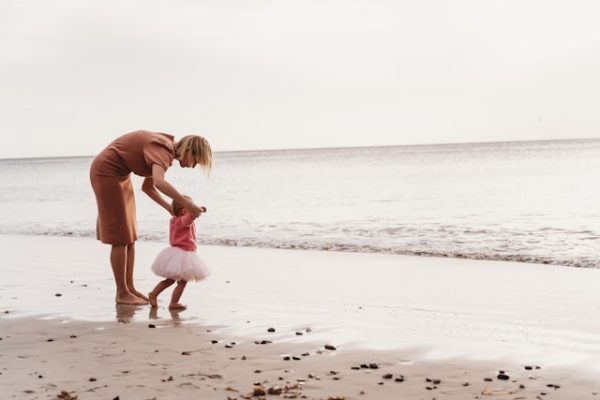
Photo by Jessie Maxwell on Unsplash
Parents also play a major role in the emotional atmosphere surrounding swimming.
Children are highly sensitive to adult emotions.
If parents appear anxious, impatient or overly focused on achievement, children often absorb those feelings.
Calm encouragement, patience and celebrating progress rather than perfection can dramatically improve a child’s confidence and enjoyment.
Perhaps one of the most important things parents should remember is that confidence develops gradually.
Progress is rarely perfectly straight, some days children appear fearless, while on other days they may suddenly seem hesitant again.
This is completely normal, learning to swim is not simply physical, its emotional too.
The wonderful thing about helping children feel safe in the water is that the effects often reach far beyond swimming itself.
Children who develop confidence in challenging environments frequently carry that confidence into other areas of life.
They become more resilient, more independent and more willing to trust themselves.
Freedom in water does not come from pressure or fear. it comes from trust, encouragement, exploration and positive experiences.
When children feel emotionally safe, they learn more effectively, build stronger confidence and develop a healthier relationship with water that can last a lifetime.
Every confident swimmer was once uncertain.
Every child who swims happily today began somewhere between curiosity and fear.
The journey from fear to freedom is not about forcing children to become fearless, its about helping them feel safe enough to believe in themselves.
Main – Photo by defina sumardji on Unsplash
About the Author: Kev Moseley