
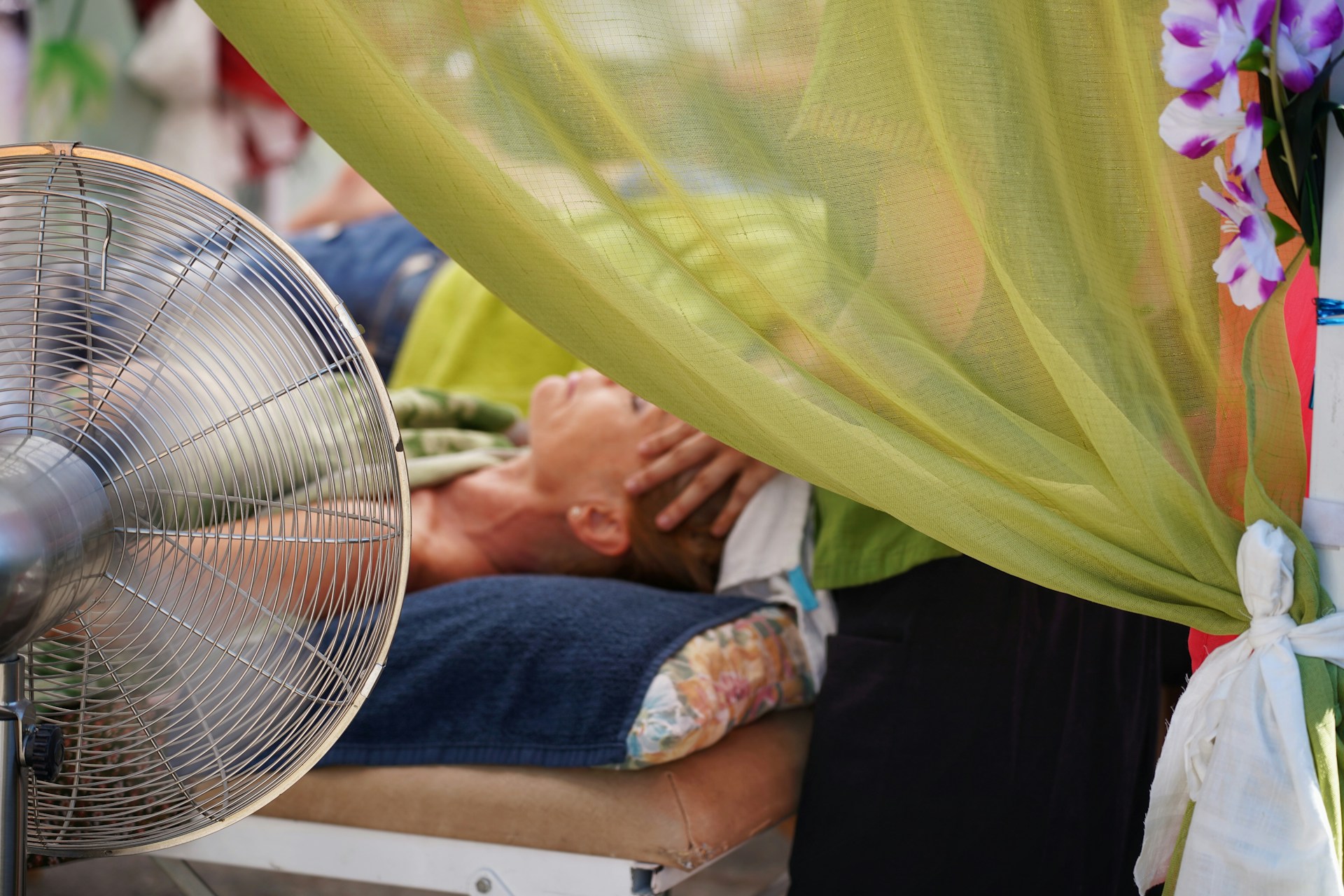
The end of June witnessed some of the hottest days on record. At the time of writing this, I am sitting sweating in my room, having eaten some melted ice cream and taken a nap with a frozen eye mask on my face. This is not normal.
It got me thinking about how we can sometimes become heated in other ways too. How might we, for instance, allow anger to affect our judgement? Frustration to cloud our thoughts when dealing with an important situation or relationship: an interaction with a family member or a colleague/client, for instance?

Here are some thoughts on ways that we might handle our anger and stress management a little bit better. I’d be interested to hear your thoughts.
- Pause. I recently re-engaged with some Victor Frankl (author of “Man’s Search for Meaning”). Frankl was a Jewish psychiatrist who was incarcerated in concentration camps, including Auschwitz, during the Second World War. A quote that is widely attributed to Frankl, though does not in fact appear in his writings, is, ‘Between stimulus and response lies a space. In that space lie our freedom and power to choose a response. In our response lies our growth and our happiness.’ Another quote from Frankl points out that, “Everything can be taken from a man but one thing: the last of the human freedoms—to choose one’s attitude in any given set of circumstances, to choose one’s own way.”
- Step back and see the bigger picture. My friend recently took a selfie at our school friendship group reunion. I had tried on my phone, but the angle didn’t work and the camera didn’t seem to quite capture everyone. He is taller than me, with a longer arm reach, and was sitting at a different point in the group, making it easier to capture a picture of us all. In addition, however, his camera was newer. As he pointed out, it had a wider-angle lens. It captured us all easily. Sometimes, it might be helpful for us to change the ‘camera’ we are using to view the world: how might we think about things differently, from the other person’s perspective, perhaps?
- Examine yourself. If we are to learn from the ancient Greeks, we are encouraged to begin with self-awareness. The inscription ‘Know thyself’ was apparently written on the Temple of Apollo at Delphi, and this sentiment is mirrored in other belief systems. Perhaps a useful lesson for us is to examine our motives. I was reminded recently that people tend to judge themselves by their motives, but to judge others by their actions. Maybe we need to show a little bit of grace, both with ourselves and with others.
- Consider the other person. The ‘golden rule’ as it is sometimes called appears in many worldviews. Seek to do to others as you would have them do to you. Jesus of Nazareth is one proponent of this. We risk forgetting ancient wisdom sometimes. As our pace of life, and the rate of technological change, seem to increase, let’s take a moment to appreciate the words of those who have gone before us. Imagine you are that other person: how might you like to be treated? Sometimes it helps to physically place yourself in another chair, imagining that you are talking to yourself (not in a weird way!). This can be a powerful exercise of coming out of your own perspective and stepping into another’s.
- Remember love. I recently came across this quote by Niebuhr on the inside of Thomas Cahill’s book on how the Irish saved (Western) civilisation. The quote reads, “Nothing that is worth doing can be achieved in our lifetime; therefore we must be saved by hope. Nothing which is true or beautiful or good makes complete sense in any immediate context of history; therefore we must be saved by faith. Nothing we do, however virtuous, can be accomplished alone; therefore we must be saved by love.” Victor Frankl came to believe through his Auschwitz experience that love is the ultimate good in the universe. Remembering how we have been given love may motivate us to seek this for others as well.
- Seek the common good. I love this phrase: the common good. It can be traced back through Thomas Aquinas, Cicero, and Aristotle, and is perhaps what we strive for in modern democracies. How can this situation I find myself in become a win-win? Or even a win-win-win, where society as a whole benefits from my interaction with this other person?

Photo by Courtney Cook on Unsplash
I hope some of these thoughts are helpful. Stay cool. Maybe have an ice cream. Be grateful for the summer while it’s here.
Main – Photo by Robert Eklund on Unsplash
About the Author: Jeff Slater