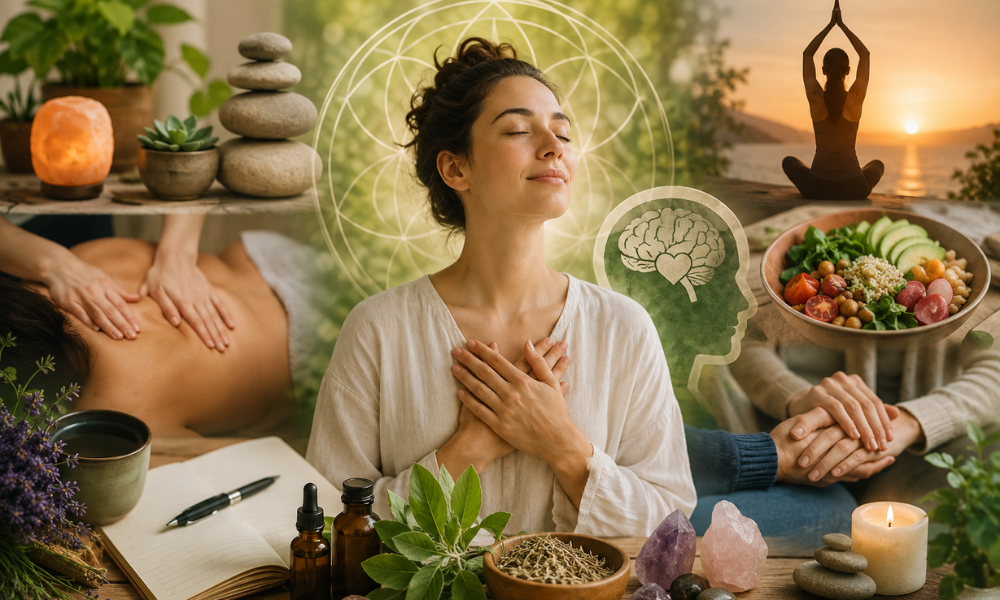
It is generally agreed that holistic therapy is a practise that seeks to support the whole person—mind, body, emotions, and, for some approaches, spiritual wellbeing—rather than focusing only on a specific symptom, illness, or injury as is generally the case in 'medicine'.
This might (and perhaps should) include
- Emotional wellbeing
- Environment
- Lifestyle
- Mental health
- Personal beliefs and values
- Physical health
- Relationships
The word Holistic appeared in 1926 and appears to stem from –
- the Greek word 'Holos' – whole, entire or complete
- 'Holism' the philosophy that the 'whole' is greater than the sum of its parts
In the 1960s, 'Holistic' became associated with medicine and a holistic therapist was one who sought to consider 'the whole body' rather than just a specific ailment.
Currently, BGi.uk provide insurance for thousands of Holistic Therapists through 'Foyht', the Health & Wellbeing group. Interestingly, since the 1960s, the collective 'Holistic Therapists' have slipped into different groups, categories or 'modalities': and some of those modalities are moving closer and closer to 'medicine'.
However, ultimately, the specialist holistic therapist still considers the wellbeing of the person/patient as a whole – and treats them accordingly.
BGi.uk has agreed with Foyht that a 'Holistic Therapy', might be considered 'a treatment, session or experience' provided by the therapist that leaves the patient 'in a better place' after the treatment/session/experience than before'.
Main – image created using AI
About the Author: Nick Elwell