
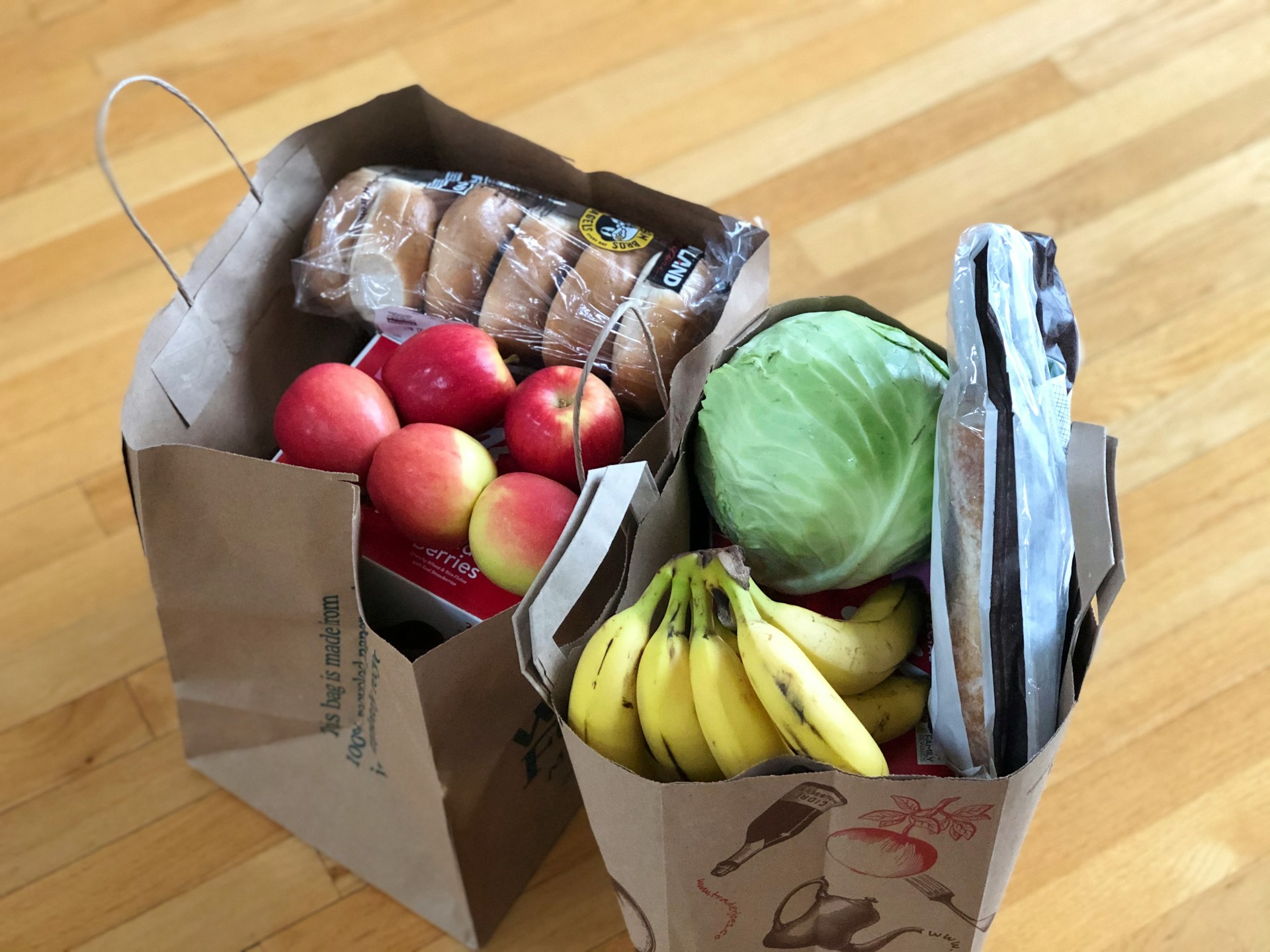
Sometimes I think the most useful session I could offer my clients would not take place in a clinic or online. It would take place in a supermarket aisle.
Many of them tell me the same thing. "If only you could come shopping with me." They want to see what I notice, what I ignore, how I compare products, and why I put certain items back on the shelf. What feels simple to a trained eye can feel overwhelming to someone standing in front of dozens of brightly packaged options.
Food labels are everywhere, yet very few people feel confident reading them. Most of us glance at the calories, check whether something is "low fat" or "high protein," and move on. Others look at the ingredients list but are unsure what half of the words mean.
At the same time, interest in nutrition has never been higher. People want to make informed choices. They want to reduce sugar, increase protein, avoid ultra-processed foods, or simply eat in a way that supports their health. The difficulty is that packaging is designed to sell. It is not designed to educate.
Learning to read nutrition labels properly is not about becoming restrictive or obsessive. It is about understanding what actually matters and ignoring what does not.

Photo by Gustavo Fring
Start with the ingredients list
If there is one place to begin, it is the ingredients list. Ingredients are listed in descending order by weight. This means the first three ingredients usually tell you most of what you need to know.
When I scan a product, I rarely start with calories. I look at those first few ingredients. If sugar, refined flour, or processed oils appear at the top, I know that product is largely built around them. If the first ingredients are recognisable whole foods, that is usually a better sign.
A long ingredient list does not automatically make something unhealthy. But when the list includes multiple additives, flavourings, stabilisers, or colourings, it suggests a higher degree of processing. The more a product relies on added substances to improve taste and texture, the further it tends to move away from its original form.
Do not be distracted by the front of the pack
Words such as "natural," "high protein," "low fat," "no added sugar," or "source of fibre" are marketing tools. They highlight one feature while often ignoring the overall nutritional profile.
A product labelled "low fat" may compensate with added sugars. A "high protein" snack may still contain refined carbohydrates and artificial ingredients. A cereal marketed as "wholegrain" may still be largely processed starch.
Front-of-pack claims are designed to catch your attention. The real information is always on the back.
Understand portion sizes
One of the most common sources of confusion is portion size. The nutrition table usually presents values per 100 grams and per portion. The per 100 grams column allows you to compare products directly. The per portion column depends entirely on what the manufacturer defines as a serving.
Sometimes a portion is smaller than what most people would realistically eat. This can make sugar or calorie content appear lower than it would be in practice.
When comparing products, I focus on the per 100 grams values. It gives a clearer and more consistent basis for comparison.

Photo by Jack Sparrow
Look beyond calories
Calories matter, but they are only part of the story. Two foods can contain the same number of calories and have very different effects on appetite and energy.
Instead of focusing only on calories, look at the balance of nutrients. Check the protein content. Look at fibre. Examine total carbohydrates and how much of that comes from sugars.
A product high in sugar and low in fibre is likely to affect appetite and energy differently from one that contains protein and fibre. The nutrition table helps you see this balance more clearly.
Be aware of hidden sugars
Sugar does not always appear simply as "sugar." It may be listed as glucose syrup, fructose, maltose, dextrose, agave syrup, rice syrup, or fruit juice concentrate. Several forms of sugar can appear separately on the ingredients list, making each one seem smaller in proportion.
This is why reading carefully matters. If multiple types of sugar are present, the overall sugar load is usually higher than it first appears.
The nutrition table will confirm this. Look at the "of which sugars" line under carbohydrates. This gives you a direct indication of how much of the carbohydrate content comes from simple sugars.
Context matters more than perfection
No single product determines your health. Reading labels should not become a source of anxiety. It is a practical tool that helps you make more informed decisions most of the time.
When I shop, I am not looking for perfect products. I am looking for options that are closer to whole foods, that contain fewer unnecessary additives, and that support steady energy and satiety.
Rather than asking whether a product is "good" or "bad," it is more helpful to ask what role it plays in your overall diet.
Is it providing nourishment, or mainly convenience?

Photo by Gustavo Fring
Building confidence over time
Reading nutrition labels becomes easier with practice. Over time, patterns become clearer. You start to recognise which brands rely heavily on additives and which prioritise simpler formulations.
The goal is not to analyse every purchase in detail. It is to develop enough literacy to see beyond marketing and understand what you are actually buying.
In a food environment that is increasingly complex, this skill offers a quiet advantage. It shifts decision-making from impulse to awareness. And that awareness, applied consistently, can make a meaningful difference to long-term wellbeing.
Main – Photo by Maria Lin Kim on Unsplash
About the Author: Elena Cholovska