
How the Therapist's State Shapes Patient Response
Exploring the Influence of the Therapist's Autonomic State via the Dive Reflex
In manual therapy, we often focus on the patient—yet a fascinating and underexplored factor is the therapist's own physiological state. Emerging observations suggest that the therapist's autonomic nervous system can influence the flexibility and tissue response of the patient, potentially via a little-known mechanism: the Dive Reflex.
The Dive Reflex, a recognised mammalian parasympathetic reflex, may be indirectly evoked through diamagnetic and dielectric contact—such as water or human touch—applied not to the patient, but to the therapist. This subtle interaction offers exciting possibilities for improving patient outcomes.
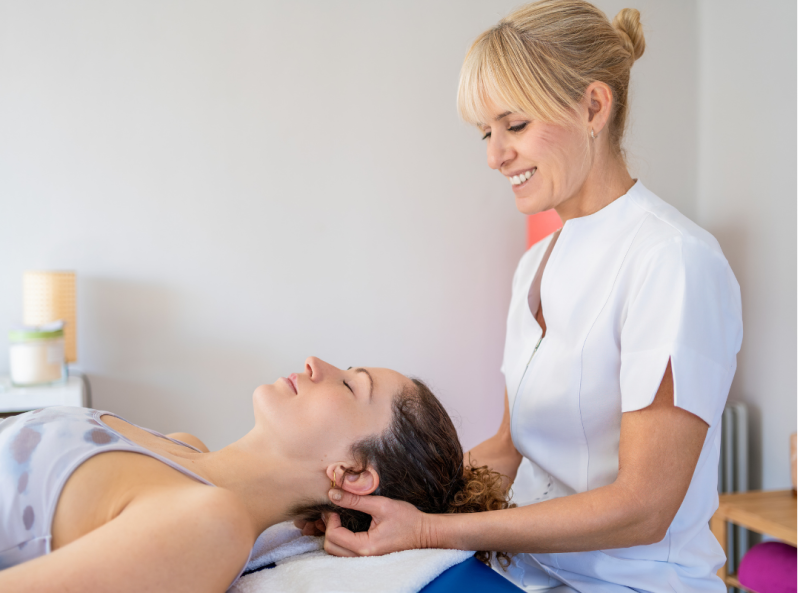
Image created on Canva
Fundamental Principle
The Dive Reflex is triggered when diamagnetic or dielectric materials contact the body, promoting:
- Parasympathetic dominance
- Relaxation
- Oxygen conservation
- Reduced heart rate
In a therapeutic context, this reflex may influence the mechanical and neurological interactions between therapist and patient.
Observed Physiological Responses
Key observations show that patient flexibility increases following activation of the Dive Reflex. Objective assessments include:
- Straight Leg Raise (SLR) test
- Hip internal rotation, measured bilaterally
Human touch itself is predominantly water—a diamagnetic medium. Its effectiveness in promoting patient relaxation varies with the therapist's autonomic state, meaning the therapist's own physiological balance directly impacts the patient's response.
Experimental Observations
Interestingly, stimulating the therapist before patient treatment can change the patient's observed flexibility:
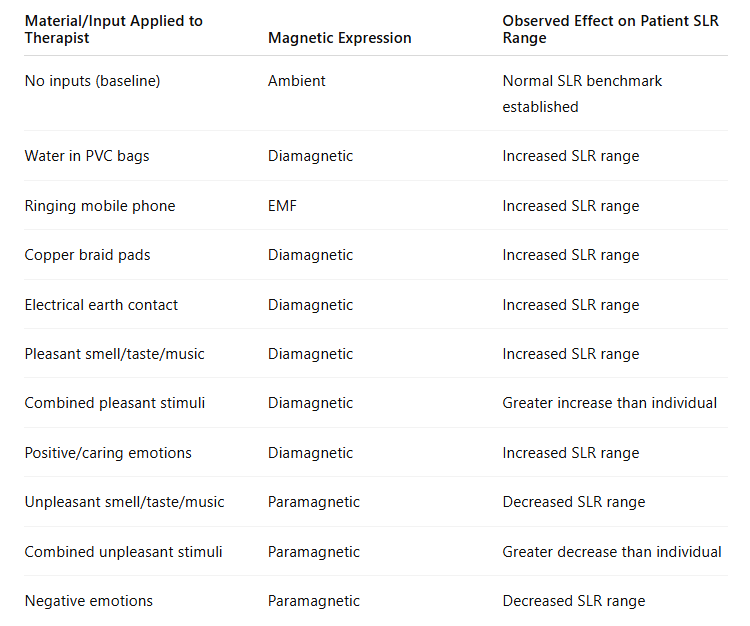
These findings suggest that the therapist's autonomic and emotional state modulates the patient's tissue response, likely via diamagnetic field interactions.
Core Physiological Principles

Key insights:
- Water as a Diamagnetic Medium: Stabilises electromagnetic fields and facilitates communication between tissues.
- Therapist–Patient Magnetic Dialogue: The therapist's hands convey diamagnetic or paramagnetic fields depending on autonomic tone, influencing tissue tension.
- Emotional Influence: Therapist emotions, as expressions of autonomic tone, further modulate this magnetic communication. Positive emotions enhance parasympathetic relaxation; negative emotions increase sympathetic contraction.
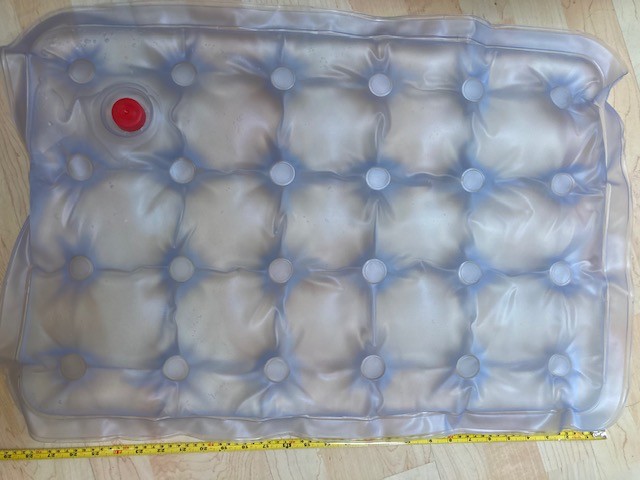
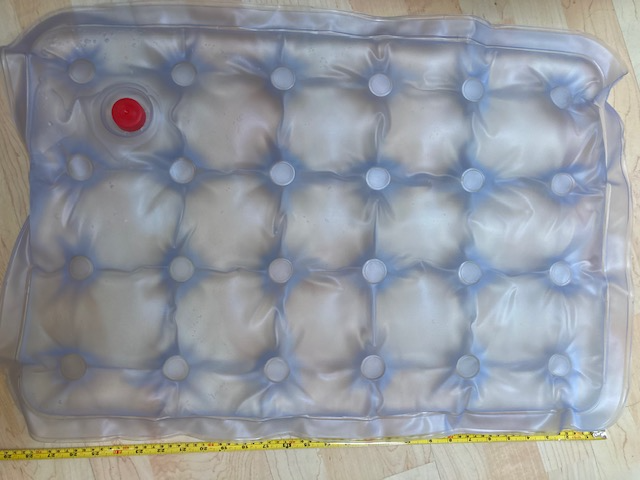
Image of a water pad by Hector Wells
Discussion & Conclusion
These observations highlight that the therapist is an active participant in the therapeutic exchange. Even when the same patient is treated by different practitioners, their measured flexibility (SLR, hip rotation) varies according to the therapist's autonomic and emotional state.
Stimuli such as water bags, copper surfaces, electrical grounding, or mobile phone EMFs can shift the therapist's diamagnetic field, producing measurable changes in the patient's tissue response. The closer the therapist's hands approach the diamagnetic characteristics of water, the more effectively relaxation is conveyed. Conversely, sympathetic arousal reduces diamagnetic expression and diminishes relaxation transfer.

Summary for Practitioners:
- The Dive Reflex can be triggered indirectly via therapist touch.
- Human touch conveys both emotional and electromagnetic information, affecting patient contractility or relaxation.
- Water acts as a diamagnetic medium, promoting tissue relaxation.
- The therapist's autonomic balance directly influences patient response.
- These effects are measurable using SLR and hip rotation tests.
This research underscores the therapist's state as a measurable, trainable variable in manual therapy—opening new avenues for enhancing treatment outcomes and professional practice.
Call For Action To Practitioner's.
Modern manual therapy is increasingly taught as a purely kinetic modality — where mass × velocity = force — and viewed simply as a system for delivering mechanical force. What's missing from this approach is the vital recognition of the practitioner–patient exchange: the subtle, relaxing influence of the practitioner's own diamagnetic and parasympathetic state on the patient.
Cranio-sacral therapists and medically registered cranial practitioners are uniquely placed to help bridge this gap. We invite you to record and report your own observations — particularly changes in SLR (Straight Leg Raise) and hip rotation — in relation to shifts in your own autonomic, diamagnetic, or parasympathetic state.
You may also wish to note any variations you observe when your electromagnetic environment changes — for example, when using a mobile phone, or when in contact with water — and how these correlate with the reference chart.
Please share your findings with Sam Rowley or Andrew Slater at Foyht. By contributing your first-hand experiences, you'll help build a stronger, evidence-based case for the subtle energetic dimensions of touch and presence in therapy.
Such collective insight could prompt the wider manual therapy community to acknowledge what many cranio-sacral practitioners already know: that the practitioner's internal state profoundly influences the patient's outcome.
A Bold Invitation From Hector Wells BSc (Hons), D.O.
Most manual therapists have never been taught how to harness the Dive Reflex, nor to understand the profound diamagnetic influence of water on the body. Until now, these processes have not been recognised or covered by manual therapy insurers.
That has changed in 2025.
Foyht has officially endorsed the Diamagnetic Dive Reflex as a safe, new, and effective therapeutic approach — putting their name and reputation behind this pioneering method.
If you're ready to deepen your understanding of the practitioner–patient connection and experience how the body's natural Dive Reflex can promote deep relaxation and enhance the effectiveness of your techniques, Hector Wells invites you to explore this breakthrough.
Discover how water alone can calm the sympathetic system, expand parasympathetic balance, and transform the quality of your therapeutic touch.
The Dive Reflex Effect is now a Foyht-approved technique.
Hector Wells is proud to be the first tutor authorised to teach the Diamagnetic Dive Reflex.
This is your opportunity to be among the first pioneers — to master a truly innovative approach that redefines the boundaries of manual therapy. Step forward, explore, and become a leader in the next evolution of therapeutic practice.
Hector can be contacted on hector@the54clinic.com
Main – Image created on Canva
About the Author: Hector Wells