
In an era where mental health awareness is at an all-time high, individuals are increasingly turning to accessible tools for self-improvement and emotional regulation. While professional therapy remains a cornerstone of mental healthcare, self-help books and journaling have emerged as powerful, science-backed adjuncts to traditional treatment. These accessible interventions offer more than just fleeting comfort; they provide structural frameworks for cognitive restructuring, emotional processing, and personal growth. By examining recent literature, we can understand the mechanisms through which these solitary practices foster profound psychological healing.
The Renaissance of Bibliotherapy
The self-help genre has undergone a significant transformation in recent years. No longer relegated to the fringes of pop psychology, these resources are now frequently authored by licensed clinicians and researchers, bridging the gap between academic rigor and public accessibility. As noted by Levine (2024), the stigma once associated with self-help literature is rapidly eroding. This shift is cultural as much as it is clinical; the act of purchasing or reading a book on anxiety, trauma, or depression is increasingly viewed as a proactive step towards wellness rather than an admission of defeat.
Levine (2024) highlights that this destigmatisation has led to “more healing,” as individuals feel empowered to seek out resources that address their specific needs. The “bibliotherapy” effect—healing through reading—works by providing readers with psychoeducation. Understanding the why and how of one’s mental state is often the first step toward recovery. When a reader encounters a description of their own symptoms or thought patterns in a book, it validates their experience, reducing the isolating shame that often accompanies mental health struggles. Furthermore, modern self-help books often include actionable exercises—such as cognitive behavioral techniques (CBT) or mindfulness practices—that allow readers to actively participate in their own treatment plan.
The Therapeutic Power of the Pen
While self-help books provide external guidance, journaling facilitates internal processing. The practice of expressive writing has been studied for decades, consistently demonstrating benefits for both physical and psychological health. Kelly (2000) succinctly captures this in “Write Away,” emphasizing that the simple act of putting pen to paper can serve as a potent stress reliever.
The mechanism at play here is often referred to as emotional catharsis, but the science goes deeper. Writing about stressful or traumatic events forces the brain to organize disorganized thoughts. Trauma and high-stress states often result in fragmented memories and intrusive ruminations. By constructing a narrative around these experiences, journaling moves the processing from the emotional centers of the brain (like the amygdala) to the analytical centers (the prefrontal cortex). This integration allows individuals to make sense of their experiences, rendering them less frightening and more manageable.
Moreover, journaling serves as a form of exposure therapy. Confronting difficult emotions on the page allows individuals to process them in a safe, controlled environment. Over time, this repeated exposure reduces the intensity of the negative emotional response, leading to greater emotional resilience.
Enhancing Cognitive Function & Self-Awareness
Beyond emotional processing, the physical act of writing has cognitive implications that further support mental well-being. A recent piece in Educational Leadership titled “Taking Note” (2024) discusses the cognitive benefits of note-taking, which parallels the practice of journaling. The article suggests that the manual process of writing helps to encode information and clarify thinking.
In the context of mental health, this “encoding” is crucial for self-awareness. When individuals journal about their daily moods, triggers, or behavioral patterns, they are essentially taking notes on their own lives. This creates a data set that reveals patterns over time—perhaps anxiety spikes on Sunday nights, or depressive symptoms correlate with poor sleep. This heightened self-awareness is a prerequisite for change; one cannot alter a behavior they do not recognize.
Furthermore, the “Taking Note” (2024) concept implies that writing slows down the thinking process. In a world of racing thoughts and instant digital gratification, the deliberate pace of handwriting forces the mind to decelerate. This can have a grounding effect, similar to meditation, helping to interrupt the cycle of anxious rumination and bring the writer back to the present moment.
Synergistic Effects
The combination of self-help reading and journaling creates a powerful synergy. A self-help book might introduce a concept—such as “inner child work” or “cognitive distortions”—and journaling provides the laboratory in which to test and apply that concept. For instance, a reader might learn about setting boundaries in a book and then use their journal to script upcoming difficult conversations or reflect on past boundary violations.
This dual approach fosters a sense of agency. Mental health struggles often leave individuals feeling helpless, at the mercy of their biochemistry or circumstances. Engaging with self-help literature and maintaining a reflective journal restores a sense of control. It transforms the individual from a passive sufferer into an active participant in their own healing journey.
Conclusion
The resurgence of self-help books, as documented by Levine (2024), and the enduring validity of expressive writing highlighted by Kelly (2000) and recent educational research (“Taking Note”, 2024), point to a hopeful trend in mental healthcare. These tools are democratic, affordable, and private, making mental health maintenance accessible to a broader population. While they are not a replacement for professional acute care, they are essential components of a holistic mental hygiene routine. By educating ourselves through reading and processing our inner worlds through writing, we leverage the brain’s innate neuroplasticity to foster resilience, clarity, and lasting well-being
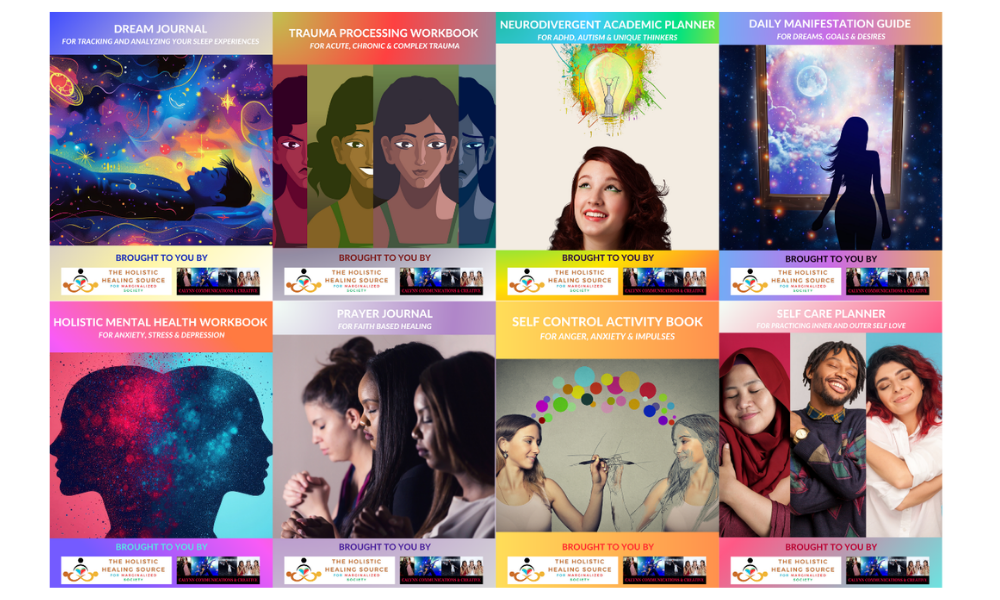
Take advantage of the Holistic Healing Source for Marginalized Society’s most popular, highly celebrated complimentary resource that reached over 100,000 people in just a few months!
- Holistic Mental Health Workbook (Anxiety, Stress & Depression)
- Trauma Processing Workbook (Acute, Chronic & Complex Trauma)
- Neurodivergent Academic Planner (ADHD, Autism & Unique Thinkers)
- Self Control Activity Book (Anger, Anxiety & Impulses)
- Self Care Planner
- Dream Journal
- Interfaith Prayer Journal
- Daily Manifestation Guide
References
Kelly, A. L. (2000). Write away. Shape, 19(9), 70.
Levine, J. (2024). SELF-HELP BOOKS: Less stigma, more healing. Library Journal, 149(1), 31–35.
Taking Note. (2024). Educational Leadership, 81(6), 13.
Images created by Calynn Lawrence
About the Author: Calynn Lawrence