There hasn’t been a time in human history when emotional and mental suffering has been so great as in the advent of technology and more recently, AI and social media.
Human bodies are naturally suited to simple lives, where hormones are balanced and physiological systems work in sync, seamlessly healing disease, recovering from injury and responding perfectly to the climate and slowly changing environment.
Imagine, if you can, a life two centuries ago, when none of these technologies were present.
How would you spend your days?
If you had resources, you would probably spend them on idle chatter, playing some musical instrument, or enjoying a summer afternoon, contemplating the garden and feeling the warmth on your face and hearing the birds cheerfully making their presence known.
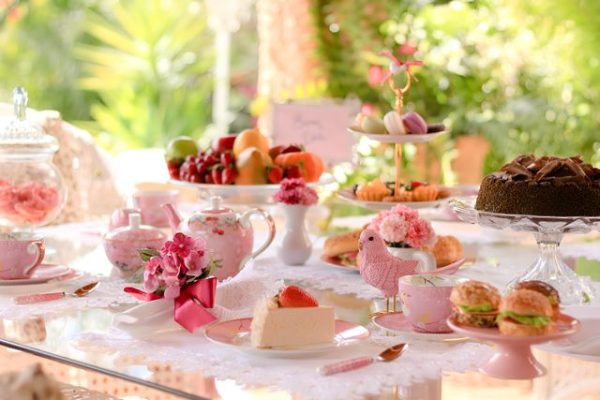
Photo by Silvia Macedo Decorações
If you had scarce resources, you would probably spend your life more dedicated to work, with occasional periods of rest and enjoyment.
If you had to survive, you would be too focused on keeping yourself and your family alive day after day, so you wouldn’t have much room for thought.
Even though the world has always been a stage for wars, sickness and misfortune, bad news would not travel fast, so people would be able to experience calmer minds and emotional comfort.
The majority of days would be expected to unfold with the same familiarity as the days before.
“No news is good news”, goes the saying, perfectly picturing the life on those days.
So, how did we end up in this society of mass anxiety, that is driving millions to rely on medication in order to even cope with their daily lives?
What changed so much that anxiety and stress are viewed as one of the worst calamities in modern society?
Connection
This is a two-sided coin. On one side we have, for the first time in our lives, the possibility to connect with each other on a global level, independently of the time or distance that separates us.
We can participate in online events and exchange ideas with people from all areas of the globe and all walks of life.
We can have video calls with family scattered through different countries and regions.
We know what is happening in any area of the globe.
This is where the other side of the coin starts to show its face.
Photo by Brian J. Tromp on Unsplash
If we are able to know, almost instantly, what is happening anywhere in the world, the chance of knowing about wars, disease, and calamities increases exponentially.
Fear and uncertainty increase, particularly because we also know that travel connects us all, so it’s easy for diseases to spread across the world, as happened with Covid, military weapons are able to reach longer distances than ever before and we rely on the global trade to be able to get food, clothes and materials we require for modern-day living.
“Detox” tip: You probably know the saying “Ignorance is bliss”, so if you are dealing with high anxiety, get yourself an old mobile phone – yes, one of those that only make phone calls, switch your TV off and avoid reading newspapers.
The first thing you will feel is emptiness, like something is missing, then boredom, like there is nothing to do.
But then, the bliss of ignorance will arise and you will start to feel calmer, happier and you will gain mental space to address whatever challenges life throws at you.
Movement
This is another two-sided coin. On one side, we can have breakfast in London and dinner in Spain; on the other, we have lost many of those much-needed moments to “pause and smell the flowers”
We move fast, travel fast, work fast, live fast and even time seems to pass so fast, even faster than before.
This continuous flow of events, tasks, to-dos, and must-dos, traps us into a roller coaster of profound dizziness to a point where we don’t know anymore how many days, weeks, months and even years have passed since a significant moment of our lives.
Lives start to feel empty, void of significance, on autopilot and like a hamster wheel.
“Detox” tip: Making voluntary pauses, having more restful periods and consciously reducing the pace at which you walk, talk, eat and live will bring you back to a more balanced state. And yes, do smell the flowers every time you have the chance.
Self-awareness
Do you really know yourself? Probably your likes and dislikes are the baseline of how much you know yourself.
If you ever participated in a job interview, the chance of being asked “What are your strengths and weaknesses?” was high.
And for you, the qualities would probably come to mind more easily than the weaknesses, right?
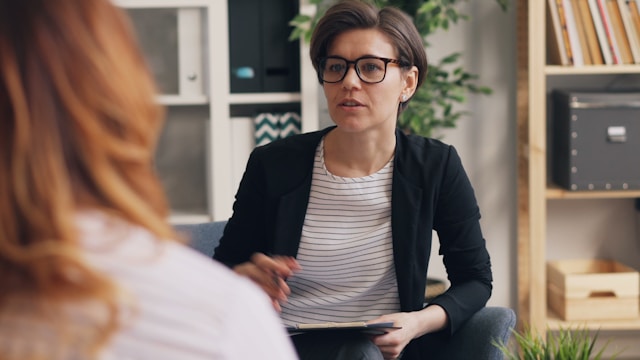
Photo by Vitaly Gariev on Unsplash
We seldom think about ourselves, and when we do, we tend to think highly of ourselves (even if we say we don’t like ourselves or that we are worthless), because it’s human nature.
The reason why I’m saying that is because we easily see faults in others and not so much in ourselves.
We are trained to compare ourselves to others without even consciously intending to. It’s automatic.
But the main issue around this lack of self-awareness is that we become prone to feel less than others, unworthy of love, recognition or success, and many times become easy targets for self-destructive attitudes that will voluntarily push us into a cycle of insecurity and self-blame.
“Detox” tip: Yes, because that’s a toxic view about oneself. Self-awareness is not something that is done in a day. It takes time to observe your own thoughts, feelings, beliefs and emotions. But it’s the necessary foundation to navigate through this new era. So, spend time journaling, observing yourself and taking notes. Then, gently move one step at a time in the direction of a better you.
Your strength must come from inside. It’s knowing yourself that will give the necessary resilience to create pauses in your busy life, set healthy boundaries particularly with technology and social media use, and truly value yourself, knowing your strengths and being certain that you are a work in progress, always changing and evolving.
Be well.
Main – Photo by Mariia Shalabaieva on Unsplash
About the Author: Ana Machado