
A beginner-friendly explanation of how Advanced Bio-structural CorrectionTM (ABC) differs from traditional chiropractic approaches.
If you find yourself looking into what therapy might be able to help you get out of pain, or into better health, then the roadmap can be quite confusing!
Firstly, there are chiropractors, osteopaths, physiotherapists, naturopaths, sports therapists, acupuncture therapists, Bowen therapists. And the list goes on. Then, if you decide that a chiropractor might be the right choice for you, there are different techniques within chiropractic each aligning themselves on how best to alleviate symptoms and optimise function.
The commonest technique used in the UK is called Diversified Technique. Other common ones are McTimoney, SOT (sacro-occipital technique) and Gonsted. To go into how they differ is beyond the scope of this article, but there's plenty online that you can look into if interested.
A technique that is growing in popularity in the UK is Advanced Bio-structural Correction (ABC). ABC differs insofar as it looks to identify and correct the problems with the body's standing structure. If the structure is not right, then the function will not be right either, and this can lead to symptoms such as inflammation, immobility and fatigue.
Many therapies focus on treating a symptom – commonly tight muscles, painful joints, headaches or nerve pain. But often, the cause of these issues is not correctly identified. For example headaches are not just a case of your head deciding to hurt; it's your body's way of telling you that there's a problem either in your spine, your hormones, food intolerance, etc. If it's a headache accompanied by a tight neck, then chances are this is a contributing factor, but the tight neck may be a compensation mechanism for something else.
So what does ABC do that's different?
ABC uses a systematic testing approach to find out what causes the body to fail structurally. In the absence of trauma or disease, this is the cause of many musculo-skeletal problems.
A key principle of ABC is that our spines cannot correct the forward movement of vertebrae because we have no muscles behind the spine to pull vertebra backwards. Daily activities such as deskwork, lifting, accidents can all cause these forward misalignments that the body can't correct and so the body starts to collapse forward and then twist or tilt to compensate.
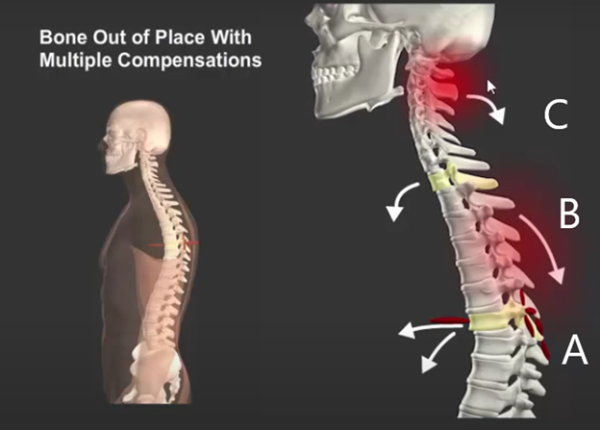
A – bone slips forward causing the spine above to tilt forward
B – muscles compensate by pulling the spine above this downwards.
C – Muscles at the top of the neck pull back to stabilise the head
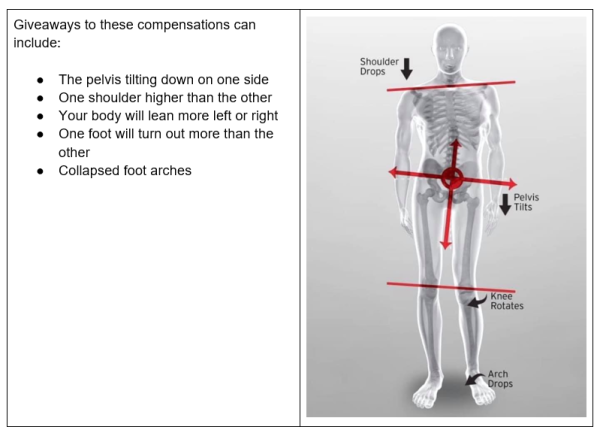
Over time, hundreds of these compensation layers develop subtly. Your body is innately clever and is doing this to protect you from further damage. But the trade-off for this is stiffness and inflammation.
So when treating people using ABC, we correct what the body cannot correct itself naturally and in-so-doing allow the body to then undo the compensations it has put in place. It's called 'unwinding' because as this process occurs, the body untwists through all these protective but painful compensations mechanisms to restore structure to its optimal state.
This process of unwinding takes time. It is not a quick fix. However, for people who have struggled with the same issues for years or even decades, without resolution, it delivers gradual but consistent and measurable results.
I often say to new clients, " if you go to the gym 2 or 3 times, are you going to see a noticeable change in your fitness or muscle tone"? The answer is of course 'No'. However, after going to the gym 2-3 times a week for 12 weeks and asking the same question, the improvements are likely to be more measurable. And after 6 months even more so assuming that other lifestyle factors such as diet and sleep are accounted for.
This is the process by which ABC improves body's. It is a gradual but consistent journey of undoing what's wrong, and allowing it to become right again. The benefits become far wider than just the resolution of a symptom. Your structure has a direct impact on body functions such as lung capacity, heart function and much more.
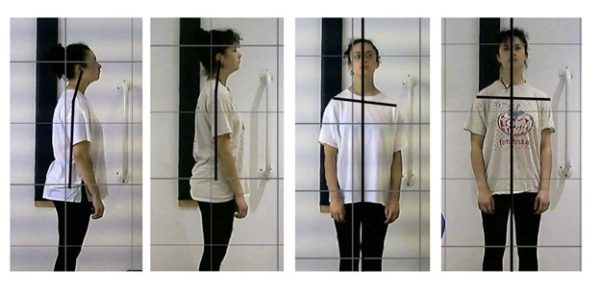
Patient with scoliosis. The instructions before photos are taken are 'breath in and out and let your body relax and slump'. Front view: shoulders more aligned and back. Side view: head more in line with shoulders and hips.
The best term in my mind to categorise ABC, is not chiropractic or osteopathy or physiotherapy, but structural healthcare. This is a huge gap in the healthcare system. It is recognised as highly significant, but glossed over because most professions do not know how to deal with it effectively and resort to external interventions such as braces, exercises or surgery. At least 50% of my patients think that their issues stem from postural (therefore structural) issues, and their intuition is correct. But they do not know how to address them. They routinely tackle the symptoms with pilates, stretches, yoga, core strengthening, supplements, etc. but never feel their body improving. They are just treading water to stay afloat.
ABC is in my view the most effective way to assess and correct structural issues with the body to improve posture and function. It is important to note that correction is always relative to each individual. Every body is different and therefore structural blueprints will differ – otherwise we would all look the same posturally.
Robert Spratley is a registered chiropractor and certified Advanced Biostructural Correction practitioner. He is the principle chiropractor at Rebalance Chiropractic, Faringdon.
Main – Photo by CHUTTERSNAP on Unsplash
About the Author: Robert Spratley